FREE SHIPPING ON ORDERS OVER $150

Cart
0
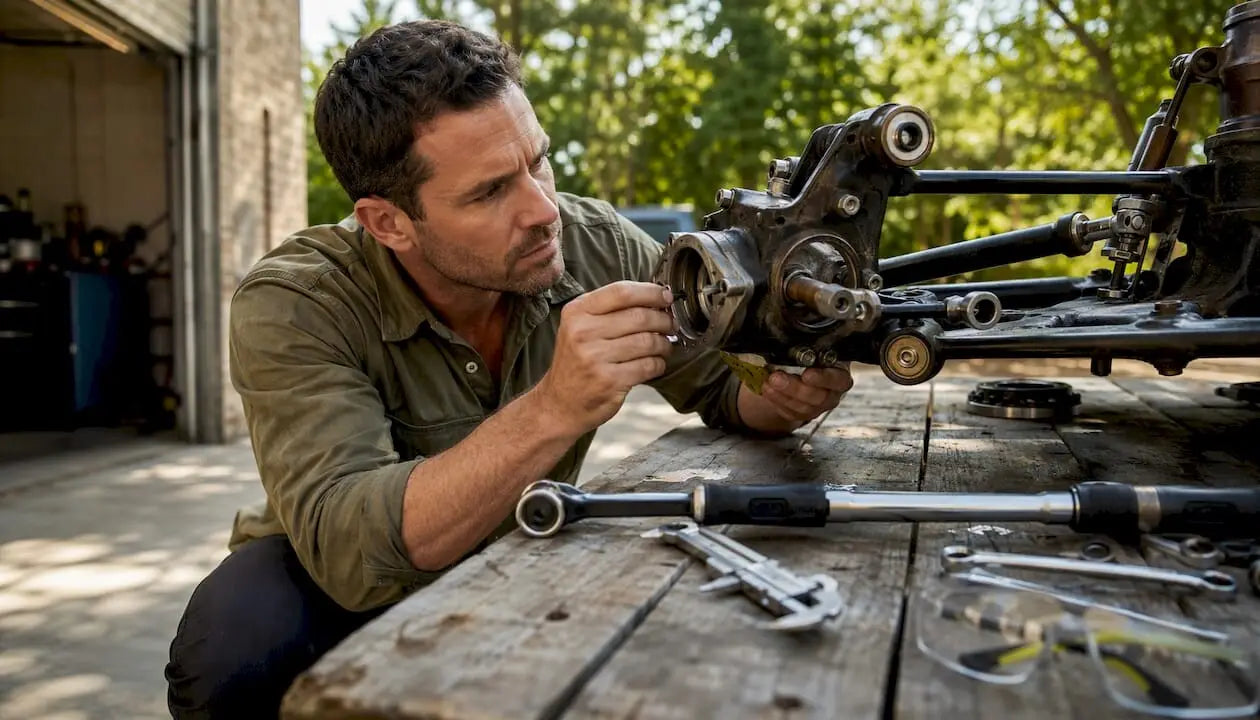
What are the main types of track suspension setups?
Track suspension systems fall into three principal architectures, and knowing which one lives under your car determines almost every tuning decision you’ll make. Here’s the quick breakdown:
- Independent suspension (double wishbone, MacPherson strut, multi-link): each wheel moves on its own, giving you better grip, precise camber control, and the handling response performance cars demand.
- Semi-independent suspension (twist-beam/torsion beam): a crossmember connects the rear wheels so movement on one side influences the other. It’s a cost-effective compromise found in many budget performance platforms.
- Solid axle (dependent) suspension: both wheels are rigidly linked. Durable and great for articulation, but less ideal for high-speed road-course work. Common in off-road and specialized racing configurations.
Each architecture has a place. The right choice depends on your platform, your track, and how much tuning flexibility you actually need.
Table of Contents
- Breaking down each suspension type for track use
- What components actually define a track suspension setup?
- Alignment and tuning considerations for track suspension
- How to upgrade from street suspension to a track setup
- How suspension geometry shapes handling on track
- Maintenance and durability of track suspension components
- Undergrounddynamics has the parts your build actually needs
- FAQ
- Key Takeaways
Breaking down each suspension type for track use
Independent suspension
Independent setups are the gold standard for road-course performance. Because each wheel responds to surface changes without disturbing the opposite corner, you get cleaner tire contact and more consistent grip through transitions.
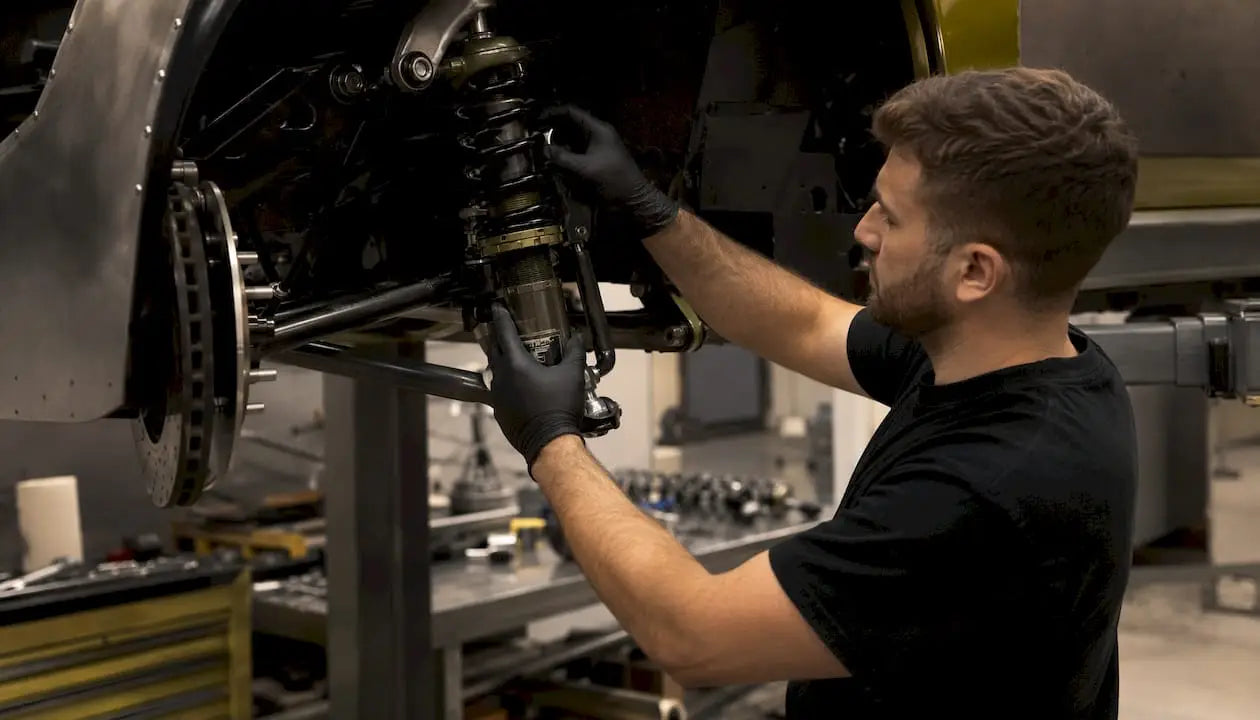
Double wishbone uses upper and lower control arms to give engineers precise control over wheel geometry throughout suspension travel. Shorter upper arms relative to the lower arms optimize the tire contact patch as the body rolls, which directly increases lateral grip. You’ll find this layout on the Acura NSX and Chevrolet Corvette for exactly that reason.
MacPherson strut combines the shock absorber and coil spring into a single unit. It’s compact, affordable, and widely used in economy and performance cars alike. The trade-off: the strut design limits how much an engineer can optimize camber as the wheel moves vertically, which matters when you’re chasing the last tenth on track.
Multi-link is where things get sophisticated. Five individual links, or a combination of arms and links, allow separate tuning of lateral stiffness, toe change, and longitudinal compliance. Multi-link setups can also be designed to resist dive under braking and squat under acceleration, giving you the most separation between handling and ride quality of any configuration.
Key advantages of independent setups:
- Wheels respond to bumps independently, maintaining grip at all four corners
- Superior camber management through suspension travel
- Best platform for aggressive alignment changes like negative camber
Disadvantages:
- More complex, heavier in some configurations
- Higher cost to rebuild or upgrade
Semi-independent suspension
The twist-beam rear suspension is the budget builder’s reality check. It’s not a true independent setup, but it’s not as compromised as a solid axle either. One crossmember connects both rear wheels, so movement on one side does influence the other. Stiffer bushings can compensate for the inherent side-to-side compliance, though that comes with added impact harshness.
For autocross or light track days, a well-sorted twist-beam car can be surprisingly capable. Don’t count it out.
Solid axle suspension
Leaf-sprung and coil-sprung solid axle configurations prioritize durability and articulation over handling finesse. Both wheels are rigidly connected, so a bump at one wheel excites the other. On a smooth road course, that’s a problem. In off-road racing or specialized oval applications, the toughness and axle control are exactly what you need.
| Suspension Type | Wheel Independence | Track Suitability | Tuning Flexibility |
|---|---|---|---|
| Double wishbone | Full | Excellent | High |
| MacPherson strut | Full | Good | Moderate |
| Multi-link | Full | Excellent | Very High |
| Twist-beam | Partial | Moderate | Low |
| Solid axle | None | Specialized | Low |
What components actually define a track suspension setup?
The architecture is the foundation, but the components you bolt in determine how the car actually behaves. Three areas matter most:
- Springs with higher rates: stiffer springs reduce body roll during cornering, keeping the chassis flatter and the tires working harder. The trade-off is a harsher ride, which is a price most track drivers accept without complaint.
- Adjustable dampers: controlling compression and rebound speed is critical for adapting to different track surfaces. A damper that’s too stiff on a bumpy circuit will skip the tire off the pavement; too soft and the car wallows. Adjustable dampers let you dial in the right response for each venue.
- Stiffer bushings: polyurethane or solid aluminum bushings replace the soft rubber factory units, sharpening steering response and reducing flex under load. You’ll feel every input more directly, which is exactly the point.
Anti-roll bars also deserve a mention. Adjusting bar diameter or stiffness lets you shift the car’s balance between understeer and oversteer without touching spring rates.
Alignment and tuning considerations for track suspension
Alignment is where setup gets personal. The same car can feel completely different with a few degrees of adjustment, and getting it wrong costs you lap time and tire life.
Key alignment settings for track use:
- Negative camber: tilts the top of the tire inward, increasing the contact patch during cornering. Performance enthusiasts typically run negative camber to improve lateral grip under high cornering loads.
- Toe: small amounts of toe-out up front can sharpen turn-in; toe-in at the rear adds stability on corner exit.
- Caster: more caster increases straight-line stability and improves steering feel, particularly at speed.
Damping tuning adds another layer. Adjustable dampers provide separate control over low-speed and high-speed compression and rebound. Low-speed settings govern body motion through slow corners and braking zones; high-speed settings handle sharp bumps and curb strikes. On a smooth circuit, you can run stiffer high-speed compression. On a rough track, back it off to keep the tire planted.
Pro Tip: Change one damper setting at a time and log every adjustment on a setup sheet. When you find something that works, you’ll know exactly what you changed to get there.
How to upgrade from street suspension to a track setup
Street suspension is built for compliance. Track suspension is built for control. Those two goals pull in opposite directions, and the further you push toward track performance, the more you give up on the daily commute.
Common aftermarket modifications for track-focused builds:
- Coilovers: the most versatile upgrade. Adjustable ride height, spring rate, and damping in one package. Ideal for dual street-track use because you can soften the setup for the drive home.
- Lowering springs: a budget-friendly drop in ride height with a modest spring rate increase. Less adjustability than coilovers, but a solid starting point.
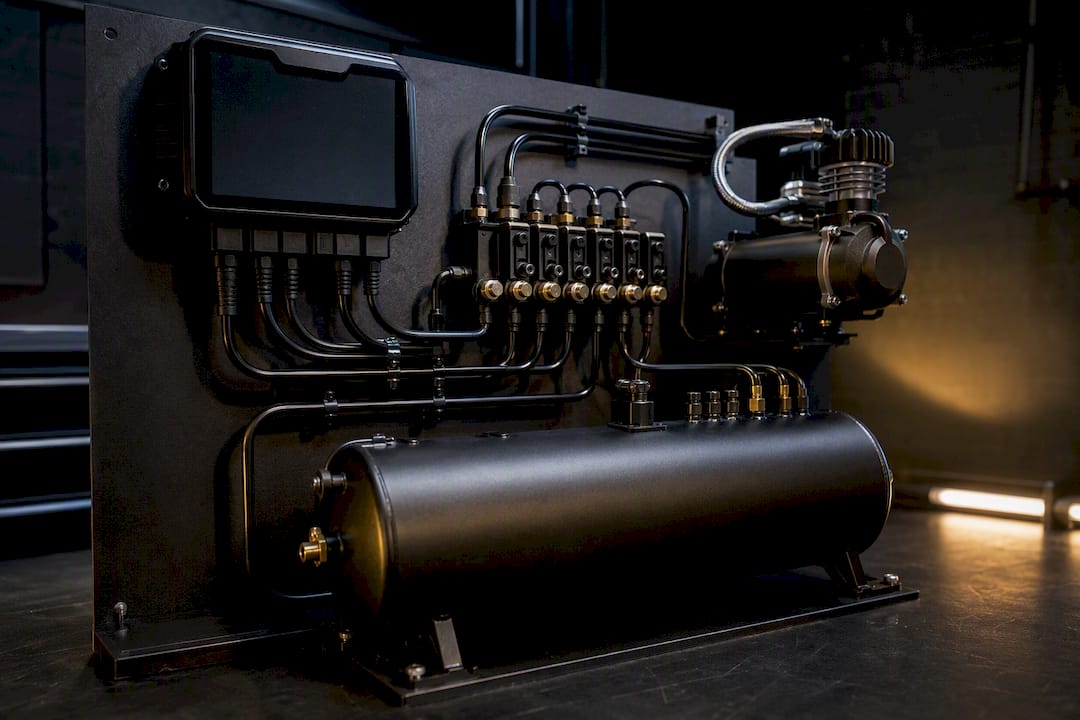
- Air suspension: allows on-the-fly ride height adjustment. Popular for builds that need to clear speed bumps on the street but drop low at the track entrance.
- Upgraded bushings: one of the highest-value modifications per dollar. Stiffer bushings sharpen response without the full cost of a coilover kit.
One thing people underestimate: lowering the car changes your suspension geometry. Ride height changes affect the roll center, can induce bump steer, and shift camber curves. A professional alignment after any suspension modification isn’t optional. Knowing when your car needs alignment can save you from chewing through a set of tires before you even reach the track.
Undergrounddynamics carries coilovers, air ride kits, and lowering springs with chassis-specific fitment data, so you’re not guessing whether a part works for your platform.
How suspension geometry shapes handling on track
Geometry is the invisible hand behind every handling characteristic. Change the roll center height and you change how weight transfers during cornering. Raise or lower the instant center and you affect anti-dive and anti-squat behavior under braking and acceleration.
Negative camber is the most visible geometry adjustment, but caster and toe interact with it constantly. A car with aggressive negative camber but neutral toe will behave very differently from one with the same camber and toe-out. The goal is a geometry package that keeps the tire contact patch loaded evenly through the full range of suspension travel, not just at static ride height.
Bump steer is another geometry issue that catches builders off guard. When steering toe changes as the suspension compresses, the car steers itself over bumps. Correcting bump steer often requires adjustable tie rod ends or a steering rack spacer, depending on the platform.
Maintenance and durability of track suspension components
Track use accelerates wear on every suspension component. Higher spring rates, stiffer bushings, and aggressive alignment settings all increase stress on joints, bearings, and hardware.
Practical maintenance priorities:
- Inspect ball joints and tie rod ends after every track day. High cornering loads and curb strikes stress these components hard.
- Check damper seals for leaks. A leaking damper loses its tuned response quickly and can fail completely mid-session.
- Re-torque suspension fasteners regularly. Vibration and repeated compression cycles loosen hardware faster than street driving ever would.
- Replace bushings on schedule. Polyurethane bushings last longer than rubber under track conditions, but they still wear. Worn bushings introduce slop that undermines every alignment setting you’ve dialed in.
- Monitor tire wear patterns. Uneven wear is often the first sign that geometry has shifted or a component has worn beyond spec.
For suspension system maintenance guidance, a qualified shop familiar with performance builds can catch issues before they become failures.
Undergrounddynamics has the parts your build actually needs

If you’ve read this far, you know what your suspension needs. The harder part is sourcing parts that actually fit your chassis without the guesswork. Undergrounddynamics stocks coilovers, air ride kits, and lowering springs with real fitment data for specific platforms, so you’re buying with confidence rather than hoping for the best.
The catalog covers the full range of suspension upgrades from budget-friendly lowering springs to fully adjustable coilover systems, all priced between $100 and $2,500. Every listing includes technical specs and chassis compatibility, which is the kind of detail that matters when you’re building a car that needs to perform, not just look good in the paddock. Browse the full performance parts catalog to find what fits your build.
FAQ
What are the three main types of track suspension setups?
The three main architectures are independent (double wishbone, MacPherson strut, multi-link), semi-independent (twist-beam), and solid axle. Independent setups offer the best handling for road-course track use.
Which suspension type is best for road-course track days?
Multi-link and double wishbone independent setups offer the most tuning flexibility and the best handling for road-course use, with superior camber control and wheel independence.
Do I need a professional alignment after installing coilovers?
Yes. Changing ride height shifts your roll center, camber curve, and can introduce bump steer, so a professional alignment is necessary after any suspension height change.
Can I use track suspension on the street?
Adjustable coilovers make dual street-track use practical. You can soften damping and raise ride height for street driving, then dial back in the track settings at the venue.
What suspension components wear fastest on track?
Ball joints, tie rod ends, damper seals, and bushings take the most abuse. Inspect these after every track day and re-torque all suspension fasteners regularly.
Key Takeaways
Independent suspension setups, particularly multi-link and double wishbone configurations, deliver the best handling performance for track use because they allow precise geometry control at each wheel independently.
| Point | Details |
|---|---|
| Three core architectures | Independent, semi-independent, and solid axle systems each suit different performance and budget needs. |
| Geometry drives handling | Camber, toe, caster, and roll center height determine how the tire contact patch loads through suspension travel. |
| Alignment after every mod | Ride height changes shift roll center and camber curves; professional alignment is required after any suspension upgrade. |
| Coilovers for dual use | Adjustable coilovers let you tune between street comfort and track stiffness without swapping components. |
| Undergrounddynamics for fitment | Undergrounddynamics stocks chassis-specific coilovers, air ride kits, and lowering springs with real fitment data for performance builds. |