FREE SHIPPING ON ORDERS OVER $150

Cart
0
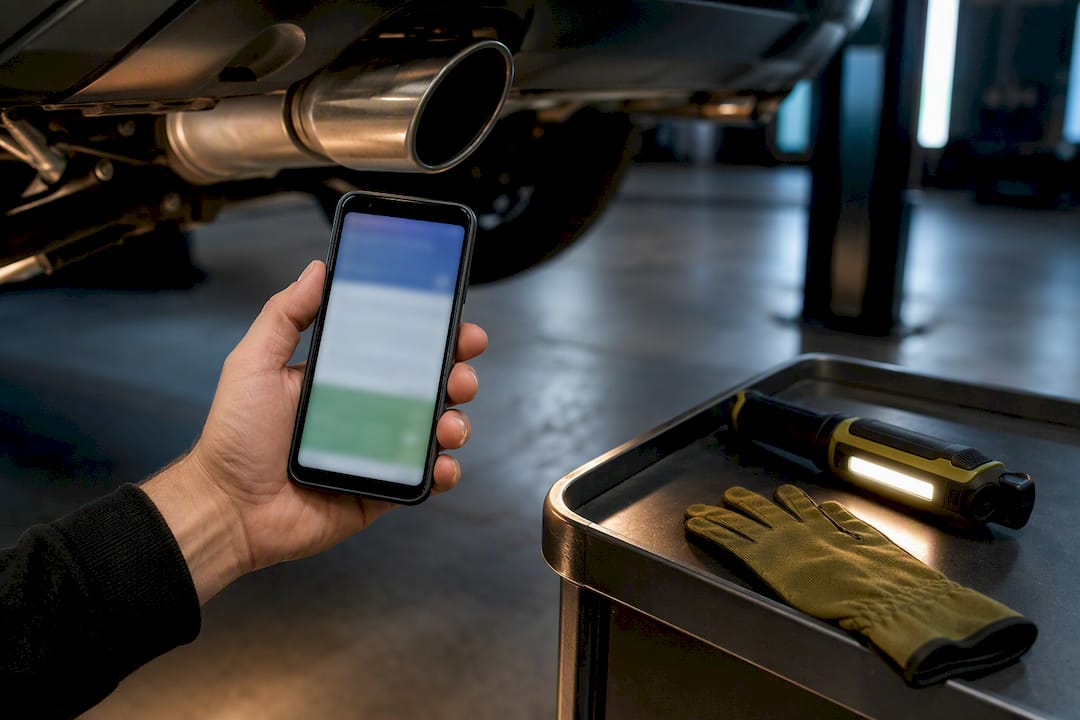
Yes, an exhaust can be legal in all 50 states, but only if it keeps your catalytic converter and oxygen sensors intact and carries a CARB Executive Order if you’re in or selling into California. Even then, noise ordinances vary by state and city, so a “50-state legal” label doesn’t shut off local enforcement. Before you buy, ask for the EO number, confirm the system doesn’t touch emissions hardware, and check your local decibel rules.
TL;DR:
- Even if an exhaust is marketed as “50-state legal,” it only guarantees California compliance if it includes a valid CARB Executive Order number and keeps emissions hardware intact.
- Noise enforcement varies widely across states and cities, making high-volume exhausts legal in one area potentially illegal elsewhere, regardless of emissions certification.
- Verifying compliance requires checking for an EO number, confirming it matches your vehicle, and ensuring the system preserves your catalytic converter and sensors, not just claiming compliance.
- Most violations occur through noise citations, which are based on local decibel limits often set between 80 and 95 dB, and are enforced independently of emissions certification.
- Proper documentation, including EO and installation notes, is crucial to avoid fines and facilitate inspections, especially in stricter jurisdictions like California and New York.
Table of Contents
- What “50-State Legal” Actually Means
- Where Exhaust Owners Actually Get Burned
- How to Verify Your Exhaust Is Legal Before You Buy
- Building a Buying Checklist That Actually Protects You
- Installation Day and What to Do If You Get Cited
- Why the “50-State Legal” Label Gets Misused
- Shop Compliant Performance Parts at Underground Dynamics
- Primary Sources to Confirm Before You Buy
- Sources
- FAQ
What “50-State Legal” Actually Means
“50-state legal” is marketing shorthand for a part that satisfies California’s stricter emissions standards, which automatically means it clears the other 49 states too. It’s not an official government term, but it points to something real: California requires a CARB EO for aftermarket parts sold or installed there, while other states generally follow federal Clean Air Act rules without their own separate emissions certification for exhausts.
Here’s the split that actually governs your build:
- Federal law bans tampering with emissions control equipment. Removing or gutting a catalytic converter is illegal everywhere, not just in California.
- CARB EOs are California’s proof system. Every approved part gets a number, tied to specific vehicle applications, and smog check stations and BAR referees use that number to verify compliance.
- Noise laws are a separate animal entirely, set by states and often tightened further by cities and counties.
A cat-back exhaust that keeps your factory catalytic converter is usually federally emissions-legal by design, since it only replaces components downstream of the cat. That’s why so many vendors lean on “50-state legal” language. It’s accurate on the emissions side. It says nothing about whether your muffler is quiet enough for the cop who pulls up next to you at a red light.
Where Exhaust Owners Actually Get Burned
Emissions inspections and noise enforcement run on completely different playbooks, and mixing them up is where most owners get blindsided. An emissions test checks whether your catalytic converter and sensors are present and functioning. A noise citation usually comes down to an officer’s judgment call, or in stricter jurisdictions, an actual decibel reading at the roadside.
Statistic Callout: Many states set noise thresholds in the 80 to 95 dB range for passenger vehicles, though exact limits and testing methods differ from state to state. California’s own guidance frequently references a 95 dBA benchmark, but the measurement procedure used to get that number isn’t uniform across every city and county that enforces it.
That inconsistency is exactly why owners in some states get away with a setup that would draw a ticket two states over. A few patterns worth knowing:
- California and New York have some of the most active noise enforcement in the country, with local ordinances that can be stricter than the state statute itself.
- Passing your state’s official inspection doesn’t guarantee you’re clear locally. Cities and counties can set lower dB limits or add time-of-day restrictions that state inspectors never check.
- Federal tampering penalties only kick in when emissions hardware is actually removed or defeated. Civil penalties for individuals can run into the thousands of dollars per violation, with even steeper fines for shops or manufacturers.
The practical takeaway: emissions compliance protects you from federal tampering charges. Noise compliance protects you from the ticket you’re far more likely to actually get.
How to Verify Your Exhaust Is Legal Before You Buy
Don’t take a product listing’s word for it. Run through this before you hand over your card number:
- Look for a physical label or EO number stamped on the part or listed on the manufacturer’s spec sheet. A legitimate CARB-compliant exhaust will reference its EO directly, not just say “CARB compliant” in vague marketing text.
- Verify that EO number yourself. Search it in CARB’s aftermarket parts database, or ask the seller to send you the actual EO PDF. Reputable sellers should have this documentation ready to hand over, no chasing required.
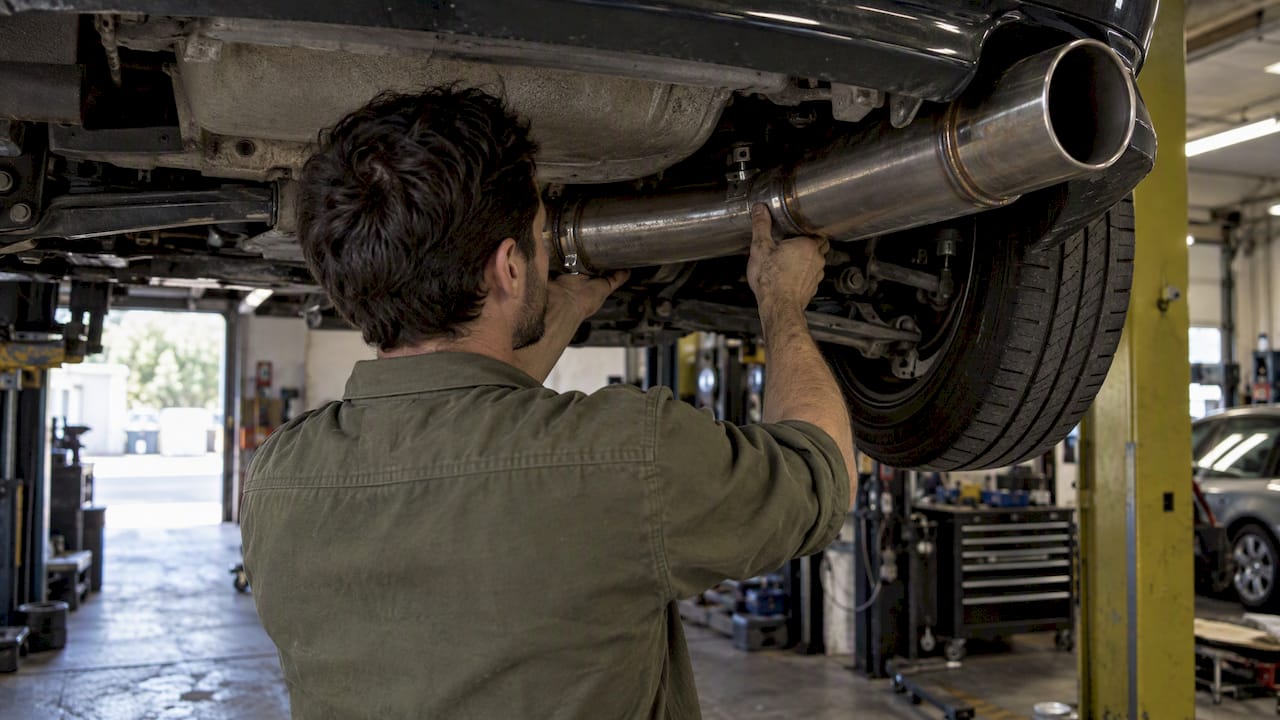
- Confirm the system preserves your catalytic converter, oxygen sensors, and doesn’t require an ECU retune to run clean. If a listing is vague about whether it’s cat-back, axle-back, or something more invasive, that’s a question to ask directly, not assume your way past.
Red flags that should stop you cold: muffler delete kits, exhaust cutouts marketed for “track use only” with no further explanation, and any listing that claims “50-state legal” without a single EO number or technical datasheet attached.
Pro Tip: Save a screenshot of the CARB EO listing page alongside your purchase receipt. If you ever get pulled over or flagged at inspection, pulling that up on your phone resolves the conversation in about thirty seconds.
Building a Buying Checklist That Actually Protects You
The parts that keep you out of trouble share a few common traits, and it pays to shop for them specifically rather than chasing the loudest option in your price range.
- Prefer cat-back or axle-back systems that leave your catalytic converter and factory oxygen sensors untouched. A well-baffled cat-back that controls sound rather than maximizing volume tends to age better with inspectors and neighbors alike.
- Request a fitment sheet, EO documentation, and installation notes before you buy, then keep copies in your glovebox. This is the same advice CARB itself points to when it comes to verifying aftermarket parts documentation.
- Call your insurer and mention the modification. An undisclosed exhaust swap can complicate a claim down the road, even a straightforward one.
Documented, compliant mods do double duty. They lower your odds of a failed inspection today, and they make your car easier to sell later, since the next buyer inherits your paperwork instead of a mystery.
Pro Tip: Keep your original factory muffler in the garage if you can. If a system ever gets flagged incorrectly, being able to reinstall stock parts fast is the cheapest insurance policy you’ll ever own.
Installation Day and What to Do If You Get Cited
A good installer preserves your emissions hardware, skips permanent cutouts, and hands you photos plus written install notes when the job’s done. That paperwork becomes your proof if anyone ever questions the setup.
Once it’s installed, you can get a rough read on volume with a consumer decibel meter app, but treat the number as a ballpark. Cheap phone-based meters can be off by several decibels depending on placement and background noise, so don’t stake a fine on one.
If you do get cited or fail an inspection:
- Pull your EO documentation and installer notes together immediately. Having them ready often ends the conversation faster.
- If the citation is noise-related and you can’t produce a clean explanation, consider temporary remediation, like adding a resonator or reverting to stock, while you sort things out.
- Escalate through the right channel. In California, that means a BAR Referee station; elsewhere, your state DMV’s vehicle equipment division is the place to start.
Why the “50-State Legal” Label Gets Misused
Most exhaust marketing treats “50-state legal” as a finish line. It’s really just half the test. The emissions side is genuinely solvable. A cat-back system with a valid EO and intact catalytic converter clears that bar reliably, and the industry has gotten good at proving it on paper.
The part sellers gloss over is that noise enforcement doesn’t care about your EO number at all. A perfectly emissions-compliant exhaust can still draw a ticket in a city with an aggressive noise ordinance, and no amount of CARB paperwork changes that. Underground Dynamics builds its performance catalog around this exact gap. Every listing carries real fitment data and technical specs, because a spec sheet you can actually read is worth more than a marketing claim you can’t verify. Products stick to carbon fiber and fiberglass construction sourced from established suppliers, and compliance guidance like the CARB legal intake checklist exists precisely because buyers keep asking the same verification questions. Choose parts here when fitment accuracy and documented compliance matter more than chasing the biggest sound.
— Ismael
Shop Compliant Performance Parts at Underground Dynamics
Underground Dynamics gives you what most aftermarket listings skip: real fitment specs, install notes, and compliance context you can actually check before you buy, instead of a vague “street legal” claim and nothing to back it up. Every product page in the performance catalog is built around chassis-specific detail, so you’re matching parts to your exact vehicle rather than guessing from a generic photo.
The blog also breaks down how to verify CARB documentation on intakes and related hardware, a useful companion read if you’re new to checking EO numbers yourself. If you’re unsure whether a given exhaust setup fits your build or meets your state’s requirements, reach out to support before you order. Browse the current lineup and get your fitment questions answered at Underground Dynamics.
Primary Sources to Confirm Before You Buy
Cross-check any seller’s claims against the source, not the sales copy.
- CARB’s aftermarket parts and EO database for verifying Executive Order numbers.
- EPA and legal guidance on tampering penalties for understanding federal emissions risk.
- State-by-state exhaust noise law breakdowns for typical decibel thresholds and muffler statutes.
Sources
- Aftermarket, Performance, and Add-on Parts | California Air Resources Board
- Is a Catback Exhaust Legal? State-by-State Rules (2026) - EGR Performance
- CARB Compliance for Exhaust Mods: How to Stay Legal Without Losing Fun - AP Tuning
FAQ
What Is the Loudest Legal Car Exhaust in the United States?
There’s no single national volume cap, since most states set their own decibel thresholds, often in the 80 to 95 dB range. A quiet performance exhaust designed with baffled mufflers will generally clear even the strictest local limits, while an unbaffled or cutout setup risks a citation almost anywhere.
Is There a $1,000 Fine for Loud Exhaust in California?
California penalties vary by violation and locality rather than a single fixed amount, and enforcement often depends on officer discretion and local ordinances rather than a flat statewide fee. Fines can still run into the hundreds of dollars for a first noise violation, with steeper penalties for repeat offenses or tampered emissions equipment.
What Aftermarket Exhausts Are Legal?
Cat-back and axle-back systems that preserve the factory catalytic converter and oxygen sensors are generally federally emissions-legal by design, since they don’t touch emissions hardware. Legality in California specifically also requires a valid CARB EO number tied to your vehicle application.
Is Loud Exhaust Illegal in the USA?
It depends on the decibel level and your local ordinance, not a single federal rule. States commonly require a functioning muffler and set their own noise thresholds, so an exhaust that’s fine in one county can still draw a citation in another with stricter enforcement.
Is Catback Exhaust Legal Everywhere?
A cat-back exhaust is typically legal on the emissions side nationwide because it leaves the catalytic converter untouched, but noise limits and local ordinances still apply on top of that. Always confirm your specific state’s dB limit and, if you’re in California, that the part carries a valid CARB EO.