FREE SHIPPING ON ORDERS OVER $150

Cart
0
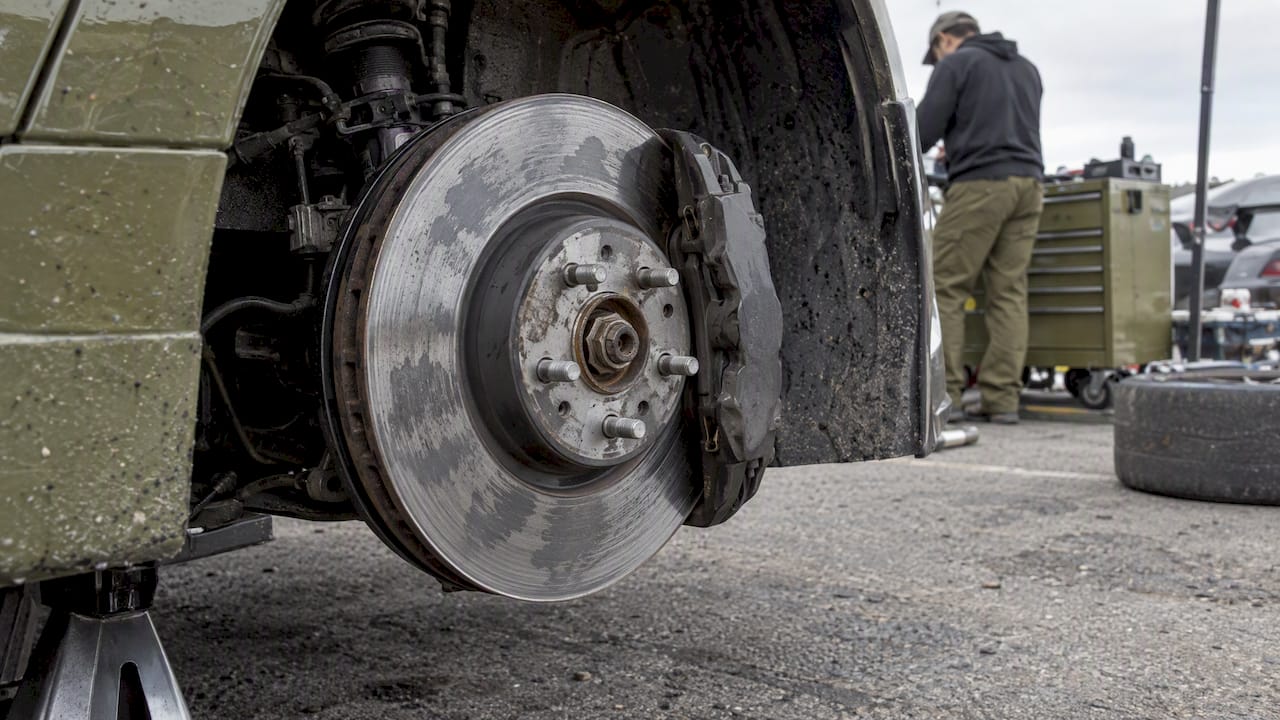
Brake pad deposits are patches of friction material that stick unevenly to the face of your rotors. They are the most common reason a car shudders under braking, and most people blame the wrong part. If your steering wheel shakes or the pedal pulses when you slow down, you probably don’t have a bent rotor. You have uneven pad transfer, and often you can fix it without buying new rotors.
This guide covers how deposits form, how to tell them from other causes, what to do about them, and how to set up your brakes so the problem doesn’t come back. It is written for people who drive their cars hard: street-performance daily drivers, track-day regulars and anyone running a firmer pad than the factory one.
TL;DR
- Most “warped rotor” complaints are really uneven pad material on the rotor face, which creates thickness variation and pedal pulsation.
- Deposits come from overheating pads, hard stops from speed that end with the car sitting still, poor bedding, and pads that don’t suit how you drive.
- Light cases can sometimes be cleaned off. Heavier cases need the rotor resurfaced or replaced, provided it is above minimum thickness and free of cracks or blue heat spots.
- Prevention is a matched pad and rotor, a proper bedding procedure, and a cool-down lap after hard use.
- Sticking calipers and bad hub mounting cause the same symptoms, so rule them out before you spend money.
Table of Contents
- What brake pad deposits actually are
- Symptoms: how deposits feel
- Why deposits form
- Rule out the look-alikes first
- How to fix brake pad deposits
- What a repair may cost
- Preventing deposits: a repeatable setup
- Our take: seat time exposes brake setups
- Brake parts and fitment help
- FAQ
- Sources
What brake pad deposits actually are
A brake pad works by dragging against the rotor. In normal operation, a thin, even layer of pad material transfers onto the rotor face. Pad rubs on a layer of itself, and that is what gives consistent bite.
Deposits are what happens when that layer goes uneven. Pad material builds up in patches, and those patches are thicker than the bare metal around them. Engineers call this thickness variation. Each time the wheel turns, the pad passes over a high spot, then a low spot, and you feel it as a pulse through the pedal or a shake through the wheel.
The key point from Centric’s technical whitepaper is that true rotor warping is extremely rare, and almost every case of perceived warping is friction material deposited unevenly. Yahoo Autos makes the same point in plain terms: a “warped” rotor usually isn’t bent, and the shuddering has more to do with what is on its surface.
That matters for your wallet. If you assume the rotor is bent, you buy rotors. If the real problem is deposits, new rotors with the same pads and the same habits will bring the shudder back.

Symptoms: how deposits feel
Deposits show up in a few recognizable ways:
- Pedal pulsation that you feel in your foot during braking.
- Steering wheel shake under braking, usually worse from highway speed.
- Vibration that comes and goes, often worse when the brakes are warm and lighter when you brake gently.
- Visible blotchy or discolored patches on the rotor face, sometimes with a rough or bluish look.
- Onset after a hard stop or a track session, especially when you parked right afterward with the brakes still hot.
A shake that appears only above a certain speed and only under braking points to the brakes. A shake that exists while cruising, with no brake input, usually points to tires, wheel balance or suspension instead.
Why deposits form
There are four common triggers. Most real-world cases involve two or more.
1. Pads running outside their temperature window
Every pad compound has a working range. When pads get hotter than they were designed for, material transfers to the rotor in uneven patches. Running too cold is a problem too: racing-oriented compounds can be noisy and weak until they are warm.
This is why using race pads for street driving is a classic recipe for uneven deposits. The pad never gets into its range on the commute, then gets slammed into it in a single hard stop.
2. Sitting on hot brakes
If you brake hard from speed and then stop and hold the pedal, the pad clamps one patch of rotor while it is hot and leaves an imprint of pad material there. Pull into the paddock, set the parking brake, and you may have just printed a deposit.
3. Bad bedding
Bedding is not just “breaking in.” It is a controlled process that lays down a thin, uniform transfer layer. If the rotor isn’t clean to begin with, for example it still has a factory anti-corrosion coating, or if you do aggressive stops too early, that layer is patchy from day one. The deposits then grow from that uneven base.
4. The wrong pad for the use
A pad that is a poor match for your driving makes everything else harder. We wrote about this in our guide to matching brake pad compounds to use and fitment. The short version: the label on the box tells you less than the real operating range and how you drive.
Rule out the look-alikes first
Before you blame deposits, check the other causes of braking vibration. Fixing the wrong thing is how people lose a weekend.
| Suspect | What it feels like | Quick check |
|---|---|---|
| Pad deposits | Pulse in pedal or wheel under braking | Blotchy rotor face, history of hard stops or track use |
| Sticking caliper | Pull to one side, one hot wheel, uneven pad wear | Compare wheel heat after a drive, inspect pad wear side to side |
| Rotor mounting problem | Vibration that appears soon after a rotor swap | Rust or dirt on the hub face, uneven lug torque |
| Tires or balance | Shake at speed even without braking | Shake persists off the brakes |
| Worn suspension parts | Clunks and wandering plus brake shake | Play in bushings, ball joints or tie rods |
How to spot a sticking caliper
AutoVerse lists uneven pad wear, pulling to one side under braking and a wheel that is noticeably hotter than the others after a drive as the signs. Cleaning and lubricating the slide pins is the first move, and the same source puts that at roughly $75 to $150 at a shop. If that doesn’t work, the caliper, pads and rotor on that corner usually get replaced together, which the source puts at about $300 to $600.
If you tackle the slide pins yourself, you save the labor, but only do it if you are comfortable working on brakes and have the right tools. If not, have a qualified technician look at it. Brakes are a safety system.
How to fix brake pad deposits
How far you go depends on how bad the deposits are. Work from least to most invasive.
Step 1: Inspect the rotors
With the wheel off, look at each rotor face. Check for:
- Blotchy, uneven coloring or raised patches of material
- Cracks, especially radiating from drilled holes or slots
- Blue or purple heat marks
- Visible lip at the outer edge, which suggests wear
Then measure thickness with a micrometer in several spots around the disc and compare it to the minimum thickness stamped on the rotor or listed in the service manual. Cracks, blue spots or a rotor near its limit mean replacement, not cleaning.
Step 2: Try a light cleanup for mild cases
For mild deposits, a short run of moderate stops from cruising speed can sometimes wear the patches down. Some people also scrub the face with abrasive pads. This is hit and miss. If you do it, wear a mask, because brake dust is not something to breathe, and clean the surface well afterward. If the pulsation is still there after a short effort, move on to step 3 rather than keep driving on it.
A word about cleaning sprays and wheel care: products meant to lift brake dust from wheel faces, like this guide to removing brake dust safely with a short dwell time, are for the wheels, not for the friction surface. Keep cleaners off the pad and rotor faces unless the product is made for brakes.
Step 3: Resurface the rotor and refinish the pads
This is the standard repair for heavier deposits. The thickness variation is removed by machining the rotor, ideally on an on-car lathe that cuts the rotor while it is mounted on your own hub. That also cancels out small hub runout. Pads get a light refinish with roughly 80-grit sandpaper, or you fit new pads.

The condition: the rotor must stay above minimum thickness after cutting, and it must be free of cracks and severe heat damage. Centric’s whitepaper frames resurfacing as often a real cure, not a band-aid, when the rotor is still within its limits.
If the rotor is thin, resurfacing is a waste. Replace the rotors and pads as a set.
Step 4: Replace and bed correctly
New rotors and pads fix the surface, but only the bedding keeps them fixed:
- Clean the new rotors. Remove the factory coating with brake cleaner, following the product’s instructions.
- Check the hub face. Wire-brush off rust and dirt so the rotor sits flat.
- Torque the lugs evenly in a star pattern to the vehicle spec.
- Follow the pad maker’s bedding instructions. Typically that means a series of progressively firmer stops from moderate speed, with cooling driving in between.
- Don’t stop and hold the pedal at the end. Keep rolling, using light braking and airflow to cool the brakes.
- Let everything cool fully before parking.
The exact speeds and number of stops differ between pad manufacturers, so use the sheet that came with your pads. The principle, which Race Technologies also describes, is to form a transfer layer on the disc that improves bite, rather than just wearing the parts in.
What a repair may cost
Costs vary by car, shop and parts quality, so treat anything you read as a ballpark. A caliper corner replacement runs about $300 to $600 according to the AutoVerse figures above, and slide pin service is cheaper. For a full pad and rotor job, get two or three quotes from independent shops and ask whether on-car resurfacing is an option on your platform.
The cheapest fix is the one you never need: matching your pads to your use and bedding them properly.
Preventing deposits: a repeatable setup
This is where builders save the most money. A repeatable system beats chasing symptoms.
Match the pad to the car and the use
- Street-performance daily: a street or fast-road compound that works cold and handles the occasional spirited run.
- Track-day weekend car on the same wheels: pick a compound with a wide operating range, and expect some compromise on noise and dust.
- Dedicated track or time-attack car: a race compound is fine, but plan on swapping to street pads if the car sees road miles. Race pads on the street are the setup most likely to leave patchy deposits.
Your pad choice should reflect your build as a whole. If you’ve added grip with coilovers, sticky tires or aero, you’re going to brake harder and later. Heavier braking means more heat, which means more reason to care about compound and rotor quality.
Cool-down lap, every time
After a hard session, drive a slow lap or a few minutes of gentle road with no hard braking. Park with the car in gear or on a flat spot with the parking brake off if the car allows it, and use wheel chocks if you need to hold it. A glowing-hot rotor with a pad pressed on one spot is how imprints happen.
Keep the rest of the corner healthy
- Lubricate caliper slide pins at pad changes.
- Replace brake fluid on schedule, especially if you track the car.
- Check wheel hub faces for rust every time you swap rotors.
- Torque wheels evenly, with a torque wrench, not an impact gun.
Change the pad and rotor together
As a rule, treat pads and rotors as a matched pair. A new pad on an old, deposit-covered rotor starts with an uneven surface. A new rotor on a pad that has already formed a different transfer layer is no better. Fresh pairs, bedded together, give the cleanest start.
Our take: seat time exposes brake setups
We sell aero and suspension, and people sometimes ask why we’re writing about brakes. The answer is simple: functional performance doesn’t stop at the parts that go fast. Lowering springs, coilovers, a lip kit or a wide-body setup change how a car loads up under braking, and the brake system is the first thing that complains when the rest of the car works better.
What we see is that deposit trouble is rarely a parts-quality problem. It is a mismatch problem. A track-oriented pad on a daily, a rotor bolted on over a rusty hub, a bedding procedure skipped because the car was needed Monday. None of that is dramatic, and all of it is avoidable.
Our advice is boring and it works. Decide what the car does most of the time. Choose the pad for that. Bed it properly. Cool it down. If the pedal starts pulsing, measure before you buy. We’d rather you resurface a rotor that has life left than sell you a new one you didn’t need.
— Ismael
Brake parts and fitment help
If your inspection says the rotors and pads need replacing, our performance rotors and brake pads collection lists parts by vehicle so you can check fitment before you order, including kits such as the EBC S20 pad and rotor kit. Building the rest of the car too? Browse the full catalog at Underground Dynamics for suspension, aero and more. And if noise rather than shake is what’s bugging you, our brake squeal checklist walks through shims and pad geometry.
FAQ
Can brake pad deposits be removed from rotors?
Sometimes. Light deposits may wear down with moderate braking from cruising speed, but heavier ones usually need the rotor machined on a lathe, ideally on the car. The rotor has to remain above its minimum thickness and be free of cracks or severe heat damage. If it isn’t, replace it.
Are my rotors warped or is it deposits?
Most likely deposits. Engineers at brake makers say that true warping is rare and that uneven pad material is behind nearly all cases of judder. A technician can measure thickness variation and runout to confirm.
How do I know if the problem is a sticking caliper instead?
Look for uneven pad wear, a pull to one side when braking, or one wheel that is much hotter than the others after a drive. AutoVerse lists these as the signs. Start with cleaning and lubricating the slide pins, and have a professional inspect the caliper if that doesn’t help.
Will new rotors stop the shudder for good?
Only if the cause is dealt with too. New rotors paired with the wrong pad, poor bedding or hot-brake parking habits can pick up deposits again. Bed the new set correctly and match the pad to how you drive.
Can I drive with brake pad deposits?
Mild pulsation is more of an annoyance than an immediate danger, but it does hurt braking consistency and gets worse over time. If the pulse is strong, the car pulls, or you smell burning, get the brakes inspected before more driving.
Sources
- Centric Parts technical whitepaper: The “Warped” Brake Disc and Other Myths of the Braking System
- Yahoo Autos: What Causes Warped Brake Rotors?
- AutoVerseUSA: Why Is My Car Shaking When Braking?
- Race Technologies: Bedding Procedure