FREE SHIPPING ON ORDERS OVER $150

Cart
0
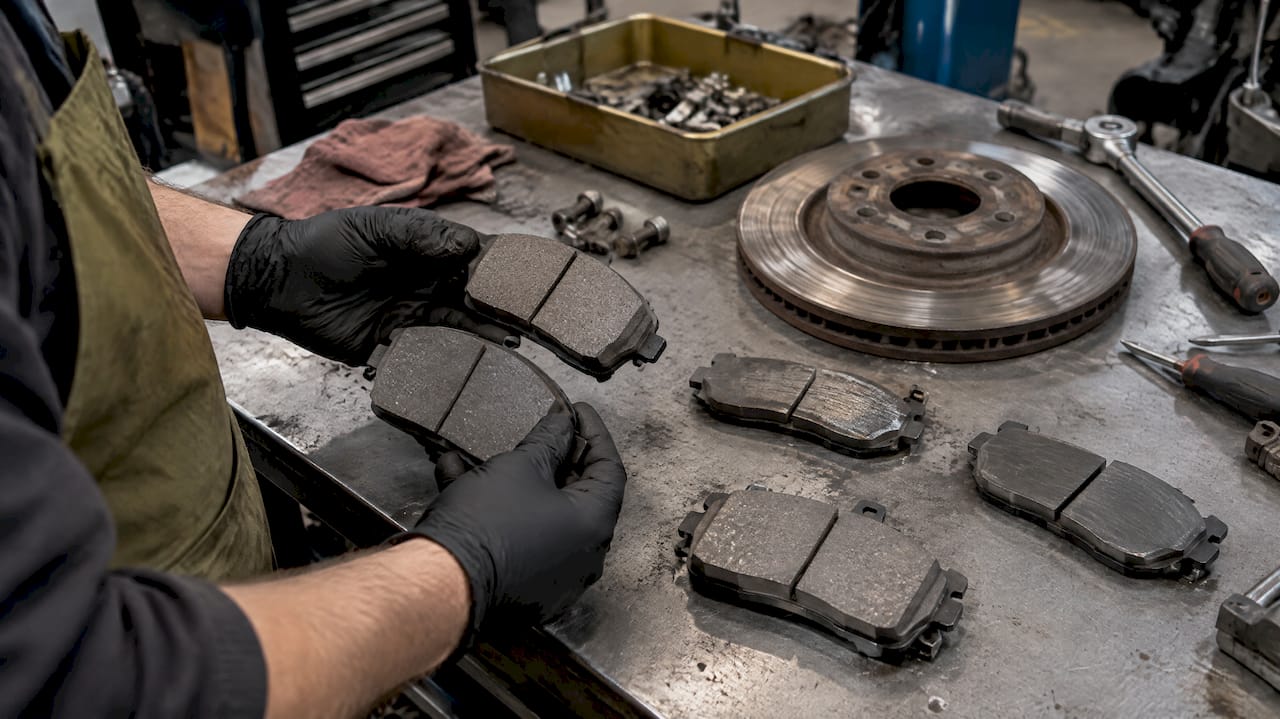
Brake pad compounds fall into several families, including ceramic, semi-metallic, low-metallic, non-asbestos organic (NAO) and sintered metallic. The rule of thumb is simple. Pick ceramic for quiet, clean daily driving, semi-metallic or sintered for heavy loads and track heat, and organic or NAO for light vehicles on a budget. Every one of them is a composite recipe, not a single material.
TL;DR:
- Use ceramic or organic pads for light commuting, but choose semi metallic or sintered compounds for towing, heavy vehicles, descents, or repeated hard stops.
- Compare friction claims only when pads were tested under the same recognized procedure and temperature range; a coefficient alone cannot show heat performance.
- Confirm the OEM cross reference for your exact vehicle and trim, inspect the rotors, check caliper clearance, and follow the pad maker’s bedding instructions.
- Use the same compound on both sides of an axle, because mismatched pads can cause uneven braking and pull the vehicle to one side.
- Inspect pads each tire rotation; replace them at about 3 millimeters, and measure rotors at every aggressive pad change against the stamped minimum thickness.
Table of Contents
- What brake pad compounds are made of
- How ceramic, semi-metallic, low-metallic, NAO and sintered pads compare
- How to pick the right compound for your vehicle
- Why fitment matters as much as the compound
- Bed-in steps and replacement thresholds
- Underground Dynamics perspective
- How compound choice affects rotor life and upkeep
- Environmental and disposal considerations
- How driving conditions change pad performance
- Our editorial take: fitment and proof beat the label
- Where to buy matched rotors and pad kits at Underground Dynamics
- FAQ
- Sources
What brake pad compounds are made of
A brake pad is a mix, not a slab of one material. A technical survey of commercial friction materials from Oak Ridge National Laboratory groups the ingredients by job, and notes that small changes in additive amounts can shift performance a lot. A 2024 comprehensive review describes modern pads as recipes with 10–30 ingredients.
The main ingredient classes:
- Binders: usually phenolic resin, which holds everything together. Most aftermarket pads are resin-bonded composites formed by hot molding and post-curing.
- Reinforcements: steel, ceramic or other fibers that give the pad strength.
- Abrasives: metal oxides that create bite and clean the rotor face.
- Solid lubricants: graphite or molybdenum disulfide that keep the friction level steady.
- Fillers and functional additives: these tune heat transport, noise and rotor wear.
“Ceramic” and “semi-metallic” are shorthand for which ingredients dominate the balance. Formulations are proprietary, so judge a pad by its trade-offs, not its label.
Manufacturers usually back their numbers with a lab procedure. There is no federal U.S. safety standard written specifically for replacement pads, so makers cite SAE J661, known as the Chase Test, as NHTSA explains.
How ceramic, semi-metallic, low-metallic, NAO and sintered pads compare
Each family trades bite, heat capacity and refinement against the others. Gaining one usually costs another. That is the triangle of compromise.
- Ceramic: quiet, low dust and long-lived, but pricier. Great for commuting and daily use. Less suited to repeated hard stops from high speed.
- Semi-metallic: high thermal capacity and strong bite. The cost is more noise, more dust and faster rotor wear. A solid pick for towing, hauling and spirited driving.
- Low-metallic: a bit longer-lived than plain organic pads, but noisier. A middle step for drivers who want some extra bite without going fully metallic.
- NAO (organic): quiet and gentle on rotors, usually cheapest, but they wear faster and fade sooner under heat. Fine for light vehicles and easy commutes.
- Sintered metallic: the toughest of the group. Strong braking, long life and big heat tolerance, but they can wear rotors faster and feel harsher at low temperature. Common on heavy vehicles and track builds.
Consumer testing summarized by Consumer Reports lines up with this: semi-metallic pads offer higher thermal capacity and durability but can be noisier and harder on rotors, organic pads are quieter but wear faster, and ceramic pads tend to be cleaner and longer lasting at a higher price. RAC Drive gives the same category-level picture.
SAE J661 reference: the Chase Test measures friction across temperatures from about 200°F to 650°F in fade and recovery segments, so it tells you how a pad holds its friction as it heats up and cools down.
How to pick the right compound for your vehicle
Work through these questions in order, then match your answers to the comparison above.
- Define your main use. Daily commute, towing, spirited road driving, track days, winter or mountain roads, or a motorcycle.
- Weigh the vehicle. Heavier vehicles and trailers push more heat into the pads and favor semi-metallic or sintered.
- Check rotor size and cooling. Small or poorly vented rotors fade sooner no matter which compound you choose.
- Decide what you will tolerate. Dust on the wheels and a little noise are the price of bite. If you hate both, lean ceramic.
- Set the budget and service cadence. Cheap pads cost less up front and get replaced more often.
- Read the friction claims carefully. A friction number only means something if you know the test behind it and the temperature range it covers. Compare pads tested the same way, not marketing letters.
Pro Tip: Match the pad to the hottest thing you regularly do, not the average drive. A pad that is perfect on the commute and fades on your one mountain descent is the wrong pad.
Why fitment matters as much as the compound
The compound is only half the decision. A pad also has to match the caliper in shape, backing plate, shim and wear sensor. A great compound on the wrong shape is a bad pad.
- Confirm the OEM cross-reference number for your exact vehicle and trim.
- Check rotor thickness and surface condition. Worn or grooved rotors undermine even the best pad.
- Verify caliper clearance, since some pad and shim combinations sit tighter than stock.
- Plan the bedding routine before you install.
Wheel and caliper clearance matters too, as this fitment article explains for add-on wheel hardware.
On mixing compounds, keep both sides of an axle the same. Different compounds across one axle give uneven braking and a pull to one side.
Bed-in steps and replacement thresholds
Bedding transfers a thin, even layer of pad material onto the rotor. Skip it and you invite noise, uneven wear and early fade.
- Make several moderate stops without coming to a full halt.
- Follow with a few firmer stops from higher speed, still without stopping fully.
- Drive a few minutes with light braking so the pads and rotors cool.
- Avoid holding the brake pedal down at a standstill while the parts are hot.
Inspect thickness at every tire rotation. Replace pads when the friction material reaches about 3 millimeters. If squeal creeps in, our write-up on pad shims and brake squeal walks through a check.
Underground Dynamics perspective
We specialize in aftermarket aero and performance parts, and we publish technical write-ups on brakes and fitment. Our catalog includes rotors and brake pad kits, and we can help match a compound to your specific vehicle.
How compound choice affects rotor life and upkeep
Harder pads wear rotors faster. Semi-metallic and sintered pads hold up under heat and last a long time, but their abrasive makeup and metal content take material off the rotor face as they go. Softer organic and ceramic pads are gentler on rotors, though organic pads give up pad life to get there.
That changes your maintenance rhythm. With aggressive pads, check rotor thickness and surface at every pad change. Look for grooves, heat spots and a raised lip at the outer edge. Measure against the minimum thickness stamped on the rotor, and replace rotors rather than machining them below that limit.

With ceramic pads, rotors usually last longer between replacements, and wheels stay cleaner. You still need to watch for glazing, a shiny hardened face that cuts bite. A fresh bed-in often fixes mild glazing, while severe cases call for new pads and a rotor check.
Pairing matters here. A track-grade pad on a thin, stock rotor can chew through the rotor quickly. Matching pads and rotors keep wear predictable and the pedal feel consistent.
Whatever you run, keep the system clean and cool. Fresh fluid, free-moving caliper slides and healthy hardware stop a pad from dragging, and drag shortens the life of both pad and rotor.
Environmental and disposal considerations
Brake dust is a real pollutant, and the industry has spent years reformulating pads. The 2024 review highlights work toward improved braking with lower environmental impact, which is why modern recipes look different from older ones.
Material toxicity is the main concern. Asbestos was once common in friction material and is no longer used in mainstream pads, so the old “do brake pads still contain asbestos” question has a reassuring answer for current retail parts. Be careful with very old or unmarked pads from a stored vehicle, and treat them as unknown material.
Dust handling is simple and worth doing:
- Never blow brake dust off with compressed air. Wet it down or use a brake-cleaning spray and a rag.
- Wear a dust mask and gloves when you service pads.
- Wash your hands and work clothes afterward.
For disposal, do not toss used pads in household trash. Many parts stores, scrap yards and municipal hazardous-waste programs accept them, and metal-heavy pads often recycle with scrap steel. Rules vary by location, so check with your local waste authority. Contaminated rags and spent brake cleaner should follow local hazardous-waste guidance as well.
How driving conditions change pad performance
The same pad behaves differently depending on where and how you drive. Heat is the biggest variable, and that is exactly what the Chase Test’s temperature segments are meant to probe.
Urban stop-and-go: pads rarely get hot, so cold bite matters most. Ceramic and organic pads shine here, with quiet, predictable response and low dust. Sintered pads can feel grabby or dull until warm.

Highway and long descents: sustained heat builds quickly. Semi-metallic and sintered pads hold friction longer under load, while organic pads fade first. Towing and mountain grades make this gap obvious. Cooling matters too, and our piece on brake cooling ducts covers how airflow cuts fade.
Wet weather: water on the rotor briefly cuts friction, and a good pad recovers fast. Pads with strong recovery behavior feel safer in rain. A light, early tap of the brake in heavy rain helps clear the film.
Cold and winter: some metallic pads feel stiff until warmed up. Add road salt and grit, and rotor surface rust shows up faster, so expect a bit of noise on the first stops of the day.
Track and spirited driving: high, repeated heat demands thermal capacity above all. If you are preparing a car for heavy braking, a track protection package is worth a look for the paint and panels that take the abuse.
Our editorial take: fitment and proof beat the label
Most buying advice stops at “ceramic is quiet, metallic is aggressive.” That is true, and it is also the least useful part. The label on the box tells you the dominant ingredient, not how the pad behaves on your car, on your roads, at your temperatures.
What matters first is honesty about your use. Most drivers overbuy. A street car used for occasional spirited driving does not need a race compound, and a pad built for track use can feel numb and noisy at commuting temperatures. Buy for the real use, not the daydream.
What gets overrated is the single friction number. Without the test method and temperature range behind it, a coefficient is decoration. Look for pads whose claims are tied to a recognized procedure, and compare like with like.
What gets ignored is the hardware around the pad. Rotor condition, shims, slides, fluid and cooling decide whether any compound works well. A fresh set of the right pads on a tired rotor is money wasted.
So do this in order: define your use, confirm fitment, choose the compound, then bed it in properly. Get that sequence right and the brand name matters far less.
— Ismael
Where to buy matched rotors and pad kits at Underground Dynamics
We list rotors and brake pads with fitment detail and technical specs, so you can match hardware to your chassis before you buy. Our team wants you to get the pairing right the first time.

- Check fitment for your exact vehicle.
- Browse rotors and brake pads in our performance rotors and brake pads collection.
- Contact us if you want a second opinion on compound and fitment.
Start at Undergrounddynamics and tell us what you drive.
FAQ
What are regular brake pads made of?
Regular pads are composites of binders, reinforcing fibers, abrasives, lubricants and fillers. A technical survey lists these as the primary constituents. The exact blend changes by compound family.
What is the 30/30/30 rule for brakes?
There is no widely recognized standard by that name, and we could not tie it to a primary source. If you meant a bed-in routine, use the step-by-step process above and follow the pad maker’s own instructions.
Do brake pads still contain asbestos?
Mainstream retail pads today are made without asbestos. Very old or unmarked pads can be a different story, so handle them with dust precautions and check local disposal rules.
What are the components of a brake pad?
A pad has a steel backing plate, the friction material bonded to it, and often a shim and wear indicator. The friction material is the composite mix described above, and fitment depends on matching all of these parts to your caliper.
Sources
- GF007915 | NHTSA
- Compositions, Functions, and Testing of Friction Brake Materials and Their Additives
- Advances in brake friction materials: A comprehensive review of ingredients, processing methods, and performance characteristics
- Brake Pads | Brake Service - Consumer Reports