FREE SHIPPING ON ORDERS OVER $150

Cart
0
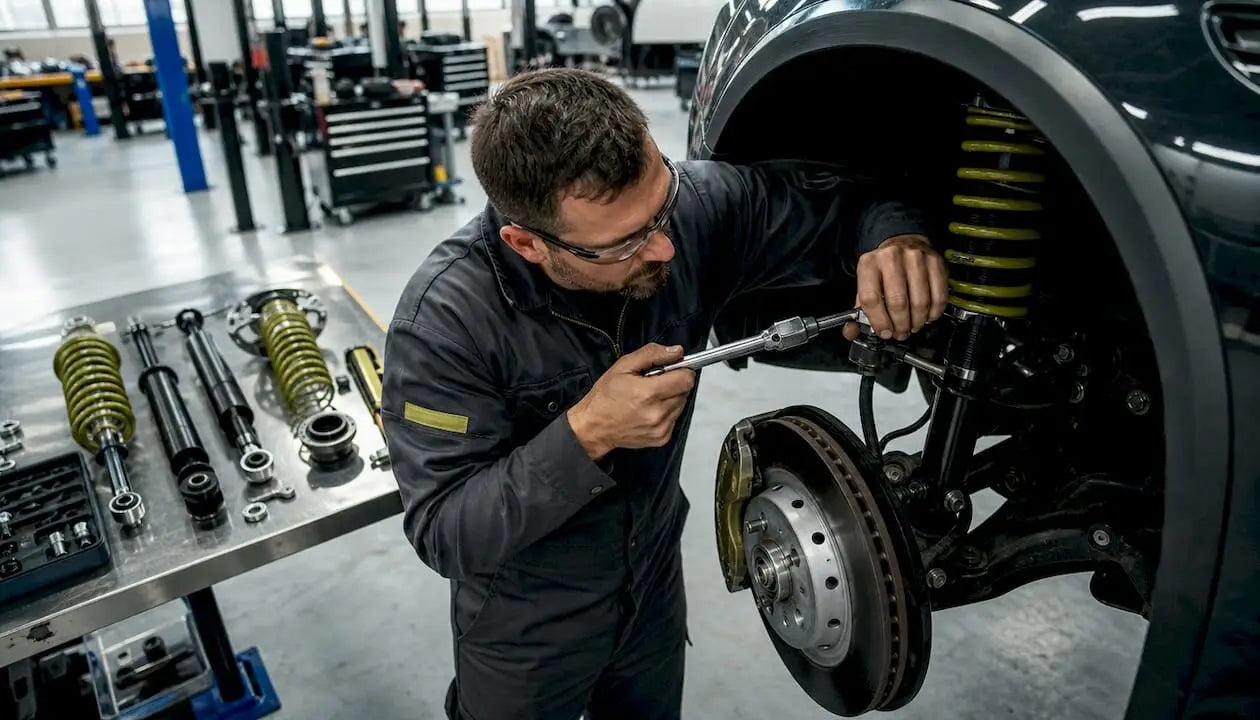
Car suspension upgrades are modifications that replace or supplement factory suspension components to improve handling, ride quality, or ground clearance. The main types of car suspension upgrades include lowering springs, coilovers, lift kits, sway bars, and control arms, each serving a distinct performance goal. Performance suspension, the industry term for this category of modifications, covers everything from budget street setups to full competition builds. Choosing the right upgrade depends on your driving style, budget, and whether you prioritize daily comfort, track performance, or off-road capability.
1. What are lowering springs and who should use them?
Lowering springs are the most accessible entry-level upgrade for street drivers. They replace your factory springs with shorter, stiffer units that drop ride height by 1–2 inches. Lowering springs cost $200–$400 for a set as of mid-2026, making them the go-to starting point for enthusiasts on a budget.
The core benefits are real and immediate:
- Lower center of gravity reduces body roll through corners
- Improved stance tightens up the wheel gap for a cleaner look
- Reduced understeer on most front-wheel-drive platforms
- Bolt-on installation with no specialized tools required
The limitations matter just as much. Lowering springs have a fixed ride height and spring rate. You cannot adjust them once installed. Running them on worn stock shocks accelerates shock wear and produces a bouncy, unsettled ride. If your shocks have more than 50,000 miles on them, replace them at the same time.
Pro Tip: Pair new lowering springs with fresh OEM-spec or performance shocks. Mismatching stiff springs with tired stock dampers is the fastest way to ruin both ride quality and your shock budget.
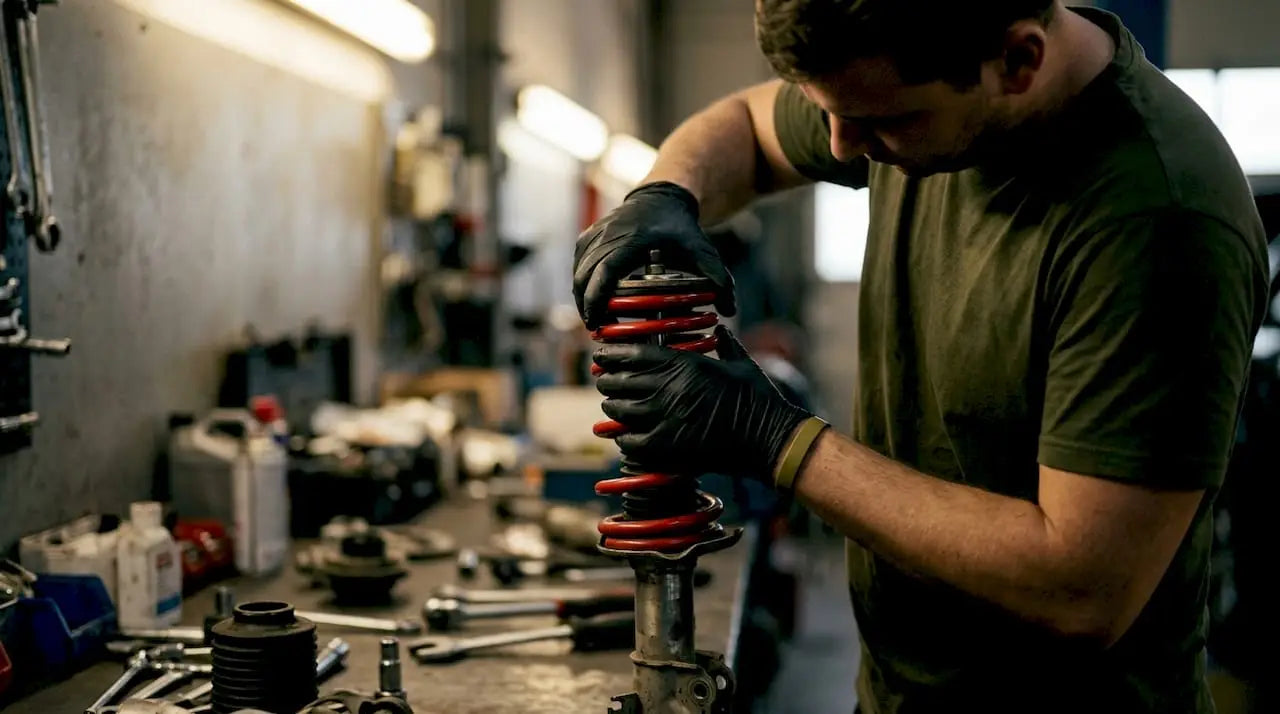
Lowering springs work best for street drivers who want a modest handling improvement without spending over $1,000 total. They are not the right tool for track days or aggressive canyon driving where adjustability matters.
2. How do coilovers work and why are they popular?
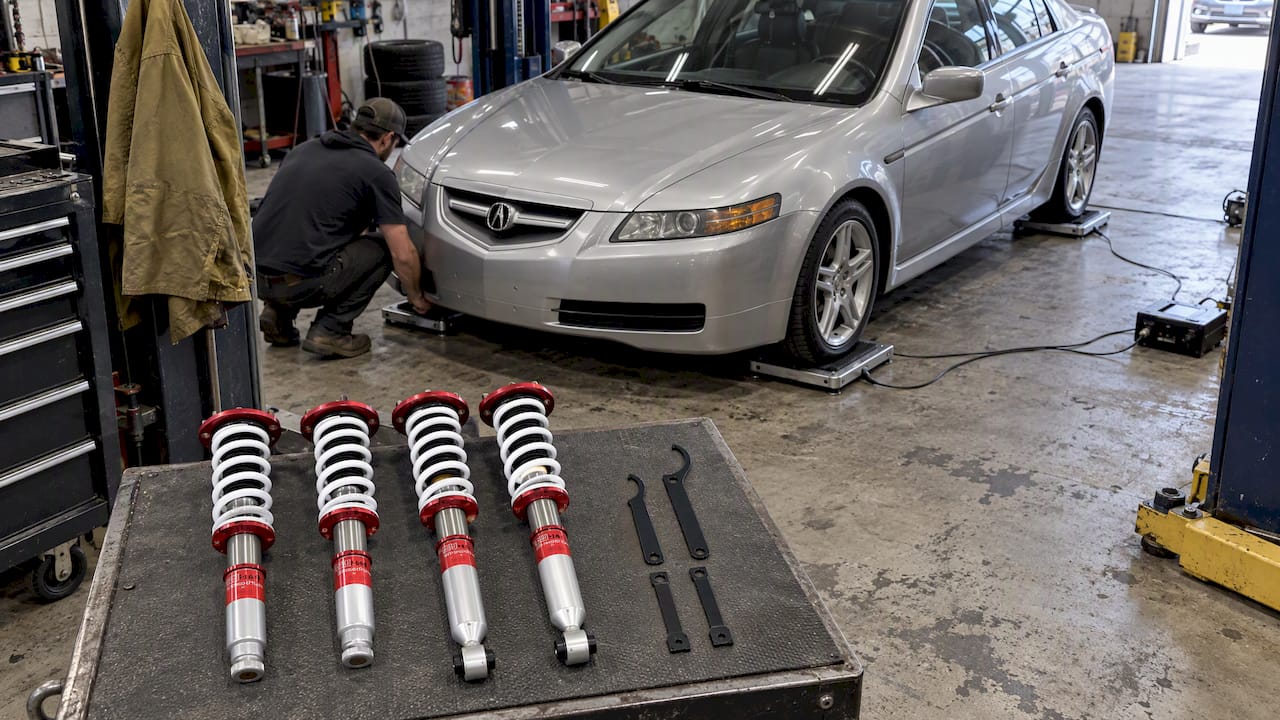
Coilovers combine a matched spring and damper into a single unit, with threaded collars that let you adjust ride height independently of spring rate. That adjustability is the reason coilovers dominate the enthusiast market. A properly tuned coilover setup can yield lap-time improvements of 1–2 seconds on short club circuits compared to stock suspension or lowering springs.
Coilover pricing breaks down into three clear tiers:
- Entry-level ($800–$1,200): Street-focused, softer spring rates, basic damping adjustment. Good for daily drivers wanting more control.
- Mid-tier ($1,500–$3,500): Multi-way adjustable damping, better valving, and higher-quality materials. The sweet spot for dual-purpose street and track use.
- Competition-level ($5,000+): Pillow ball mounts, remote reservoirs, and precision valving. Built for track-only or serious time attack builds.
Street coilovers prioritize noise isolation and softer spring rates. Track coilovers use pillow ball mounts and stiffer springs for precision, at a real cost to daily comfort and cabin noise. Know which category you actually need before spending.
Pro Tip: If you plan to track the car even twice a year, buy mid-tier coilovers from the start. Upgrading from entry-level to mid-tier later costs more than buying right the first time.
Coilovers are also rebuildable. Quality coilovers last 5–10 years with periodic maintenance, which makes the higher upfront cost a better long-term investment than replacing budget springs every few years. For a deeper look at how coilovers translate to real-world handling gains, the Civic coilover handling guide at Undergrounddynamics breaks it down by platform.
3. What are lift kits and when do they make sense?
Lift kits are the opposite of lowering springs. They raise the vehicle’s ride height to increase ground clearance and accommodate larger tires. Lift kits increase ground clearance by 2–6 inches, primarily for trucks and SUVs used off-road or with oversized tires.
The practical benefits for off-road builds are significant:
- Better approach and departure angles for clearing rocks, logs, and steep inclines
- Larger tire fitment for improved traction on loose surfaces
- Increased suspension travel for articulation over uneven terrain
- Improved visibility from a higher seating position
Lift kits are not a performance upgrade for street cars. Raising the center of gravity increases body roll and reduces cornering stability on pavement. If you drive a truck or SUV and spend time on trails, fire roads, or unpaved terrain, a lift kit is the right call. If you drive a sport compact or sedan, it is not.
Installation complexity varies by lift height. A 2-inch leveling kit is a straightforward bolt-on job. A 4–6 inch suspension lift requires new control arms, extended brake lines, and often a professional alignment on a specialized rack.
4. What roles do sway bars and control arms play?
Sway bars and control arms are supporting components that most enthusiasts overlook until they have already installed springs or coilovers. That is a mistake. Sway bars reduce body roll and improve cornering stability, while upgraded control arms strengthen the suspension and enhance travel range.
Here is how each component contributes:
| Component | Primary Function | Key Benefit |
|---|---|---|
| Sway bar (front) | Connects left and right suspension | Reduces understeer and body roll |
| Sway bar (rear) | Links rear suspension geometry | Improves cornering balance and rotation |
| Control arms | Connect suspension to chassis | Increases strength, travel, and geometry correction |
| End links | Connect sway bar to suspension | Maintains correct bar geometry at lowered ride heights |
Upgraded sway bars make the biggest difference on cars that have been lowered. Stock sway bar end links go out of their effective range when ride height drops, reducing the bar’s effectiveness. Adjustable end links restore proper geometry and let the bar do its job.
Control arm upgrades matter most on cars with high-mileage rubber bushings or on builds that need corrected camber geometry after lowering. Solid or polyurethane bushings sharpen steering response but add some NVH (noise, vibration, and harshness) to the cabin. That is a trade-off worth knowing before you buy.
5. Air suspension as a flexible alternative
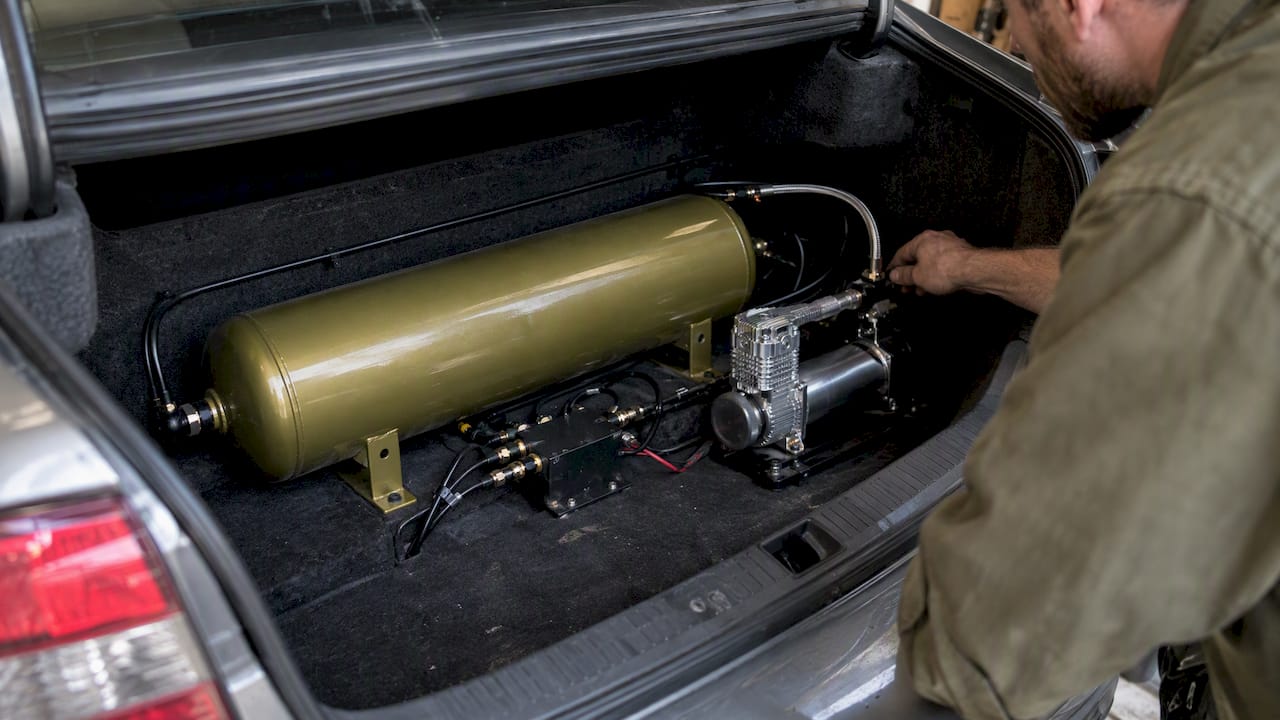
Air suspension uses air springs controlled by an electronic management system to adjust ride height on the fly. Air suspension combines comfort and adjustability for daily driving, with the ability to raise the car for speed bumps and drop it for shows or spirited driving.
The trade-offs are real. Air suspension requires more maintenance than coilovers. Compressors, air lines, and management systems add complexity and failure points. A complete air ride kit costs significantly more than a mid-tier coilover setup. For enthusiasts who want maximum stance flexibility and daily usability, it is worth the investment. For track-focused builds, coilovers remain the better tool.
Undergrounddynamics carries coilovers, air ride, and lowering springs with chassis-specific fitment data, so you can confirm compatibility before ordering.
6. How to choose the right suspension upgrade for your build
Matching your upgrade to your actual driving goals prevents wasted money and frustrating compromises. Performance suspension works as a system: shocks, springs, sway bars, and bushings must work together for the setup to perform as intended.
Use this framework to narrow your choice:
- Daily street driver on a budget: Lowering springs with fresh shocks. Total cost under $700. Modest handling improvement with no adjustability.
- Street and occasional track use: Entry-level to mid-tier coilovers with adjustable damping. Best balance of cost and flexibility.
- Dedicated track or time attack build: Competition coilovers with matched spring rates, pillow ball mounts, and a full alignment setup.
- Truck or SUV for off-road use: Lift kit sized to your tire and terrain requirements. Pair with upgraded shocks rated for the new travel range.
- Show car or daily with maximum stance flexibility: Air suspension with a quality management system and proper air line routing.
Alignment is non-negotiable after any suspension change. Custom camber, caster, and toe settings are required for lowered cars to avoid uneven tire wear and unsafe handling. Budget $150–$200 for a four-wheel alignment every time you change ride height. If you want a full checklist before you start wrenching, the suspension tuning checklist at Undergrounddynamics covers every step from spring selection to final alignment settings.
Pro Tip: Never skip the alignment after installing any suspension upgrade. A car that handles worse after a coilover install is almost always an alignment problem, not a parts problem.
If you are working on an Acura platform specifically, the Acura TL suspension upgrade list at Undergrounddynamics covers the top mods for 2026 with fitment-specific detail.
Key Takeaways
The most effective suspension upgrade matches your specific driving goals, with coilovers offering the best balance of adjustability and performance for most enthusiasts.
| Point | Details |
|---|---|
| Lowering springs are entry-level | Cost $200–$400 and suit street drivers wanting modest handling gains on a budget. |
| Coilovers offer the most flexibility | Adjustable ride height and damping make them the best choice for dual-purpose street and track use. |
| Lift kits serve off-road builds | Designed for trucks and SUVs needing 2–6 inches of added ground clearance. |
| Supporting components matter | Sway bars and control arms complete the setup and prevent handling imbalances after lowering. |
| Alignment is required every time | Custom camber, caster, and toe settings protect tires and restore safe handling after any suspension change. |
What I have learned after years of suspension builds
By Ismael
The most common mistake I see is enthusiasts buying the stiffest setup they can afford, then wondering why the car feels worse than stock. Over-stiffening reduces tire contact and grip on anything but a perfectly smooth track surface. A street car that corners brilliantly on a closed circuit but trampolines over every expansion joint is not a better car. It is just a more uncomfortable one.
My honest advice: build progressively. Start with a quality mid-tier coilover and spend the first season learning how damping adjustments change the car’s behavior. Most builders who rush straight to competition-spec setups never dial them in properly because they lack the baseline experience to know what they are adjusting toward.
The other thing nobody talks about enough is the relationship between springs and dampers. Mismatching stiff springs with stock shocks causes premature shock failure and a ride that feels broken rather than sporty. Match your components, get a proper alignment, and give the setup seat time before you start chasing more parts. The car will tell you what it needs next.
If you are dealing with steering feel changes after a suspension swap, noise from the front end is often a sign of stressed components. The power steering noise troubleshooting guide at Autotronics is worth reading before you assume the suspension is the only variable.
— Ismael
Suspension upgrades available at Undergrounddynamics
Undergrounddynamics stocks a focused catalog of suspension upgrades built around real fitment data and technical specs. Every product listing includes chassis-specific compatibility so you know what fits your car before you buy.

The suspension catalog covers coilovers, air ride systems, and lowering springs across a wide range of enthusiast platforms. Pricing runs from entry-level spring sets to mid-tier coilover kits, with specs listed clearly so you can compare spring rates and damping options without guessing. If you want to see the full range of performance parts beyond suspension, Undergrounddynamics carries chassis-specific components across aero, drivetrain, and handling categories.
FAQ
What is a performance suspension upgrade?
A performance suspension upgrade replaces factory springs, dampers, or supporting components with parts tuned for improved handling, cornering, or ride height control. The goal is better chassis behavior, not just a lower stance.
What are the best suspension upgrades for street cars?
Mid-tier coilovers with adjustable damping offer the best balance of street comfort and handling performance. Lowering springs are the right choice for budget-focused builds that do not require adjustability.
How long do coilovers last compared to lowering springs?
Quality coilovers last 5–10 years with periodic maintenance and are rebuildable, making them a better long-term investment than replacing lowering springs every few years.
Do I need an alignment after installing suspension upgrades?
Yes. Custom camber, caster, and toe settings are required after any suspension change to prevent uneven tire wear and restore safe handling. Budget for a four-wheel alignment every time you adjust ride height.
Can I mix coilovers with stock sway bars?
You can, but upgrading sway bar end links is strongly recommended after lowering. Stock end links go out of their effective range at lower ride heights, reducing the sway bar’s ability to control body roll.