FREE SHIPPING ON ORDERS OVER $150

Cart
0
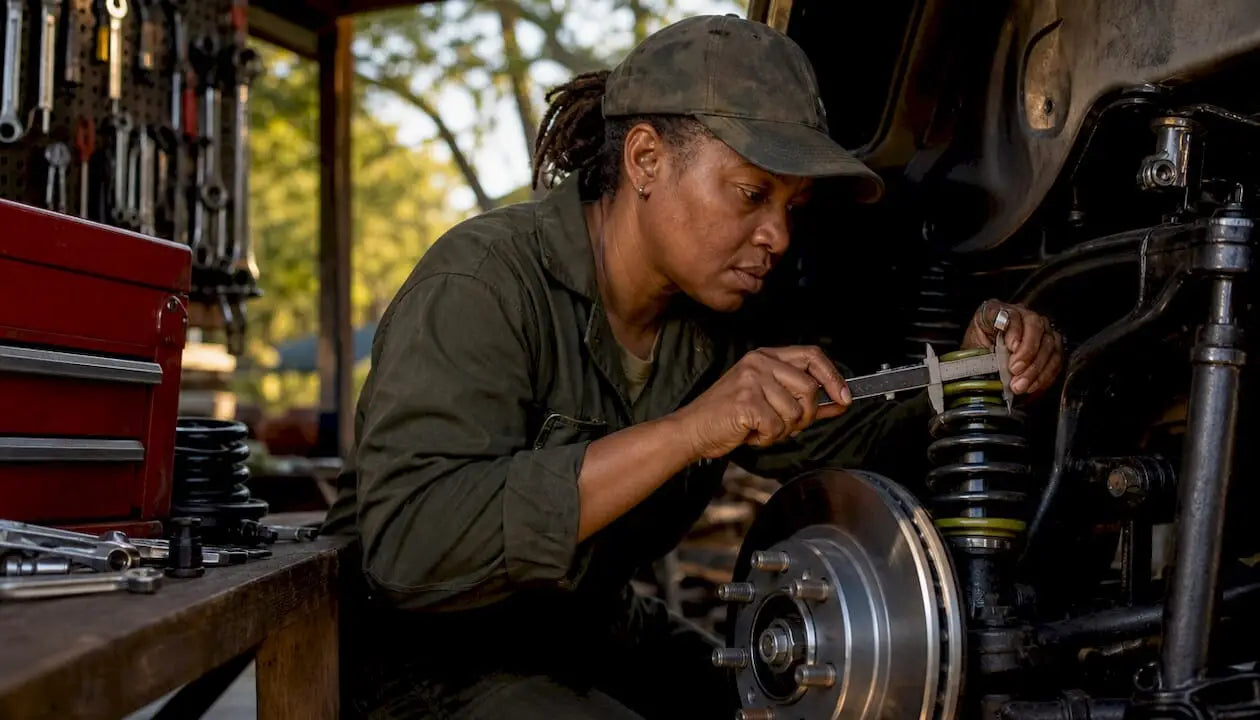
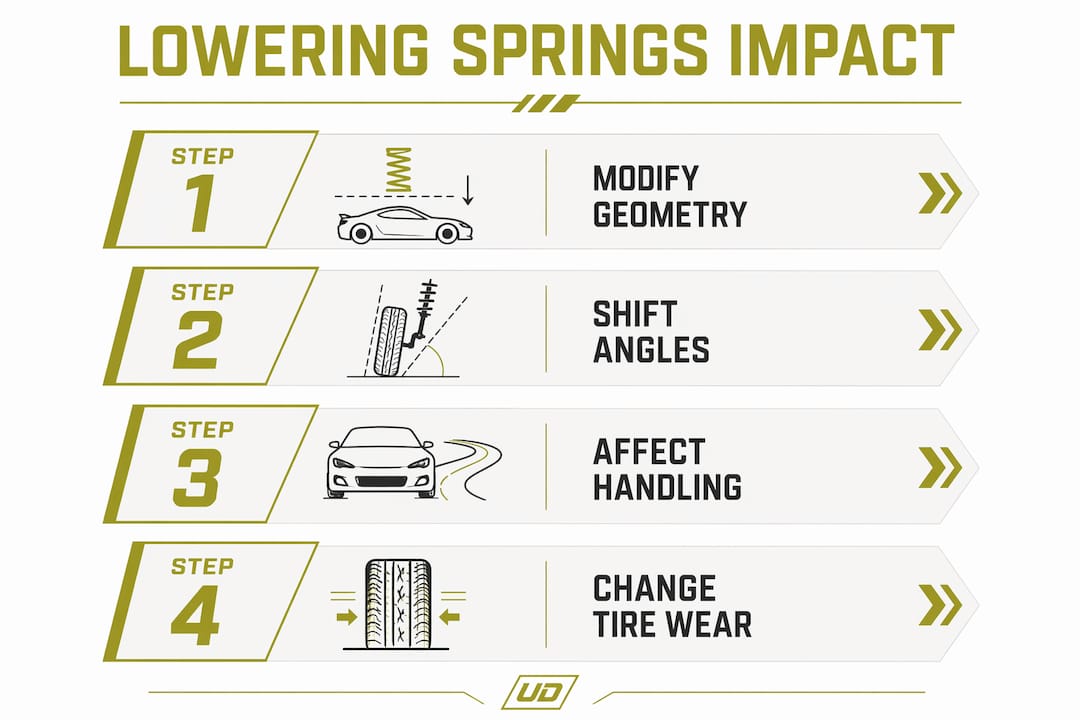
Lowering springs alter suspension geometry by forcing every suspension component to operate at a new angle the factory never intended. When you drop ride height, the control arms, tie rods, and struts all shift their working positions. That shift changes camber, caster, and toe simultaneously. The industry term for this collective effect is “static alignment change,” and it happens the moment your car settles onto shorter springs. A 1-inch drop shifts static camber by roughly 0.5 degrees, which sounds small until you realize it compounds across every corner of the car. Getting alignment corrected after lowering is not optional. It is the difference between a car that handles better and one that eats tires.
Why lowering springs alter suspension geometry: the core mechanics
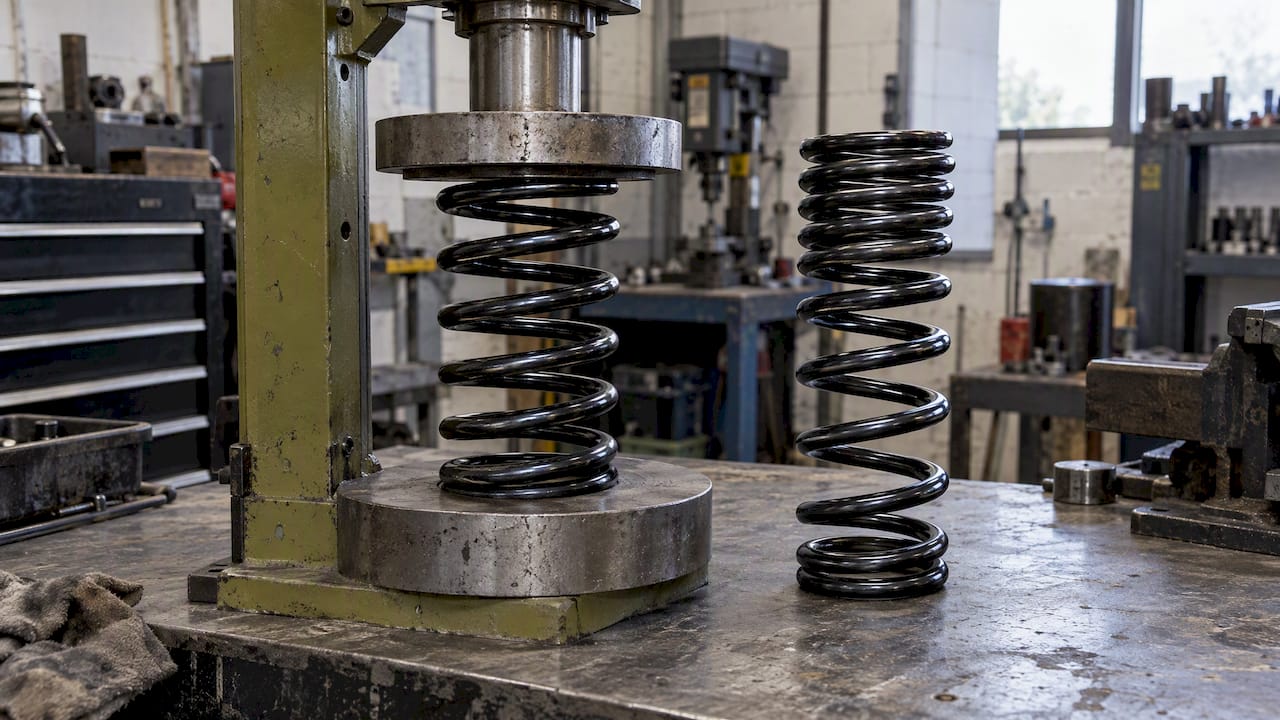
Lowering springs reduce ride height by replacing the factory spring with a shorter, stiffer unit. That shorter spring forces the suspension to sit lower in its travel arc. Every suspension link connected to the knuckle now operates at a steeper angle than it was designed for.
Camber is the first angle to move. Negative camber increases as the wheel tilts inward at the top. On a MacPherson strut setup, a 1-inch drop typically adds 0.5 degrees of negative camber per corner. That change improves cornering grip by keeping more tire on the road during body roll, but it accelerates inner tire wear if left uncorrected.
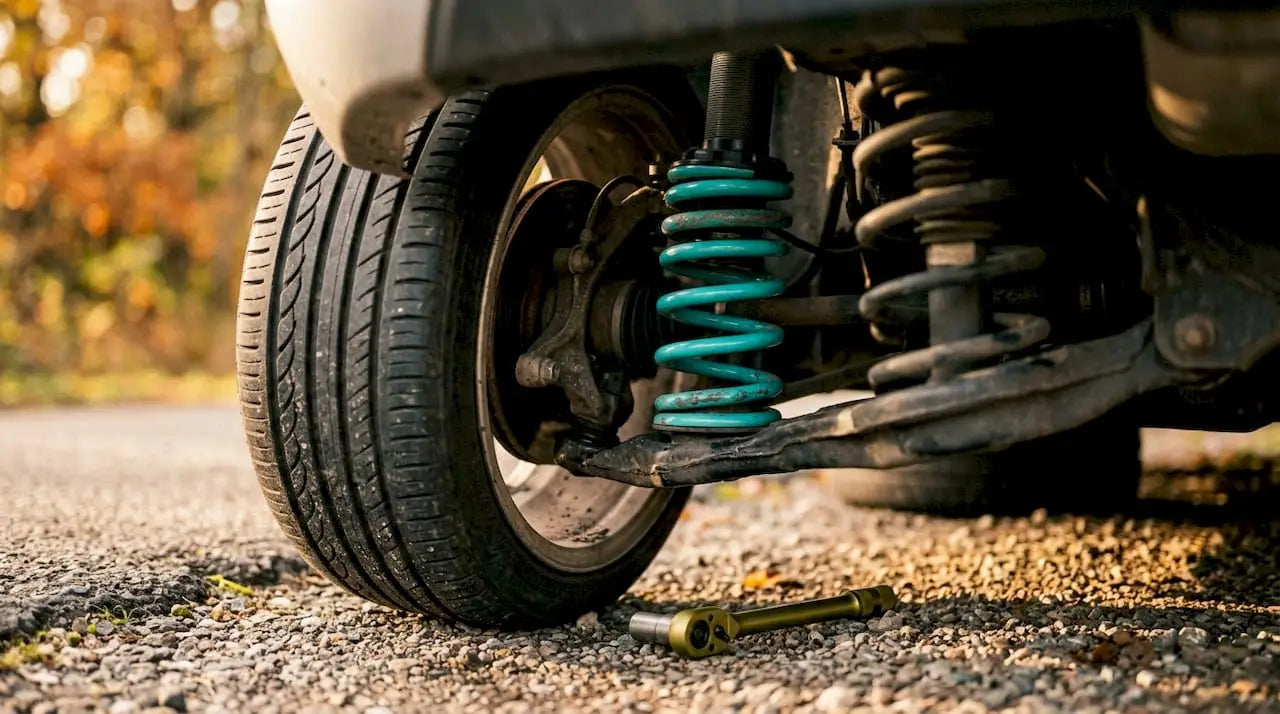
Caster shifts when the strut or control arm geometry changes its fore-aft angle. More positive caster generally improves straight-line stability and steering return, but the change is less predictable than camber and varies by platform. Some cars gain caster, some lose it.
Toe is the sneakiest change. As the suspension drops, the tie rod operates at a new angle relative to the control arm. That mismatch creates toe-out or toe-in depending on the geometry. Toe changes cause tire scrub, uneven wear, and a steering feel that ranges from vague to outright nervous.
- Camber: increases in the negative direction, improving cornering but risking inner tire wear
- Caster: shifts fore-aft, affecting steering feel and straight-line tracking
- Toe: changes due to tie rod angle mismatch, causing scrub and alignment drift
- Roll center: drops more drastically than the center of gravity, increasing body roll tendency if uncorrected
- Jounce travel: reduced suspension travel causes more frequent bump stop engagement
Pro Tip: Before installing lowering springs, photograph your current alignment printout. That baseline tells you exactly how far each angle has shifted post-install, which makes the alignment shop’s job faster and your results more repeatable.
How do geometry changes affect handling and tire wear?
The practical effects of altered suspension geometry show up fast. Cornering grip often improves initially because controlled negative camber keeps the tire contact patch flatter during cornering load. That is the benefit side of the equation.
The cost shows up in a few specific ways:
- Inner tire wear. Excessive negative camber loads the inner edge of the tire under straight-line driving. If camber runs beyond the recommended range without correction, you can wear through an inner tire in half the normal mileage.
- Harsh ride. Reduced jounce travel means the suspension hits its bump stops sooner. When that happens, the car suddenly feels like it has no suspension at all. Rough pavement becomes a real problem.
- Nervous steering. Toe changes from the new geometry create a car that darts or wanders. Drivers often describe it as “twitchy” at highway speed.
- Reduced braking traction. A smaller or unevenly loaded contact patch reduces the friction available during hard braking. This is the geometry change most tuners underestimate.
- Unpredictable oversteer or understeer. Roll center drop increases the moment arm for body roll. More body roll shifts weight transfer faster and less predictably, which changes the car’s balance mid-corner.
Lowering a car without correcting the geometry is like sharpening one side of a knife. You get a result, but not the one you wanted. The car feels faster in some corners and completely wrong in others. Alignment and roll center correction are what turn a lowered car into a properly handling one.
Alignment after lowering is non-optional because suspension arms and linkages operate at entirely new angles. Skipping it means you are driving a car with geometry the factory never validated.
Why alignment and suspension tuning are critical after lowering
Static alignment angles shift significantly the moment you install lowering springs. The car needs a full four-wheel alignment immediately after the install, not weeks later when the tires are already showing wear.
The industry-recommended front negative camber for lowered vehicles runs from negative 1.5° to negative 2.5° for most performance applications. That range keeps the tire working efficiently in corners without destroying the inner edge on the street. Rear camber targets vary by platform but generally follow a similar logic.
| Alignment angle | Factory target (typical) | Post-lowering target (performance) |
|---|---|---|
| Front camber | 0° to -0.5° | -1.5° to -2.5° |
| Rear camber | 0° to -0.5° | -1.0° to -2.0° |
| Front toe | 0° to +0.1° | 0° to +0.05° |
| Rear toe | +0.1° to +0.2° | +0.1° to +0.2° |
| Caster | +4° to +6° | +5° to +7° (platform dependent) |
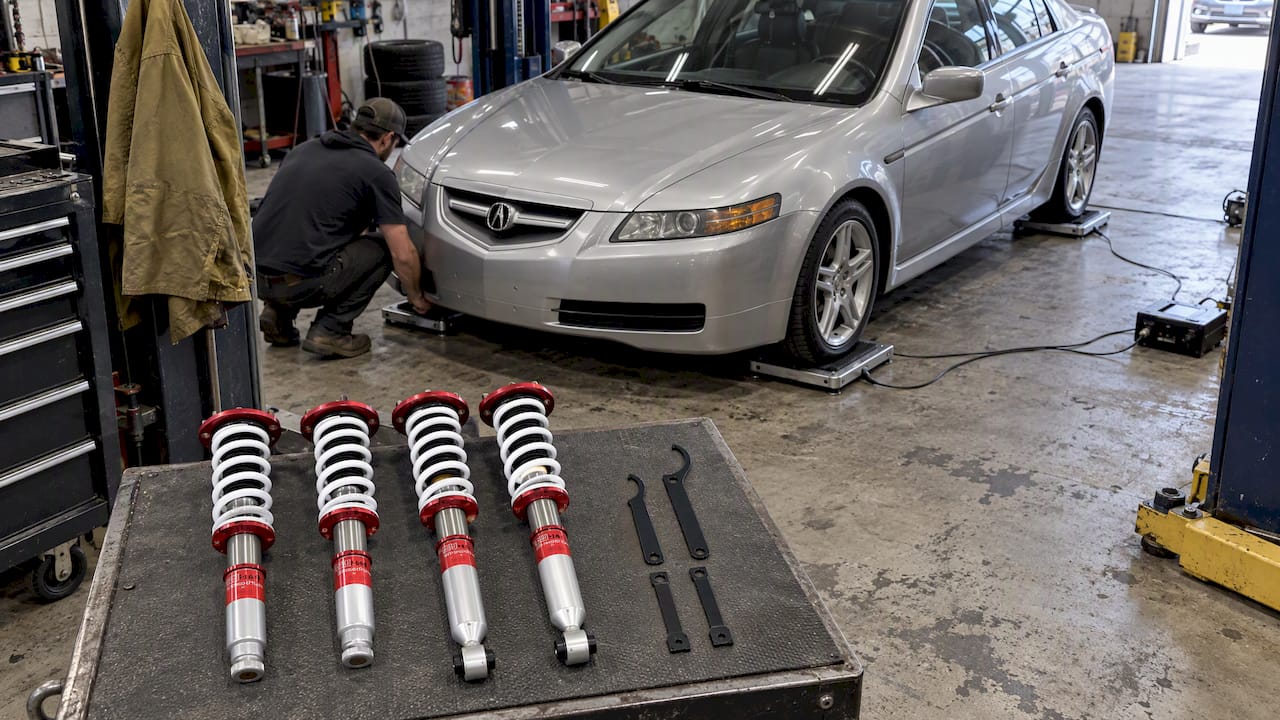
Damper matching matters just as much as alignment. Lowering springs on factory dampers not valved for the increased spring rate cause premature damper failure and a ride quality that gets worse over time, not better. The factory damper is tuned to work with the factory spring rate. A stiffer spring needs a damper with matching compression and rebound valving.
Properly matched spring and damper systems maintain both handling improvement and ride quality after lowering. That is the system approach, and it is the only one that works long-term.
Pro Tip: When booking your alignment, ask specifically for a “performance alignment” and bring your target numbers. A generic alignment to factory spec on a lowered car is money wasted. The shop needs to know you want negative camber dialed in, not zeroed out.
You can also use a dedicated alignment tool to verify camber and caster settings at home between shop visits, especially useful after track days when geometry can shift.
Common pitfalls and misconceptions about lowering springs
Most of the problems tuners run into with lowering springs come from one of a handful of repeatable mistakes. Knowing them in advance saves you money and seat time.
- “Lowering always improves handling.” Not automatically. Excessive lowering without roll center correction causes harsh ride and poor handling despite the car looking faster. The geometry has to be corrected, not just the height.
- Ignoring roll center drop. Roll center drop can cause increased body roll and reduced stability if not addressed. Many tuners focus entirely on camber and miss this entirely.
- Misunderstanding bump stops. Loss of jounce travel increases bump stop usage, causing a sudden stiff suspension response that reduces ride comfort and consistent tire loading. Trimming or replacing bump stops is often necessary after lowering.
- Running factory dampers with stiffer springs. This is the most expensive mistake. The damper wears out faster, the ride gets worse, and you end up replacing parts twice.
- Thinking alignment fixes everything. Alignment corrects static angles. It does not fix roll center drop, bump stop interference, or a damper that cannot control the new spring rate. Those require hardware changes.
- Going too low. Moderate lowering, typically 1 to 1.5 inches on a street car, retains enough suspension travel for real-world grip and predictability. Extreme drops sacrifice compliance for stance.
A suspension tuning checklist helps you work through each of these variables systematically before and after the install.
Key Takeaways
Lowering springs improve handling only when geometry corrections, damper matching, and alignment are completed as a system, not as afterthoughts.
| Point | Details |
|---|---|
| Camber shifts immediately | A 1-inch drop adds roughly 0.5° of negative camber per corner, requiring alignment. |
| Roll center drops faster than CoG | Uncorrected roll center drop increases body roll and reduces mid-corner stability. |
| Dampers must match spring rate | Factory dampers fail prematurely when paired with stiffer lowering springs. |
| Alignment targets change | Performance-lowered cars need front camber between -1.5° and -2.5°, not factory spec. |
| Moderate lowering outperforms extreme drops | A 1–1.5 inch drop retains suspension travel and delivers better real-world grip. |
What most tuners get wrong about lowering springs
I have seen a lot of builds come through with lowering springs installed and zero follow-up work done. The car sits lower, looks great in photos, and then the owner wonders why it feels worse on the street than stock. The geometry changed. Nothing else did.
The biggest thing I keep coming back to is the system mindset. Springs, dampers, alignment, and roll center correction are one system. Pull one piece out and the others cannot compensate. I have watched tuners spend good money on quality springs and then bolt them onto worn factory struts. The result is a car that crashes over bumps and wears tires in six months.
My honest advice: if your budget does not cover springs plus matched dampers plus a proper alignment, wait until it does. A half-finished suspension setup is not a performance upgrade. It is a liability. The sweet spot for most street-driven builds is a 1 to 1.5-inch drop with dampers valved for the new spring rate and a full alignment to performance targets. That combination gives you real handling gains without turning the car into a punishment device on anything but smooth pavement.
The shocks and struts replacement side of the equation gets skipped more than any other step. Do not skip it.
— Ismael
Suspension upgrades built for tuners who want real results
Lowering your car correctly takes more than a spring swap. It takes matched components, the right specs, and parts sourced from suppliers who understand what performance actually means.

Undergrounddynamics carries lowering springs, coilovers, and air suspension options selected for enthusiast builds, with real fitment detail and technical specs so you know what you are buying before it ships. Every product in the suspension catalog is chosen with component compatibility in mind. You can also browse the full performance parts catalog for alignment tools, drivetrain upgrades, and chassis components that work together as a system. If you are building a car that handles as well as it looks, this is where to start.
FAQ
What angles change when you install lowering springs?
Lowering springs alter camber, caster, and toe simultaneously because every suspension link operates at a new angle after the ride height drops. A 1-inch drop typically adds about 0.5° of negative camber per corner.
Do you always need an alignment after lowering springs?
Yes. Alignment is non-optional after lowering because the new ride height shifts camber, caster, and toe away from factory spec, affecting both tire wear and steering response.
Can factory dampers work with lowering springs?
Factory dampers are not valved for the increased spring rate of lowering springs. Running them together causes premature damper wear and a ride quality that degrades quickly.
How much negative camber is correct for a lowered car?
The recommended front negative camber for most lowered performance vehicles runs from -1.5° to -2.5°. That range improves cornering grip without accelerating inner tire wear under normal driving.
Why does my car ride harsher after lowering springs?
Reduced jounce travel causes the suspension to engage the bump stops more frequently. When the bump stop engages, the effective spring rate spikes suddenly, creating the harsh, jarring feel most drivers notice on rough roads.
Recommended
- Acura TL Suspension Upgrade List: Top Mods for 2026 – Underground Dynamics
- Suspension Tuning Checklist for Experienced Builders – Underground Dynamics
- Why Civic Coilovers Improve Handling: A Real Driver’s Guide – Underground Dynamics
- Why Coilover Damping Matters for Faster Lap Times – Underground Dynamics