FREE SHIPPING ON ORDERS OVER $150

Cart
0

Carbon fiber parts are the most effective material choice for Miata weight reduction, cutting component mass by 30–70% compared to OEM steel or aluminum. The Mazda Miata already starts life as a lightweight sports car, but every pound you strip from it sharpens throttle response, tightens cornering, and drops lap times. Understanding why carbon parts suit Miata weight goals means knowing the difference between manufacturing methods like dry carbon and wet layup, which parts deliver the biggest gains, and how to match your choices to your actual build intent.
Why carbon parts suit Miata weight goals better than any other material
Carbon fiber reinforced polymer, the industry term for what enthusiasts call “carbon fiber,” has a density of roughly 1.5–1.8 g/cm³. Steel sits above 7.8 g/cm³, and aluminum lands around 2.7 g/cm³. That gap is why a carbon hood weighs a fraction of its steel counterpart while holding its shape under stress.
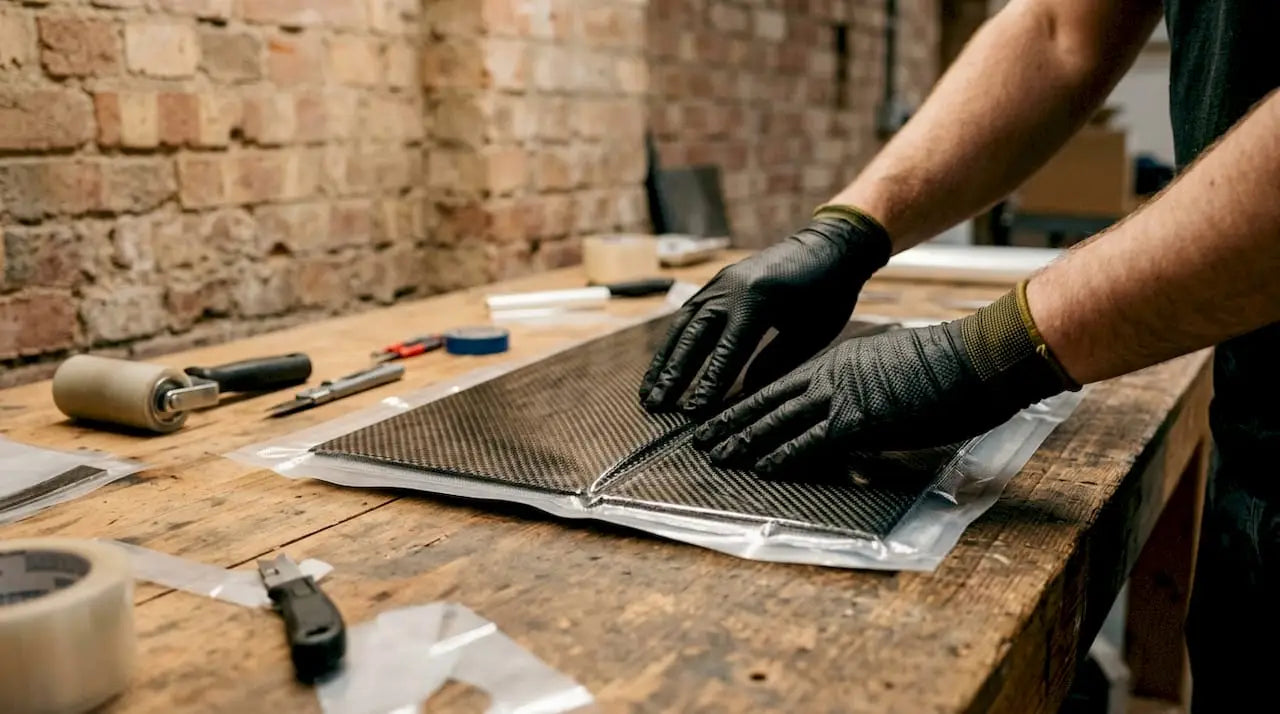
The way carbon fiber is manufactured determines how much of that weight advantage you actually capture. Dry carbon uses pre-preg material, which is carbon fabric pre-impregnated with resin, cured under heat and pressure in an autoclave. Dry carbon parts are 20–40% lighter than wet layup parts of the same size. Wet layup applies resin by hand, leaving more excess resin and air voids in the finished part. The result is heavier and less consistent.
Fiber orientation also matters. Engineers arrange carbon plies at specific angles to maximize stiffness exactly where the part needs it. A hood built with 0/90 and ±45 degree ply orientations resists both bending and torsion without adding unnecessary material. That targeted design is something you simply cannot replicate with stamped steel or cast aluminum.
Pro Tip: Vacuum-bagged dry carbon minimizes resin content and air voids, producing parts with OEM-level surface finish and superior strength-to-weight ratios. If a supplier cannot tell you whether their parts are vacuum-bagged, assume they are not.
| Material | Density (g/cm³) | Weight vs. OEM Steel | Typical Application |
|---|---|---|---|
| Stamped steel | 7.8+ | Baseline | OEM body panels |
| Cast aluminum | 2.7+ | 50–65% lighter than steel | OEM hoods, suspension |
| Wet layup carbon | ~1.8 | 70–75% lighter than steel | Entry-level aero parts |
| Dry carbon (prepreg) | ~1.5 | Up to 80% lighter than steel | Performance and race parts |
Which Miata parts deliver the most weight savings?
Not all weight is equal on a Miata. Unsprung and rotational weight reductions deliver disproportionately large handling improvements compared to removing the same mass from the cabin or chassis. A pound removed from a wheel or suspension component improves suspension response more than a pound removed from a seat.
That said, body panels are where carbon fiber delivers the largest absolute mass reductions. Here is where to focus:
- Hood: A carbon hood typically saves 15–25 lbs over a steel OEM hood. It also lowers the center of gravity slightly by removing weight from the nose.
- Hardtop or roof: A carbon fiber hardtop weighs approximately 13 lbs, saving about 7 lbs over a fiberglass equivalent. Removing weight from the roofline directly improves roll dynamics.
- Trunk lid: Carbon trunk lids save meaningful mass from the rear, which helps balance the front-to-rear weight distribution on a Miata.
- Fenders: Wide-body carbon fenders replace heavy steel units and often weigh less than fiberglass alternatives.
- Aerodynamic add-ons: Carbon splitters, diffusers, and wings add downforce without the weight penalty of fiberglass or polyurethane versions.
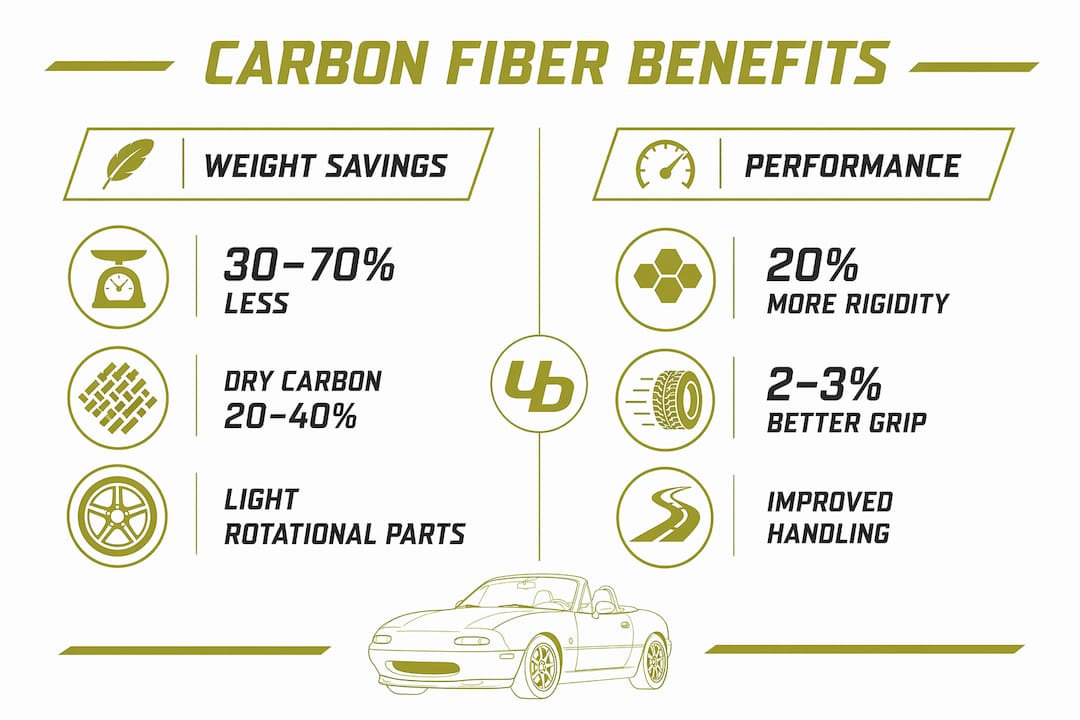
Strategic carbon reinforcement can increase torsional rigidity by about 20%, improving cornering grip by 2–3% and reducing lap times by 0.2–0.4 seconds. On a tight autocross or track day course, that is a real, measurable gain.
Race engineers consistently point to rotational weight reduction as the highest-leverage modification for Miata handling. A lightweight flywheel paired with carbon body panels compounds the benefit. The Undergrounddynamics catalog includes options like the ACT XACT Streetlite Flywheel for NA and NB Miatas, which targets exactly this rotational mass reduction.
How do carbon fiber choices align with your budget and build goals?
Carbon fiber parts range from affordable wet layup aero pieces to expensive dry carbon panels. Knowing when to spend more matters as much as knowing what to buy.
Dry carbon is the right call for track-focused builds where every gram counts. For builds with a weight-to-power ratio below 7 kg/hp, carbon fiber delivers real-world performance gains that justify the cost. If your Miata is a street car you occasionally take to track days, wet layup carbon still cuts significant weight at a lower price point.
Pro Tip: Prioritize carbon parts by location first. Roof, hood, and wheels give you the most return per dollar spent. Save the cosmetic carbon interior trim for after you have addressed the high-leverage structural pieces.
A few practical considerations before you buy:
- Fitment validation: Always confirm the part is chassis-specific. A hood listed as “universal fit” is a red flag. Undergrounddynamics lists fitment by chassis code so you know exactly what you are getting.
- Supplier quality: Ask whether parts are vacuum-bagged and whether the seller can provide thickness and weight specs. Vague answers mean vague quality.
- Insurance: Declared carbon fiber modifications can raise insurance premiums by 8–12% due to higher repair and replacement costs. Factor that into your total ownership math.
- Build intent: A show car benefits from the visual appeal of exposed carbon weave. A time-attack car needs the lightest part regardless of finish. These are different products.
Avoiding common tuning pitfalls like mismatched component choices is especially relevant when mixing carbon aero with suspension and powertrain upgrades. The parts need to work as a system, not as a collection of individual mods.
What to expect from carbon fiber parts over time
Carbon fiber is not maintenance-free. Impact damage to composite parts is often irreparable in the way a dented metal panel is not. A steel fender takes a hit and dents. A carbon fender takes the same hit and may crack or delaminate. Repair requires specialized composite work, not a body shop with a hammer.
Here is what long-term carbon ownership looks like on a Miata:
- UV protection: Exposed carbon weave degrades under UV light. Clear coat or a UV-protective film extends the life of the finish significantly.
- Inspection routine: Check mounting points and edges after every track event. Cracks propagate from stress points, and catching them early prevents full panel replacement.
- Cleaning: Use pH-neutral soap and avoid abrasive compounds on bare carbon. Wax or sealant every few months protects the clear coat.
- Climate: Extreme heat cycles, common on track days, can stress the resin matrix over time. Dry carbon handles thermal cycling better than wet layup parts.
Weight distribution stays consistent with carbon parts because the material does not fatigue or deform the way metal does under repeated stress. That consistency is one of the underrated advantages of carbon fiber for track use. Your Miata handles the same at the end of a season as it did at the start.
Key Takeaways
Carbon fiber parts reduce Miata weight by 30–70% over OEM steel, with dry carbon delivering an additional 20–40% mass advantage over wet layup, making it the definitive material choice for performance-focused builds.
| Point | Details |
|---|---|
| Weight savings range | Carbon parts cut 30–70% mass vs. OEM steel; dry carbon is 20–40% lighter than wet layup. |
| Highest-leverage locations | Hood, hardtop, and rotational components like flywheels deliver the most handling return per pound saved. |
| Dry vs. wet carbon | Dry carbon suits track builds; wet layup is a cost-effective option for street-driven Miatas. |
| Insurance and ownership costs | Carbon mods can raise insurance premiums by 8–12%; factor repair costs into your budget. |
| Fitment and quality | Always buy chassis-specific parts with documented weight specs and vacuum-bag construction. |
The part most builders get wrong
I have seen a lot of Miata builds prioritize carbon interior trim and a carbon steering wheel cover before touching the hood or roof. It looks great in photos. It does almost nothing for lap times.
The weight you remove from high and heavy locations, the roof, the hood, the nose, changes how the car rotates and responds. A carbon hardtop saving 7 lbs from the roofline does more for your cornering confidence than 3 lbs of carbon trim scattered across the cabin. The physics are not subtle.
The other mistake I see constantly is buying cheap wet layup parts and expecting dry carbon performance. Wet layup carbon is a legitimate product for street builds on a budget. But if you are running a time-attack setup and your weight-to-power ratio is already below 7 kg/hp, the extra cost of dry carbon pays back in consistency and actual mass reduction. Spending $400 on a wet layup hood when a dry carbon unit is available for $650 is false economy at that level.
Match the material to the mission. If you are building a weekend track car, go dry carbon on the panels that matter most and use fiberglass where the weight difference is small. If you are building a street car that sees occasional spirited driving, wet layup carbon still beats steel every time. The Undergrounddynamics build projects page shows real examples of how builders have approached these trade-offs on actual cars.
— Ismael
Carbon fiber and performance parts for your Miata build
Undergrounddynamics carries a focused catalog of carbon fiber body kits and aero components built for Miata owners who want real weight reduction, not just visual upgrades. Every part in the catalog includes chassis-specific fitment data and material specs so you know exactly what you are ordering.

Beyond aero, the performance parts section covers lightweight flywheels, suspension upgrades, and complementary components that work alongside carbon body panels to reduce both sprung and rotational mass. If you are serious about hitting a weight target on your Miata, the catalog gives you a clear path from hood to flywheel without guessing at fitment.
FAQ
How much weight can carbon fiber parts save on a Miata?
Carbon fiber parts typically reduce component mass by 30–70% compared to OEM steel or aluminum equivalents. A carbon hardtop alone saves approximately 7 lbs over a fiberglass version.
What is the difference between dry carbon and wet carbon for Miata parts?
Dry carbon uses pre-preg material cured in an autoclave, making it 20–40% lighter and stiffer than wet layup carbon. Wet layup is more affordable and suits street builds; dry carbon is the right choice for track-focused Miatas.
Which Miata parts benefit most from carbon fiber?
The hood, hardtop, trunk lid, and fenders deliver the largest absolute weight savings. Rotational components like lightweight flywheels compound the handling benefit beyond what body panels alone can achieve.
Does carbon fiber affect Miata handling beyond just weight?
Yes. Strategic carbon reinforcement can increase torsional rigidity by about 20%, improving cornering grip by 2–3% and reducing lap times by 0.2–0.4 seconds on track.
Do carbon fiber mods affect Miata insurance costs?
Declared carbon fiber modifications can increase insurance premiums by 8–12% due to higher repair and replacement valuations. Always notify your insurer when adding significant carbon components.