FREE SHIPPING ON ORDERS OVER $150

Cart
0
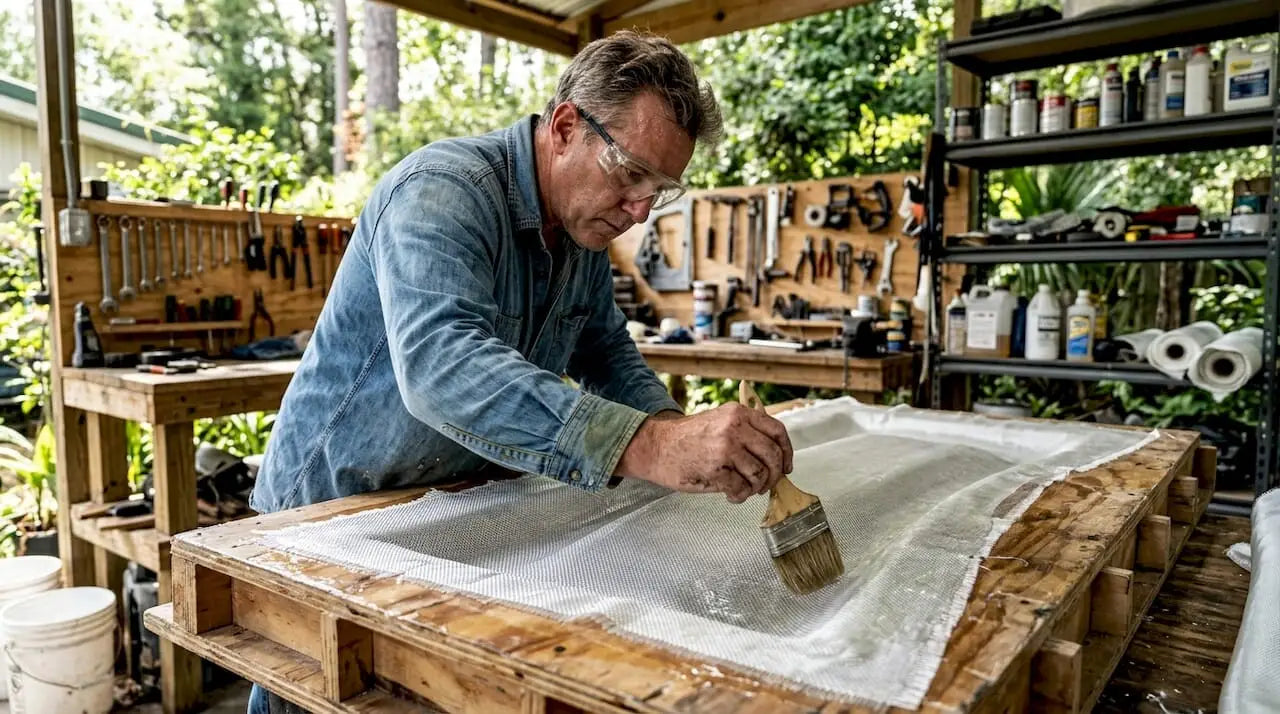
Fiberglass is defined as a composite material made from woven or chopped glass fibers embedded in a polymer resin, and it is the dominant material choice for custom and low-volume car builds. Car builders choose fiberglass because it delivers a 60–75% weight reduction compared to steel while maintaining comparable tensile strength. The tooling costs for fiberglass molds run significantly lower than steel stamping dies, which makes the material practical for builders working outside of mass production. The 1953 Chevrolet Corvette proved this formula first, becoming the first mass-production fiberglass body in automotive history.
Why car builders choose fiberglass: weight, strength, and performance
Fiberglass composites deliver a strength-to-weight ratio that steel and aluminum simply cannot match at the same price point. Pultruded fiberglass composites achieve 60–75% weight savings over steel with comparable structural performance. That reduction translates directly into faster acceleration, shorter braking distances, and more responsive handling.
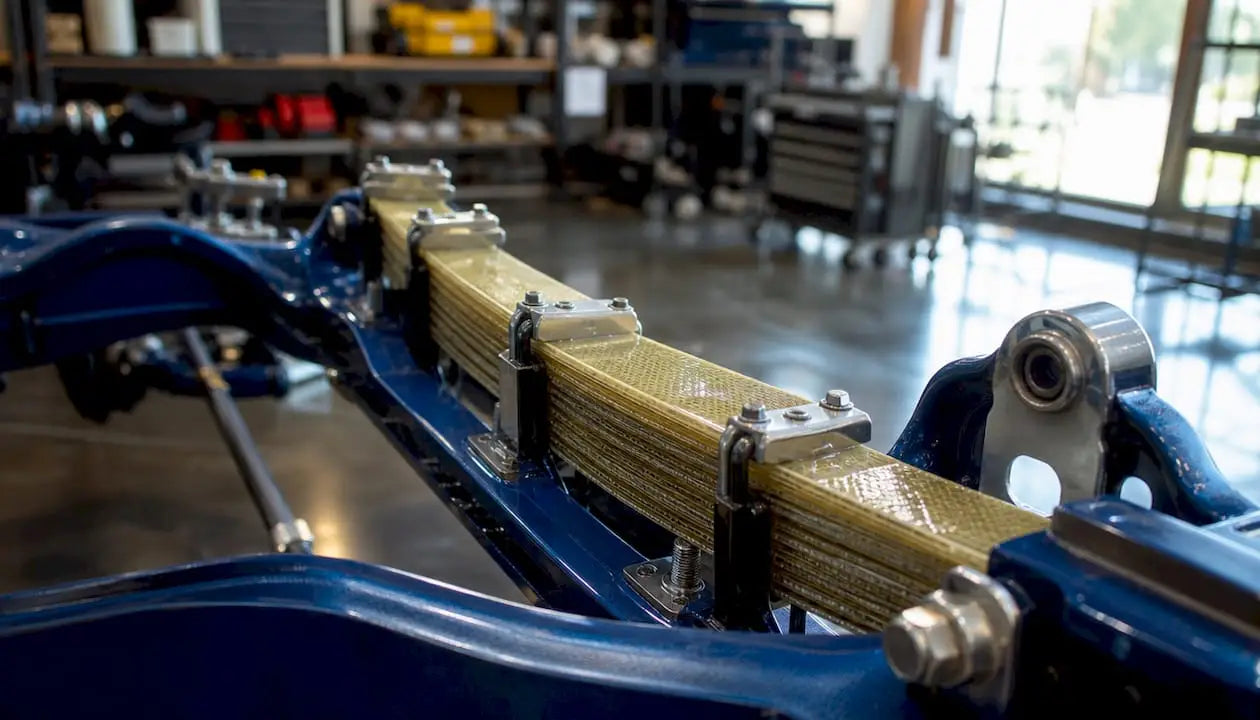
The gains go beyond body panels. Glass fiber reinforced polymer leaf springs are over 70% lighter than their steel equivalents. Less unsprung mass means the suspension tracks road surfaces more accurately, which is exactly what you want on a track day or a tight canyon road.
Fiberglass also benefits electric vehicle builders. Lighter body structures extend range without requiring a larger battery pack. For builders chasing better fuel economy improvements, a fiberglass hood or front clip can shave meaningful pounds from the nose of the car.
The material’s anisotropic nature is the real engineering advantage. Fiber orientation can be engineered to place strength exactly where loads occur, rather than adding uniform thickness everywhere. That precision is what separates a well-built fiberglass panel from a heavy, brittle one.
- Weight savings: 60–75% lighter than steel in structural applications
- Unsprung mass: Fiberglass leaf springs cut suspension weight by over 70%
- Strength placement: Fiber orientation targets load paths, not overall thickness
- EV and fuel economy: Lighter bodies extend range and reduce fuel consumption
How do tooling costs make fiberglass affordable for custom builds?
Fiberglass molds cost a fraction of what steel stamping dies require. A steel die for a production body panel can cost hundreds of thousands of dollars and takes months to machine. A fiberglass mold can be pulled from a plug in days and costs far less, which is why fiberglass molds remain the standard for low-volume production.
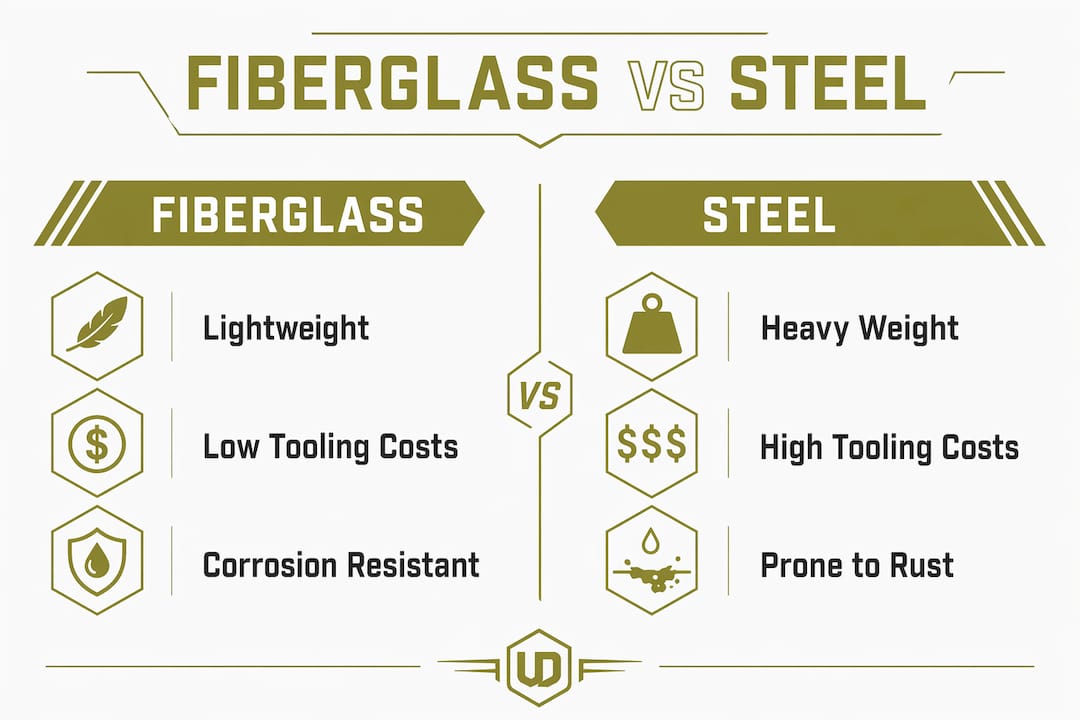
That cost gap changes everything for the custom builder. You can afford to iterate. If a fender shape needs adjustment, you modify the plug and pull a new mold. With steel tooling, a design change means scrapping expensive dies and starting over.
The economics also keep aftermarket parts affordable. Body kits, wide-body fenders, and custom hoods reach the market at prices builders can actually budget for, rather than prices that only make sense at 10,000-unit production runs.
Here is what the tooling advantage delivers in practice:
- Lower entry cost: Mold production requires far less capital than metal stamping
- Faster iteration: Design changes happen in days, not months
- Complex shapes: Fiberglass molds capture curves and undercuts that metal stamping cannot
- Affordable aftermarket: Low tooling costs keep part prices within reach for enthusiast builds
What are the durability and maintenance realities of fiberglass body parts?
Fiberglass is corrosion-resistant by nature. Salt air, road moisture, and humidity do not rust it the way they attack bare steel. That makes it a practical choice for coastal builds and cars that see wet conditions regularly.
The weak points are UV exposure and impact behavior. Fiberglass is prone to UV degradation and gel coat peeling without proper protection. A quality UV-resistant clear coat or regular waxing schedule keeps the surface intact, but you cannot ignore it the way you might with a painted steel panel.
Impact damage behaves differently than metal damage. Steel dents and deforms. Fiberglass cracks and fractures. The repair process requires grinding, patching with resin and mat, and refinishing. It is not harder than metal repair, but it is different, and you need the right materials on hand.
Here is a numbered maintenance checklist for fiberglass body panels:
- Inspect gel coat annually for crazing, peeling, or UV fade
- Apply UV-resistant clear coat or wax every six months in high-sun climates
- Check mounting points for stress cracks after track use or rough roads
- Repair cracks immediately with fiberglass resin and mat before they propagate
- Seal all edges during installation to prevent moisture intrusion at panel gaps
Pro Tip: Apply a self-etching primer to all bare fiberglass edges before painting. It prevents moisture from wicking into the laminate and causing delamination from the inside out.
Fiberglass performs well in dry and coastal climates with consistent care. The maintenance routine is different from metal, not harder, but you need to commit to it.
How to engineer fiberglass panels for maximum strength
Strength in a fiberglass panel comes from material placement, not raw thickness. Woven fiberglass cloth in load-bearing areas provides rigidity and directional strength. Chopped strand mat handles complex curves and transitions where woven cloth would bridge or wrinkle. Using the right material in the right location is what separates a panel that lasts from one that cracks at the first hard corner.
The laminate schedule matters as much as the materials. A typical structural panel uses woven cloth on the outer skin, a core layer of mat for thickness, and another woven layer on the inner face. That sandwich structure resists bending without adding unnecessary weight.
Chassis integration is non-negotiable. Fiberglass shells require a rigid chassis or tubular space frame to handle torsional loads. Without that support, the body flexes, stress cracks appear at door corners and windshield frames, and alignment shifts over time. The body is a skin, not a structure.
| Engineering choice | Purpose | Where to apply |
|---|---|---|
| Woven fiberglass cloth | Directional strength and rigidity | Flat panels, structural skins |
| Chopped strand mat | Conforms to curves, bonds layers | Compound curves, transitions |
| Core material (foam or balsa) | Adds thickness without weight | Large flat panels needing stiffness |
| Steel subrail inserts | Transfers load to chassis | Door hinges, hood pins, mounting points |
Pro Tip: Buy body kits with pre-installed mounting points and steel subrails already laminated in. You will cut build hours significantly and avoid the alignment headaches that come from drilling into raw fiberglass.
Where is fiberglass used in aftermarket and custom car builds?
Fiberglass shows up across nearly every category of custom and performance builds. Its moldability and low tooling cost make it the default choice wherever complex shapes and lightweight matter more than crash energy absorption.
The most common applications include:
- Hoods and front clips: Weight reduction at the nose improves front-to-rear balance and reduces understeer
- Wide-body fenders: Complex flared shapes that would require expensive metal fabrication are pulled from a mold in hours
- Bumpers and valances: Front and rear fascias that integrate aero features like splitters and diffuser channels
- Doors: Full replacement doors for race cars where interior trim and glass are removed anyway
- Replica and show car bodies: Full fiberglass shells for kit cars and tribute builds where exact shape replication matters
- Structural supports: Transmission tunnels, firewall panels, and floor sections where corrosion resistance outweighs impact requirements
Builders working on show cars and replica builds get the most from fiberglass. The material captures fine surface detail from the mold, which means body lines and character lines come out sharp without hand finishing. For race applications, the weight savings justify the material even when impact resilience is a secondary concern.
Aero components are another strong use case. Splitters, canards, and diffuser end plates benefit from fiberglass because the shapes are complex and the loads are aerodynamic rather than crash-related. For builders thinking about aero on smaller sports cars, fiberglass is the practical material for getting functional downforce parts without carbon fiber pricing.
Key Takeaways
Fiberglass is the most practical material for custom car builds because it combines a 60–75% weight advantage over steel with low tooling costs, corrosion resistance, and the ability to engineer strength exactly where loads occur.
| Point | Details |
|---|---|
| Weight advantage | Fiberglass cuts 60–75% of steel’s weight while maintaining comparable structural strength. |
| Tooling cost | Fiberglass molds cost far less than steel dies, keeping custom and aftermarket parts affordable. |
| Durability trade-off | Fiberglass resists corrosion but needs UV protection and different repair techniques than metal. |
| Chassis integration | A rigid chassis or space frame is required to prevent stress cracks and alignment failure. |
| Engineering placement | Use woven cloth for load-bearing areas and chopped strand mat for curves to maximize strength. |
Fiberglass works best when you know what you are building toward
I have seen builders go all-in on fiberglass because it is cheap and light, then spend twice the budget fixing fitment problems and stress cracks six months later. The material is not the issue. The planning is.
If your goal is a show car or a replica build, fiberglass is the right call every time. The surface detail is sharp, the shapes are repeatable, and the weight savings make the car look and feel right. If you are building something that will see serious track time or road use in mixed conditions, you need to think harder about chassis integration and maintenance commitment before you order panels.
The one thing I always recommend: buy pre-reinforced kits with steel subrails and hardware already installed. The time you save on fitment pays for the price difference immediately. Raw fiberglass bodies look like a bargain until you spend 40 hours drilling, shimming, and re-drilling mounting points that should have been there from the start.
Fiberglass also rewards builders who understand that it is a skin, not a structure. Pair it with a proper chassis and the right laminate schedule, and it outperforms steel on every metric that matters for a custom build. Treat it like a drop-in replacement for a steel body without chassis upgrades, and you will be chasing cracks for years.
The material is not magic. It is a tool. Use it for what it does well and build the rest of the car to support it.
— Ismael
Lightweight builds deserve the right drivetrain to match
A fiberglass body cuts serious weight from your build. The drivetrain needs to keep up.

At Undergrounddynamics, the performance parts catalog is built for exactly this kind of project. A lighter car with a stock flywheel and worn clutch disc leaves power on the table. An ACT lightweight flywheel reduces rotational mass so the engine revs faster and responds harder. Pair that with an ACT performance clutch disc and the drivetrain matches the weight savings you worked for in the body. Browse the full catalog at Undergrounddynamics and spec the parts that actually fit your build.
FAQ
Why do car builders choose fiberglass over steel?
Car builders choose fiberglass because it is 60–75% lighter than steel while maintaining comparable strength, and fiberglass molds cost far less to produce than steel stamping dies. That combination makes it the practical choice for custom, low-volume, and performance builds.
Is fiberglass better for cars than aluminum?
Fiberglass offers lower tooling costs and easier complex shaping than aluminum, making it more accessible for custom builders. Aluminum has better impact resilience, but fiberglass wins on cost and moldability for body panels and aero components.
How long do fiberglass car panels last?
Fiberglass panels last many years with proper UV protection and regular maintenance. Without a quality clear coat or wax schedule, UV degradation and gel coat peeling will shorten the lifespan significantly.
Does fiberglass require a special chassis?
Yes. Fiberglass bodies require a rigid chassis or tubular space frame to handle torsional loads. Without chassis support, stress cracks form at panel joints and alignment shifts over time.
What fiberglass technique gives the strongest panels?
Woven fiberglass cloth in load-bearing areas combined with chopped strand mat for curves produces the strongest panels. Strength comes from engineered fiber placement, not from adding more layers uniformly.