FREE SHIPPING ON ORDERS OVER $150

Cart
0
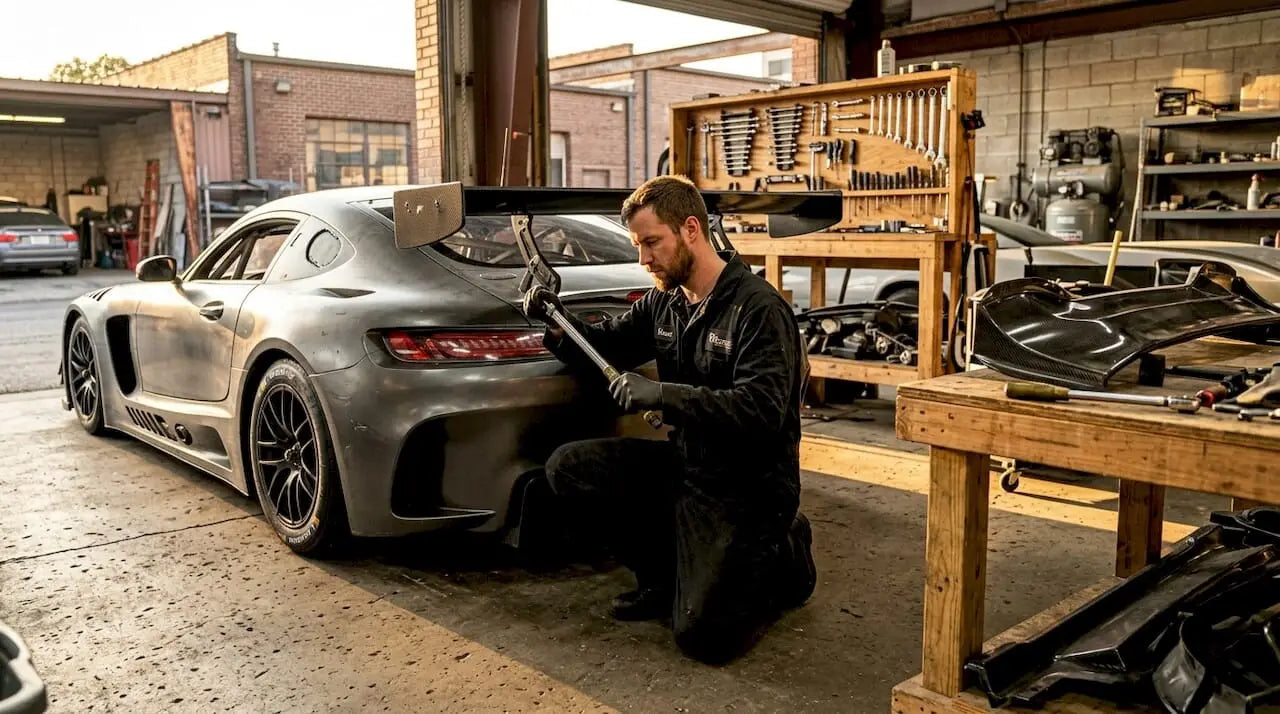
A full aero package is a coordinated set of exterior aerodynamic components engineered to reduce lift, increase downforce, and improve high-speed stability as a single system. The industry term is “full aerodynamic kit,” and it covers every major airflow management point on the car: front splitter, side skirts, rear diffuser, and rear wing or spoiler. These components work together, not independently. Aerodynamic benefits become measurable at speeds consistently above 100–120 km/h (roughly 62–75 mph). Below that threshold, the physics simply don’t produce enough air pressure differential to matter. If you’re building a track car or a fast street machine, understanding what a full aero package does, and how each piece contributes, is the starting point for every smart build decision.
What is a full aero package and what does each part do?
A full aerodynamic kit works because every component targets a specific airflow problem. Remove one piece, and the system loses balance. Add one piece without the others, and you may create more problems than you solve.
- Front splitter: Sits below the front bumper and cuts airflow into two paths. Air above the splitter feeds the radiator and engine bay. Air below gets forced under the car at higher pressure. This pressure differential reduces front lift and pushes the front axle down, sharpening steering response at speed.
- Side skirts: Run along the lower rocker panels between the front and rear wheels. Their job is to seal the gap between the car’s body and the road, preventing high-pressure air from the sides from disrupting the low-pressure zone under the car. Without side skirts, underfloor aero efficiency drops significantly.
- Rear diffuser: Sits at the rear underfloor and uses the venturi effect to accelerate airflow exiting from under the car. Faster-moving air creates lower pressure, which pulls the rear of the car downward. A well-designed diffuser generates meaningful rear downforce without adding drag at the same rate.
- Rear wing or spoiler: Mounts above the trunk or rear deck and acts like an inverted aircraft wing. It pushes down on the rear axle, adding grip and stability. Wings are adjustable on most track setups, letting you dial in the front-to-rear downforce balance.
The interaction between these four components is what makes a full kit worth the investment. The front splitter and rear wing must be tuned together to avoid shifting the aerodynamic center of pressure too far forward or rearward. Unbalanced aero creates handling instability, not performance gains.
Pro Tip: If you’re running a front splitter without a rear wing, you’re adding front downforce without matching it at the rear. That imbalance can cause the car to feel loose at the back end during high-speed cornering.

What materials are used in a full aero kit?
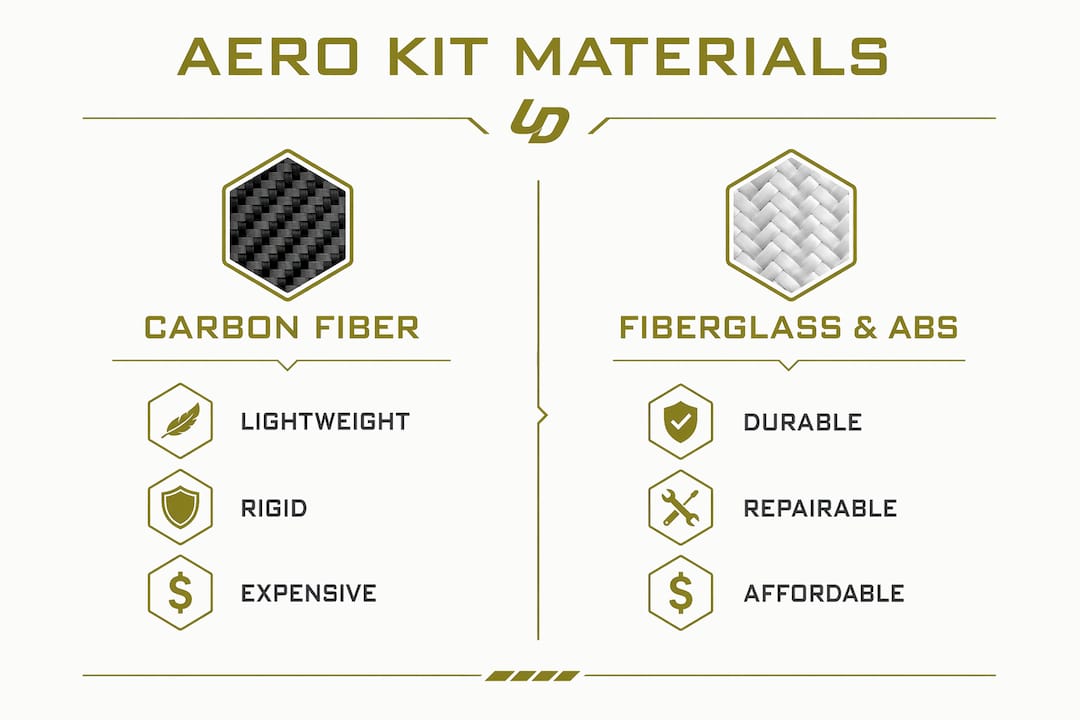
Material choice determines how a kit performs, how long it lasts, and how much it costs. The three main options are carbon fiber, fiberglass (also called GFK or glass-reinforced plastic), and ABS plastic.
Carbon fiber
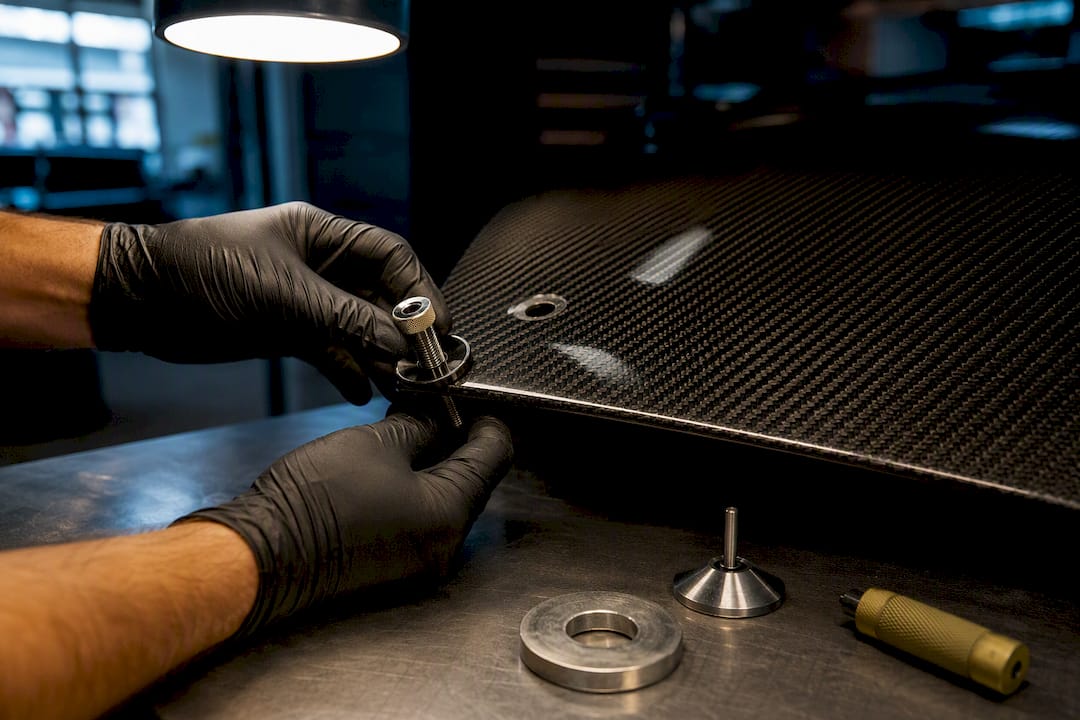
Carbon fiber delivers the best strength-to-weight ratio of any aero material. It’s rigid under load, which means it holds its shape at high downforce levels without flexing. Carbon fiber kits often cost $5,000 or more due to engineering, CFD validation, and material costs. That price reflects real performance value for track builds, but it’s hard to justify for a daily driver that sees the occasional canyon run.
Fiberglass and ABS
Fiberglass (GFK) and ABS plastics are the practical choice for street-driven cars. GFK offers greater shear strength compared to standard fiberglass and better resistance to vibration stress cracking. ABS is lighter and easier to paint, but it can become brittle in cold weather. Both materials are far easier to repair after a parking lot scrape than carbon fiber, which typically requires specialist work.
| Material | Best for | Weight | Repairability | Cost |
|---|---|---|---|---|
| Carbon fiber | Track builds | Lightest | Difficult | High |
| Fiberglass (GFK) | Street and light track | Moderate | Good | Mid-range |
| ABS plastic | Street use | Moderate | Easy | Low |
Choosing materials should align with vehicle usage: carbon fiber for track strength and rigidity, GFK and ABS for practical street durability and ease of repair. Undergrounddynamics stocks both carbon fiber and fiberglass options across its catalog, so you’re not forced into one material across the whole kit.
Pro Tip: If you track your car twice a year and street-drive it the rest of the time, fiberglass is the smarter call. You’ll save money on the kit and on repairs after inevitable contact.
How does installation work for a full aero package?
Installation is where most builds go wrong. A full aerodynamic kit involves mounting multiple exterior panels with precise fitment requirements. Rushing this process creates gaps, misalignment, and components that fail at speed.
- Dry fit every component first. Before any adhesive or hardware goes in, test-fit each piece against the car. Testing fitment is a critical step before final mounting to confirm alignment and function. Mark your drill points and check panel gaps at this stage.
- Identify your mounting points. Functional aero components need to bolt directly to chassis or frame rails. Cosmetic kits using adhesives alone risk deformation or detachment at high speeds. Structural mounting is non-negotiable for any component that will see real downforce loads.
- Prepare the mounting surfaces. Clean, degrease, and if needed, sand the contact areas. Adhesion fails on dirty or oily surfaces, and a failed bond at 80 mph is a safety issue, not just a cosmetic one.
- Install in sequence. Start with the front splitter, then side skirts, then the rear diffuser, and finish with the rear wing. This order lets you check front-to-rear alignment as you go.
- Use the right hardware. Installation may require adhesive, hardware, drilling, and trimming depending on kit type and vehicle model. Use stainless steel hardware where possible to prevent corrosion from road spray.
- Get a professional to finish or check the work. Professional installation is strongly advised for load-bearing components. A shop with aero experience will catch fitment issues that are easy to miss on a first build.
The complexity of installation varies by kit and chassis. A chassis-specific kit designed for your exact car will always install more cleanly than a universal kit that requires heavy trimming.
How does a full aero package improve performance and handling?
A well-designed full aerodynamic package changes how the car communicates with the road. The gains are real, but they only show up at the right speeds and with the right setup underneath.
- Increased tire contact patch: Downforce pushes all four tires harder into the road surface. More contact means more grip, which translates directly into faster cornering and shorter braking distances.
- Improved lane stability at highway speeds: A well-designed full aero package improves lane stability, steering response, and tire contact by reducing lift at speeds above highway thresholds. The car feels planted instead of light and nervous.
- Reduced understeer and oversteer: Balanced front-to-rear downforce keeps the car neutral through corners. Too much front downforce causes understeer. Too much rear downforce causes oversteer. A matched kit keeps both tendencies in check.
- Faster cornering on track: Downforce lets you carry more speed into and through corners without losing grip. This is the core reason motorsport engineers spend so much time on aero balance.
- Better feedback through the wheel: Reduced lift at the front axle sharpens steering feel. You get more information about what the tires are doing, which makes the car easier to place precisely.
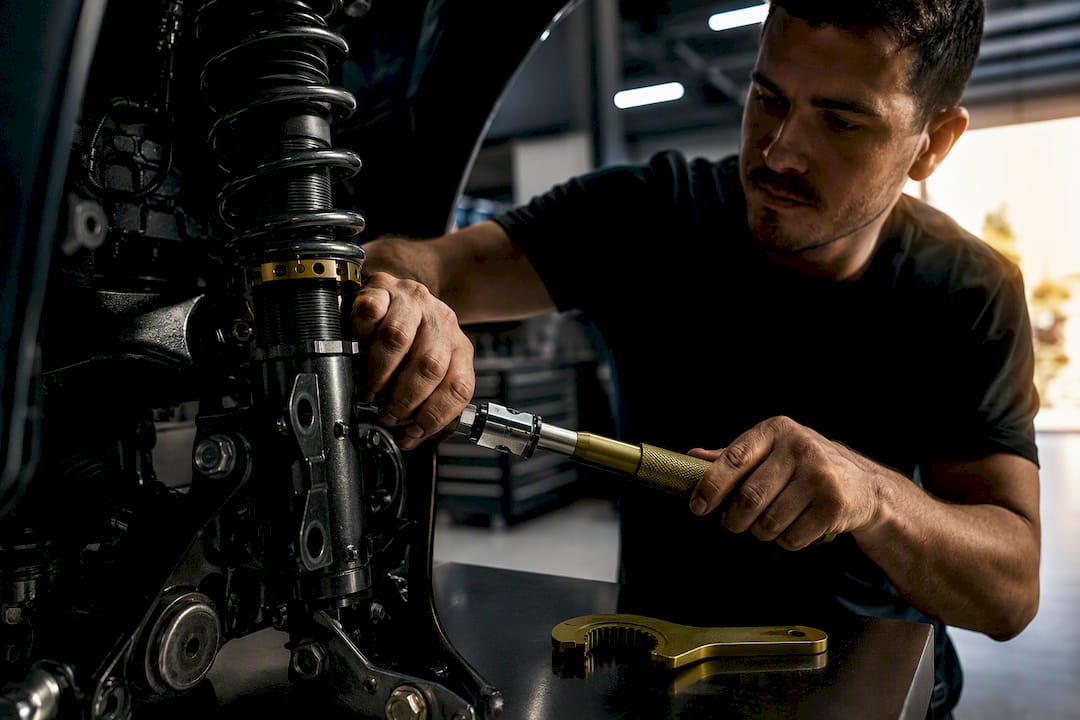
Aero gains work best when the suspension is set up to match. Pairing a full kit with coilovers that improve handling gives you the stiffness and ride height needed to keep the splitter and diffuser at their designed operating height. Run the car too high and the diffuser loses efficiency. Run it too low and the splitter contacts the road.
The role of aero on small sports cars is especially significant because lighter cars feel downforce gains more immediately. A 2,400-pound sports car with a balanced aero kit transforms its high-speed behavior in ways that a heavier car might not.
Common misconceptions about full aero kits
More parts do not always mean better performance. This is the most common mistake builders make when selecting a full aerodynamic kit.
- Myth: Any aero kit improves performance. Cosmetic kits with no CFD engineering add weight and drag without meaningful downforce. They look aggressive but do nothing useful at speed.
- Myth: You can mix and match components freely. An unbalanced aero package can cause handling issues by shifting the aerodynamic center of pressure and inducing high-speed understeer. Components from different kits rarely share the same design intent.
- Myth: Adhesive mounting is fine for functional parts. Cosmetic aero parts often only adhere with basic adhesives, but functional aero components require secure bolting or structural mounting to handle aerodynamic loads safely.
- Myth: Carbon fiber is always the right choice. For a street car, carbon fiber’s repairability problems and cost make fiberglass the smarter material in most cases.
- Myth: Aero alone fixes handling. A full kit works best when paired with matching suspension and tire upgrades. Aero without proper suspension tuning leaves performance on the table. Builders interested in performance vehicle upgrades consistently report better results when aero and suspension are developed together.
Key Takeaways
A full aero package delivers real performance gains only when every component is engineered as a balanced system, mounted structurally, and matched to the right suspension setup.
| Point | Details |
|---|---|
| System design matters | All four components must work together for balanced front-to-rear downforce. |
| Speed threshold is real | Aerodynamic benefits only become measurable above 100–120 km/h on most builds. |
| Material choice drives cost and use | Carbon fiber suits track builds; fiberglass and ABS suit street-driven cars. |
| Structural mounting is non-negotiable | Adhesive-only installation risks component failure at high speeds. |
| Suspension must match aero | Coilovers and ride height directly affect how well a diffuser and splitter perform. |
Why balanced aero is the build decision most builders get wrong
I’ve seen a lot of builds where the owner bolted on a wing and a splitter from two different kits, called it a full aero setup, and wondered why the car felt worse at speed. The problem is almost always balance. A big rear wing with a stock front end shifts the aerodynamic center of pressure rearward, and the car starts pushing through fast corners instead of rotating cleanly.
The builds that actually work are the ones where the builder treated the aero as a system from day one. That means picking a kit designed for the specific chassis, confirming the front-to-rear downforce ratio, and then setting the suspension to match the operating height the kit was designed around. It sounds like a lot of steps, but it’s really just discipline.
Material selection is the other place I see builders overcomplicate things. Carbon fiber is genuinely great for track cars where every kilogram matters. For a street build that sees occasional track days, fiberglass does the job at a fraction of the cost and survives the parking lot incidents that carbon fiber does not. The aero component catalog at Undergrounddynamics covers both materials with real fitment specs, which makes the decision a lot easier than guessing.
The future of aero for enthusiasts is more accessible CFD-validated kits at mid-range prices. That’s already happening, and it means builders can get engineered performance without the five-figure price tag that used to come with it. Buy the kit that was designed for your car, mount it properly, and set your suspension to match. That’s the whole formula.
— Ismael
Aero parts built for your specific chassis
Undergrounddynamics carries a direct-to-consumer catalog of carbon fiber and fiberglass aero components, body kits, lip kits, and wide-body fenders built for enthusiast cars. Every listing includes real fitment detail and technical specs so you know exactly what you’re buying before it ships.

If you’re putting together a full aerodynamic kit for a sports or performance build, browse the full catalog to find chassis-specific options priced from $100 to $2,500. The catalog covers front splitters, side skirts, rear diffusers, and rear wings alongside suspension upgrades like coilovers and air suspension. For builders who want performance-matched aero and suspension in one place, Undergrounddynamics is the practical starting point.
FAQ
What is a full aero package in simple terms?
A full aero package is a matched set of exterior components, including a front splitter, side skirts, rear diffuser, and rear wing, engineered to reduce lift and increase downforce as a single system. It improves high-speed stability and handling when all components are balanced correctly.
At what speed does a full aero kit start working?
Aerodynamic benefits become measurable at speeds consistently above 100–120 km/h (roughly 62–75 mph). Below that threshold, air pressure differentials are too small to produce meaningful downforce.
Is carbon fiber or fiberglass better for a full aero kit?
Carbon fiber is better for dedicated track builds because of its rigidity and light weight. Fiberglass is the practical choice for street-driven cars because it costs less and is far easier to repair after contact.
Can I install a full aero package myself?
Basic installation is possible for experienced builders, but professional installation is strongly recommended for load-bearing components. Structural mounting to chassis or frame rails is required for functional aero parts, and improper fitment risks component failure at speed.
Does a full aero package work without suspension upgrades?
A full aero kit delivers reduced performance without matching suspension work. Ride height directly affects diffuser and splitter efficiency, so coilovers or adjustable suspension are a practical requirement for getting the most from any full aerodynamic package.