FREE SHIPPING ON ORDERS OVER $150

Cart
0
If your car left the factory with a driver airbag, bolting on a quick-release hub that disables it will usually make that car illegal to drive on public roads. Quick release steering wheel legality in the United States comes down almost entirely to one question: does removing the factory wheel take a mandated safety system with it? If yes, you’re looking at FMVSS violations, potential state citations, and an insurer who may not have your back after a crash.
Before you order parts, do this:
- Pull your VIN build sheet or check the SRS label on the steering column for factory airbag confirmation.
- Call your insurer and get written guidance on the modification, not a verbal “should be fine.”
- Look up your specific state’s vehicle code for equipment and airbag tampering rules.
- Skip the quick-release hub entirely if you’re daily-driving an airbag-equipped car on public streets.
San Diego police have publicly warned that swapping out a factory airbag for a racing-style wheel raises fatality risk in a crash and can carry misdemeanor charges. That’s the real stakes behind this question, not just a paperwork technicality.
Key Takeaways
Quick release steering wheel legality in the U.S. hinges on whether your car’s factory airbag and horn circuit stay functional after the swap.
| Point | Details |
|---|---|
| Airbag presence decides legality | Check your VIN build sheet and SRS label before assuming a quick-release hub is street-legal. |
| “Off-road only” means noncompliant | Labels admitting the part fails FMVSS standards can be used against you in enforcement or insurance disputes. |
| State penalties vary but are real | California, Texas, Florida, Illinois, New York, and Pennsylvania all have enforcement history for disabled airbags. |
| Insurance risk is immediate | Insurers can deny claims or void policies over undisclosed safety-system modifications. |
| Choose compliant hardware | Underground Dynamics documents fitment data so you can verify hub, wheel, and airbag compatibility before buying. |
Table of Contents
- Why Quick-Release Setups Run Into Legal Trouble
- State Laws and Penalties: What Enforcement Actually Looks Like
- Passing Inspection With a Modified Steering Wheel
- What a Disabled Airbag Does to Your Insurance Coverage
- When Quick-Release Wheels Are Actually Legal
- How to Check Your Own Car Before You Buy Anything
- What Underground Dynamics Sees in Aftermarket Hub Installs
- Style Points Aren’t Worth a Voided Policy
- Get Fitment Right Before You Touch a Wrench
- Where to Verify the Details Yourself
- Sources
- FAQ
Why Quick-Release Setups Run Into Legal Trouble
The federal safety framework behind this issue is FMVSS No. 208, the standard that governs occupant crash protection, including driver airbags. NHTSA doesn’t police individual driveways, but federal law prohibits knowingly making a required safety device inoperative on a vehicle that was built to comply with it. Swap out the factory wheel and hub on an airbag-equipped car, and you’ve likely done exactly that.
The mechanical reality makes this worse than most people expect. Pulling a factory wheel doesn’t just remove a design element. It typically disconnects:
- The airbag module itself
- The clock spring that maintains electrical continuity while the wheel turns
- The horn circuit
- Self-canceling turn signal function on many vehicles
Each of those losses can independently trigger a state “unsafe equipment” violation, on top of the federal issue. This is why so many quick-release hubs on the market carry a blunt disclaimer.
Labels reading “for off-road use only” aren’t a legal loophole. They’re the manufacturer’s own admission that the part doesn’t meet FMVSS standards for street use, and that label can become evidence against you in an insurance dispute or a courtroom.
Pro Tip: When you’re comparing hubs, the question that actually matters is whether the unit preserves the original airbag module and horn circuit through the disconnect. That’s the difference between a track toy and something you can legally drive to work.
State Laws and Penalties: What Enforcement Actually Looks Like
State vehicle codes fill in where federal law leaves off, and several states have real enforcement history around disabled airbags. Treat every example below as “check current law,” since statutes get amended and penalties shift by county and judge.
- California — Removing or disabling a driver airbag can bring misdemeanor charges, with some jurisdictions citing penalties up to six months in jail or a $1,000 fine.
- Texas — Enforcement under unsafe equipment statutes; a car missing a required airbag can face citation and inspection failure.
- New York, Florida, Illinois, and Pennsylvania — Each has enforcement history or statutes penalizing airbag removal, with consequences ranging from fines to vehicle impoundment.
Your best evidence for or against a violation is the SRS label on the column or the VIN build sheet showing original equipment. Keep a copy of both.
Pro Tip: Search your state’s statute using terms like “unsafe equipment” and “airbag tampering” alongside your state’s own vehicle or transportation code name, not just Google’s general results.
Passing Inspection With a Modified Steering Wheel
Inspectors look for specific, visible red flags, and any one of them can fail your car. Common rejection points include:
- An illuminated or missing SRS warning light
- No functioning horn
- Insecure hub or wheel attachment
- Altered rim diameter where state rules require a continuous factory-spec rim
A failed safety inspection typically blocks registration renewal, and some states flag the vehicle record for unsafe equipment going forward. To avoid a surprise at the inspection station:
- Bring documentation showing the hub preserves airbag and horn function if you’ve installed a compliant unit.
- Ask the inspector directly about local rim-diameter and SRS rules before the test, not after a failure.
What a Disabled Airbag Does to Your Insurance Coverage
Insurers can deny a claim or void a policy outright if they determine you knowingly disabled a mandated safety system, and that determination often surfaces at the worst possible moment, after a crash. A denied claim doesn’t just leave you covering your own repairs. It can also leave you personally exposed on the other driver’s bodily injury and property damage claims.
Civil liability compounds the problem. If a missing airbag is shown to have increased the severity of injuries in a crash, you can face a lawsuit that your policy never would have touched had the airbag stayed intact. Not disclosing the modification to your insurer only widens that exposure.
Pro Tip: Call your insurer, ask specifically about your planned modification, and get the answer in writing. Save the email or the chat transcript with your vehicle records. A verbal “that’s probably fine” from a call center rep won’t help you after a claim gets denied.

When Quick-Release Wheels Are Actually Legal
Quick-release hardware isn’t universally off-limits. It’s legal and common in a handful of clear scenarios:
- Vehicles built without a factory driver airbag, generally pre-1990s models depending on the manufacturer’s rollout timeline
- Purpose-built track cars that never touch public roads
- Sanctioned competition vehicles operating under their sanctioning body’s own equipment rules
For street-driven cars, the safer path is hardware that keeps the factory airbag and horn circuit intact rather than removing them. That means:
- Choosing a hub explicitly designed to retain airbag and clock-spring function, not one labeled off-road only.
- Confirming with the manufacturer or installer that horn and turn-signal cancel functions survive the swap.
- If you genuinely want a track-only setup, documenting that use in writing and keeping the car off public roads entirely.
Pro Tip: If a car is track-only, treat it that way on paper too. Keep dated photos, a written declaration of off-road-only use, and any track/event registrations. That paper trail matters if the vehicle’s status is ever questioned.
How to Check Your Own Car Before You Buy Anything
Work through this before you spend a dollar on hardware:
- Check the VIN build sheet and the SRS label on your steering column for factory airbag confirmation.
- Look up your state’s vehicle code or DMV inspection rules for steering and airbag equipment.
- Call your insurer and request written guidance on the specific modification.
- Talk to a qualified installer about preserving horn and clock-spring function.
- Document everything: photos of labels, saved emails, and your VIN.
Gather these before you call anyone: your VIN, photos of the column’s SRS label, your policy number, and links to the relevant state statute.
Pro Tip: Log the date, time, and name of whoever you speak with at the DMV or insurer. A vague memory of “someone said it was fine” carries zero weight later. A saved email does.
What Underground Dynamics Sees in Aftermarket Hub Installs
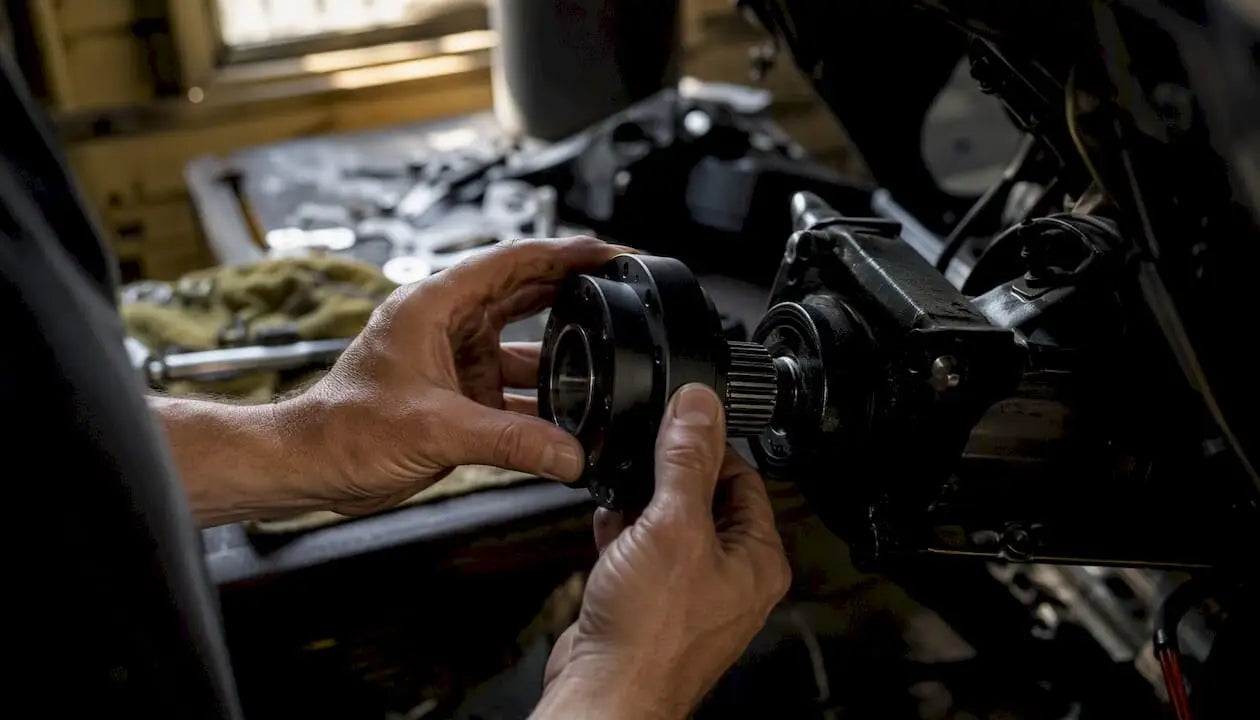
Fitment problems show up in predictable places: spline mismatches between hub and wheel, hub wobble from worn tolerances, and rim clearance issues that crowd turn-signal stalks or airbag housings. A hub that doesn’t fit the spline exactly will develop play over time, which is both a safety issue and a fast way to fail inspection.

Before you trust any install, check torque specs against the manufacturer’s number, use threadlocker where specified, verify hub preload, confirm the retaining pin seats fully, and run an SRS diagnostic scan afterward if the airbag circuit was touched at all. For street cars, stick to certified-fitment components and professional installation, exactly the kind of fitment data Underground Dynamics documents for parts across its catalog.
Style Points Aren’t Worth a Voided Policy
Quick-release access and a smaller wheel diameter genuinely improve entry and exit and can sharpen your feel on track, and that appeal is real. But on anything you drive to work, preserving the airbag and horn circuit isn’t optional. Underground Dynamics backs track-focused hardware and compliant street options alike. Run the verification steps above before you order anything.
Get Fitment Right Before You Touch a Wrench
Underground Dynamics gives you something most quick-release sellers don’t: real fitment documentation instead of a generic “universal fit” label. That matters most on exactly the kind of steering and hub install where a spline mismatch or a skipped airbag check turns a weekend project into a legal headache.
If you’re weighing a hub swap on a Civic, Supra, 350Z, or Miata, browse the compatibility details on our storefront before you buy, and if you’re unsure whether a specific hub preserves your airbag and horn circuit, reach out to our support team for written fitment guidance. For anything beyond the hub itself, our performance parts catalog documents the same fitment-first approach across suspension, aero, and drivetrain components. If the steering job calls for professional clock-spring or horn diagnostics, a shop like Barry Fleet Services can verify continuity after the install. Check compatibility for your exact chassis before you order.
Where to Verify the Details Yourself
Before you rely on any secondhand summary, check these primary sources directly:
- NHTSA and FMVSS No. 208 guidance on occupant crash protection
- Your state DMV’s vehicle code section on equipment and inspections
- Your insurer’s written policy language on modifications
Save the exact statute number and page when you contact your DMV or insurer.
This article is general information, not a substitute for advice from a qualified lawyer. Consult a qualified legal professional about your own circumstances before acting on anything here.
Sources
- Cbs8
- Installing A Racing Wheel In Your Daily Could Land You In Jail - Jalopnik
- Quick-Release Steering Wheels: Street Legal? - GarageSee
FAQ
Are quick release steering wheels legal in the United States?
It depends on the vehicle: if the car was factory-equipped with a driver airbag, a quick-release hub that disables it can violate FMVSS No. 208 and state unsafe equipment laws.
Why are detachable steering wheels illegal on some cars?
They become illegal when removing the factory wheel disconnects the airbag module, clock spring, or horn circuit, which several states treat as tampering with mandated safety equipment.
Is a quick release steering wheel illegal in Texas?
Texas can cite a modified car under unsafe equipment statutes if the airbag or horn function is lost, and the vehicle can also fail inspection over the same issue.
Can you pass an inspection with a quick release steering wheel?
Only if the airbag, SRS warning light, and horn remain fully functional; inspectors commonly reject setups with a disabled airbag or missing horn circuit.
Does Underground Dynamics sell street-legal quick-release hubs?
Underground Dynamics documents fitment data for its steering and hub components so you can check spline compatibility and airbag preservation before you buy, rather than guessing on a universal fit.