FREE SHIPPING ON ORDERS OVER $150

Cart
0
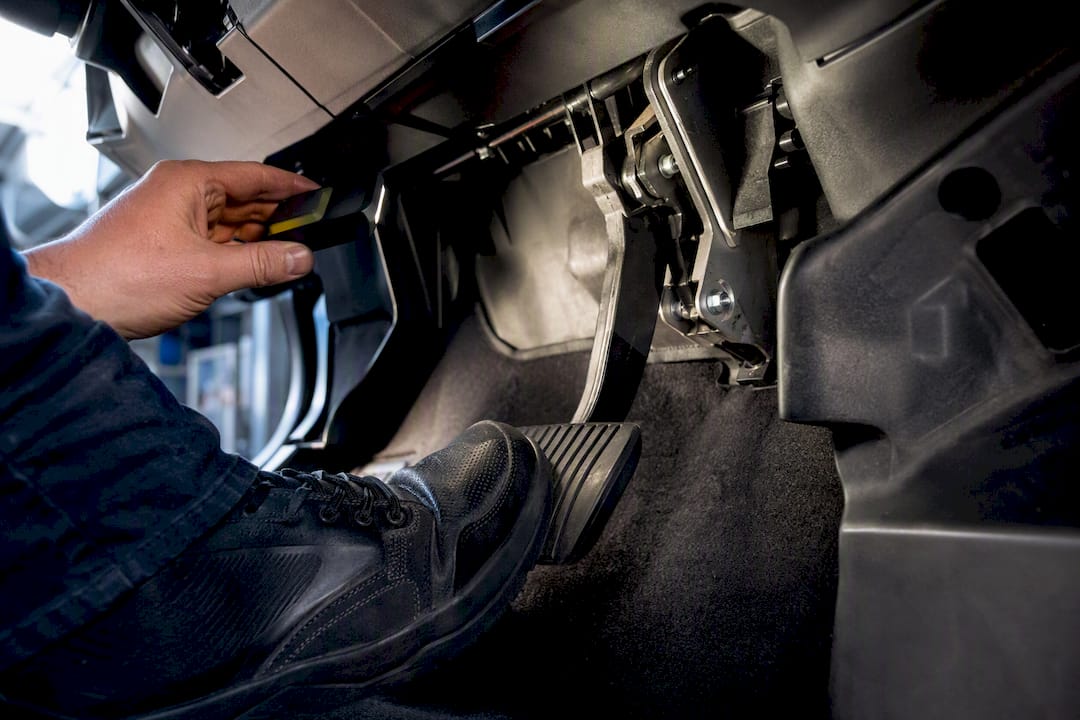
A soft or spongy brake pedal almost always means air, a leak, boiling fluid, or a failing master cylinder is stealing hydraulic pressure. Treat it as a safety issue, not a nuisance. Right now, with the engine off, pump the pedal five or six times. If it firms up, air is likely trapped and bleeding will fix it. If it stays soft or sinks to the floor, don’t drive it, get it to a shop or have it towed.
TL;DR:
- A soft brake pedal that remains soft after pumping likely indicates a leak or master cylinder bypass that requires professional inspection and repair.
- Pedal sinking under steady pressure usually points to an internal master cylinder failure, which often necessitates replacement rather than simple bleeding.
- Bleeding the brake system and flushing contaminated fluid are the most common fixes, especially if the fluid appears dark or feels soft after hard braking.
- Symptoms such as a sinking pedal, fluid leaks, or warning lights signal that the vehicle should not be driven and needs urgent professional diagnosis.
- Regular maintenance, including fluid flushing every two years and checking for leaks, helps prevent the return of soft pedal issues.
Table of Contents
- What Causes a Soft Brake Pedal
- Diagnosing a Soft Brake Pedal: The Pump Test and What It Tells You
- Fixing a Soft Brake Pedal, Cause by Cause
- When a Soft Brake Pedal Means Stop Driving
- What It Costs to Fix a Soft Brake Pedal
- Preventing a Soft Brake Pedal From Coming Back
- Underground Dynamics’ Take on Brake Reliability
- Sources
- FAQ
What Causes a Soft Brake Pedal
Brake systems run on hydraulic pressure, and anything that lets that pressure compress instead of transfer straight to the calipers will turn a firm pedal into a mushy one. Here’s what’s usually behind it:
- Air in the lines. Air gets in during a brake job, a low fluid level, or a failed seal. Unlike fluid, air compresses under pressure instead of pushing the calipers, which is exactly why the pedal feels soft. Bleeding the system is the fix, and it’s the most common cause of a spongy pedal.
- Contaminated or moisture-laden fluid. Brake fluid pulls moisture from the air over time. Under hard or repeated braking, that moisture can boil, and the resulting vapor behaves just like trapped air, producing a phenomenon mechanics call vapor lock.
- External leaks. Cracked hoses, corroded calipers, or a rusted line can leak fluid slowly enough that you don’t notice until the pedal goes soft. Check for wet wheels, fluid spots under the car, or a dropping reservoir.
- Master cylinder internal bypass. Worn seals inside the master cylinder let fluid slip past internally instead of pushing it to the wheels. This usually shows up as a pedal that sinks slowly while held.
- Swollen flexible hoses. Old rubber hoses can balloon internally, absorbing pressure that should be moving fluid to the caliper.
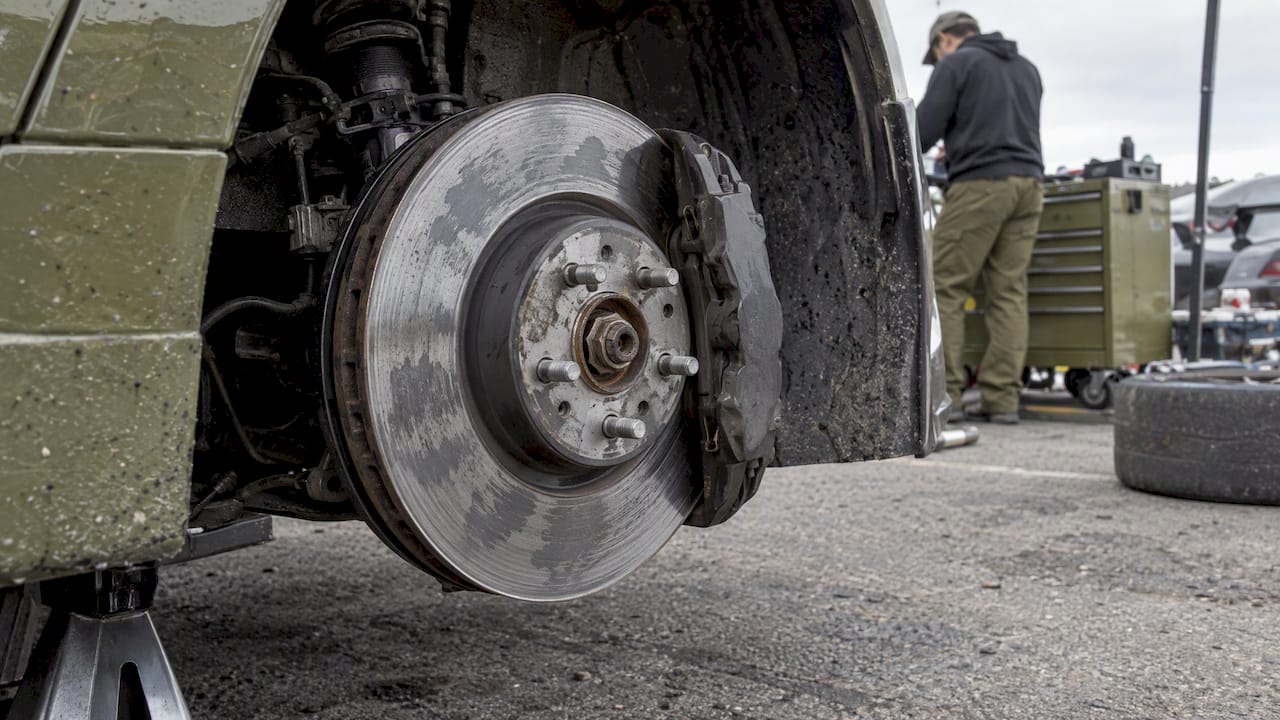
- Pad knockback or rotor runout. A warped rotor or retracted caliper piston can cause sponginess on the very first press of the day, then firm up as the pads reseat.
- ABS module trapped air. After a brake job or an ABS event, air can hide inside the ABS modulator, out of reach of a standard bleed.
Diagnosing a Soft Brake Pedal: The Pump Test and What It Tells You
Run the pump test before anything else. With the engine off, press the brake pedal repeatedly, five to ten times, holding light pressure on the last press.
- Pedal firms up after a few pumps. Air is present somewhere in the system. Bleeding is the likely fix.
- Pedal stays soft no matter how many times you pump it. Suspect a leak or master cylinder bypass rather than air alone.
- Pedal sinks slowly to the floor while held. This is the master cylinder bypass signature and usually means replacement, not bleeding.
Timing matters as much as the pump test itself. A pedal that’s spongy only on the first press points to pad knockback or rotor runout. One that goes soft after a long downhill run or hard track laps points to boiling fluid. A pedal that’s always soft, regardless of driving conditions, points toward air or a leak.
| When it happens | Likely cause | First check |
|---|---|---|
| Always spongy | Air in lines, old fluid | Fluid color, level, pump test |
| First press only | Pad knockback, rotor runout | Rotor for warping or lip |
| Firms after pumping | Trapped air | Bleed the system |
| After downhill/hard braking | Boiling fluid (vapor lock) | Fluid age and moisture content |
| Pedal sinks while held | Master cylinder bypass | Check for fluid at the booster |
| After ABS activation or service | Air trapped in ABS module | Scan tool bidirectional bleed |
Also glance under the car for wet wheels or fluid trails, watch the reservoir level, and note whether the ABS warning light is on. If it is, the ABS modulator may need a bidirectional scan-tool bleed rather than a manual one, which is a shop job on most modern cars.
Fixing a Soft Brake Pedal, Cause by Cause
Once you’ve narrowed down the likely cause, the repair path gets a lot clearer.
- Bleed the brakes. Start with the wheel farthest from the master cylinder and work closer, pushing old fluid and trapped air out through each caliper bleeder screw. A basic manual bleed is doable in your driveway with a helper and a clear tube; a pressure or vacuum bleeder speeds it up solo. Budget a shop visit if you don’t have the tools or the ABS light is on.
- Flush the fluid. If the fluid looks dark or the pedal softens after hard braking, flush it completely rather than just bleeding. Stick to the DOT rating your manufacturer specifies. DOT 3, 4, and 5.1 are glycol-based and mix, but DOT 5 is silicone-based and will damage seals if mixed in.
- Inspect hoses and lines. Squeeze flexible hoses by hand, feeling for soft spots or bulges, and look along steel lines for rust or wet spots. Replace anything questionable rather than patching it.
- Address the master cylinder. A pedal that sinks under steady pressure, with no visible leak, points to internal bypass. Replacement is the standard fix, not a rebuild in most modern applications.
- Check for pad knockback and rotor runout. A warped rotor or retracted piston causes that annoying first-press sponginess. Resurfacing or replacing the rotor and reseating the pads usually solves it.
- Handle ABS-related air at a shop. Vehicles with electronic stability control often trap air inside the ABS unit that a manual bleed can’t reach. A bidirectional scan tool cycles the ABS valves during bleeding, which is why this step almost always happens at a shop.
- Road-test to confirm. Drive slowly at first, testing the pedal at low speed before trusting it in traffic. The pedal should feel firm within the first inch or two of travel, not soft or delayed.
Pro Tip: If you just had brake work done and the pedal went soft afterward, always ask the shop whether they verified the bleed and cycled the ABS module. A rushed bleed is one of the most common reasons a “fixed” pedal goes soft again within days.
When a Soft Brake Pedal Means Stop Driving
Some symptoms mean the car needs to stop moving, not just get an appointment.
- The pedal sinks all the way to the floor with steady pressure.
- You smell burning fluid or see smoke near a wheel.
- The ABS or brake warning light is on alongside the soft pedal.
- You see fluid pooling under the car or a wet wheel.
- Stopping distance noticeably increases compared to normal driving.
If any of those apply, pull over safely, avoid hills and highway speeds, and pump the pedal continuously rather than relying on one press. The parking brake can slow the car in an emergency, but it’s not a substitute for hydraulic brakes on a moving vehicle, especially at speed. Call for a tow rather than risk driving to a shop.
What It Costs to Fix a Soft Brake Pedal
Repair costs vary widely depending on the cause, but here’s what to expect in most shops.
- Bleeding the system: free if you do it yourself, $80 to $180 at a shop.
- Full fluid flush: $80 to $150.
- Hose replacement: $80 to $200 per hose.
- Caliper replacement: $200 to $600.
- Master cylinder replacement: $350 to $950 installed.
- Rotor and pad service: $200 to $500.
If you just had a brake job done, the diagnosis often narrows quickly to a bad bleed or a loose fitting rather than a new failure. Expect a diagnostic fee if the shop needs to hook up a scan tool to check the ABS module, but that fee is usually worth it if it saves you from a repeat repair.
Preventing a Soft Brake Pedal From Coming Back
Most soft pedal problems trace back to skipped maintenance, so a little routine care goes a long way.
- Flush your fluid on schedule. Follow your manufacturer’s interval, typically around every two years, since fluid absorbs moisture even if you never open the reservoir.
- Never mix incompatible DOT fluids. Confirm DOT 3, 4, 5.1, or 5 before topping off, since mixing the wrong type can damage seals.
- Ask your shop to verify the bleed. Any time brake work is done, ask whether they confirmed a firm pedal afterward and cycled the ABS module if applicable.
- Do a monthly pedal check. Press the pedal with the engine running and note if it feels different than usual. Catching a slow change early beats discovering it on the highway.
- Look under the car occasionally. A small drip caught early is a cheap fix. The same leak ignored for months can mean a caliper or line replacement.
If your build includes upgraded rotors or big brake kits, heat management becomes even more important, since track-oriented setups are more prone to fluid boiling under repeated hard stops than stock street systems.
Underground Dynamics’ Take on Brake Reliability
Braking problems rarely show up in isolation. A car with worn suspension bushings, warped rotors, or mismatched pads puts more strain on the whole system, and that’s the lens we bring to every part we sell. Underground Dynamics works with established suppliers like ACT, and we build our catalog around real fitment data because guesswork under the hood is how small problems turn into expensive ones. A soft pedal is a symptom worth chasing down immediately, not something to drive around.
— Ismael
Whether you’re chasing down a spongy pedal or upgrading the suspension and rotors that support your braking system, you can find performance parts built for enthusiast cars with detailed fitment information. Browse the full Underground Dynamics catalog when you’re ready to move from repair to upgrade.
Sources
- Why Is My Brake Pedal Spongy? 9 Causes & Quick Fixes
- How To Diagnose a Spongy or Soft Brake Pedal - PowerStop Brakes
- Soft Brake Pedal Causes and When It Becomes Dangerous - The Virtual Driver
FAQ
How Do You Fix a Soft Brake Pedal?
Start with a pump test to check for trapped air, then bleed the system if the pedal firms up. If it stays soft, check for leaks, flush contaminated fluid, or inspect the master cylinder for internal bypass.
What Does It Mean if the Brake Pedal Is Soft?
A soft pedal usually means air, moisture-laden fluid, a leak, or a failing master cylinder is preventing full hydraulic pressure from reaching the calipers. The exact cause depends on when the softness happens, whether it’s on first press, always, or only after heavy braking.
Is It Safe to Drive With a Soft Brake Pedal?
It depends on severity. A slightly soft pedal that firms up after pumping may be safe for a short trip to a shop, but a pedal that sinks to the floor, comes with a warning light, or shows visible fluid loss means you should stop driving and call for a tow.
How Much Does It Cost to Fix a Soft Brake Pedal?
Costs range from free for a DIY bleed to $80 to $180 for a shop bleed, $80 to $150 for a fluid flush, and up to $350 to $950 for a master cylinder replacement, depending on the root cause.