FREE SHIPPING ON ORDERS OVER $150

Cart
0
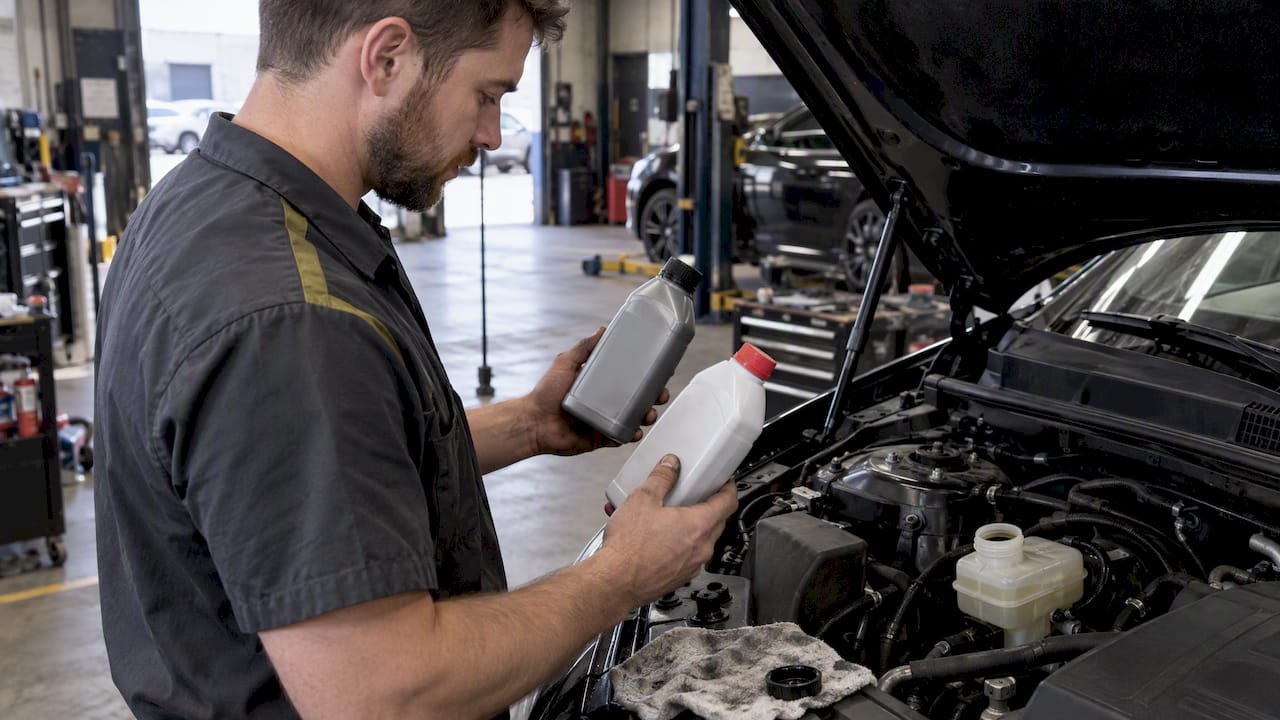
DOT 5.1 is a glycol-based fluid that can replace DOT 4 in most brake systems and delivers higher boiling points for better fade resistance. DOT 5 is a completely different, silicone-based fluid that must never be mixed with either one. If your reservoir cap already specifies DOT 4, switching to DOT 5.1 is almost always a safe upgrade, not a gamble.
TL;DR:
- For commuting, fresh DOT 4 changed on the manufacturer’s schedule is adequate; choose DOT 5.1 for towing, mountain descents, or repeated track braking.
- SRAM lists DOT 5.1’s dry boiling point at about 260°C, versus roughly 230°C for DOT 4; wet performance matters more after fluid absorbs moisture.
- Before switching grades, inspect seals, hoses, and master cylinder cups for wear or swelling, then drain and flush the old fluid completely.
- Most service schedules call for a complete fluid flush every one to two years, because absorbed moisture lowers glycol fluid’s wet boiling point.
- Cold climate drivers should check the owner’s manual for a viscosity requirement, since slow flowing fluid can delay ABS or stability control operation.
Table of Contents
- 1. Key physical and chemical differences between DOT 4 and DOT 5.1
- 2. Compatibility and mixing rules you need to know
- 3. Wet vs dry boiling point and what it means for braking
- 4. Low-temperature viscosity and how it affects ABS and ESP
- 5. Standards and labeling: what FMVSS 116 and NHTSA require
- 6. Which fluid fits your driving: street, towing, or track
- 7. Maintenance: service intervals, flushing, and safety steps
- 8. Why fitment and specs matter when upgrading your brake system
- Pair your fluid upgrade with the right hardware
- FAQ
- Sources
1. Key physical and chemical differences between DOT 4 and DOT 5.1
Both DOT 4 and DOT 5.1 are glycol-ether based fluids, which means they’re hygroscopic: they pull moisture from the air over time, and that moisture gradually lowers their boiling point. DOT 5, in contrast, is silicone-based and doesn’t absorb water, which is exactly why it lives in a different compatibility class entirely.
The numbers matter here. FMVSS 116 sets the minimum dry and wet boiling points that any fluid sold under a DOT grade has to meet, and DOT 5.1 is required to clear a noticeably higher bar than DOT 4.
- DOT 4 and DOT 5.1 are both glycol-based and absorb moisture from the air.
- DOT 5 is silicone-based, repels water, and sits in its own compatibility category.
- Color is not a reliable indicator of grade; always read the label and the FMVSS 116 certification markings.
According to SRAM’s technical support page, DOT 5.1 has a dry boiling point around 260°C compared to roughly 230°C for DOT 4. That gap gives you real margin before fluid starts to boil under hard, repeated braking.
2. Compatibility and mixing rules you need to know
DOT 3, DOT 4, and DOT 5.1 are all glycol-based, so they’re mutually compatible and can be mixed or topped off between each other without drama. DOT 5 silicone fluid is the outlier: mixing it with any glycol fluid can cause seal swelling, poor pedal feel, and a brake system that doesn’t behave the way it should.
Before you change fluid types, run through this quick checklist:
- Inspect rubber seals, hoses, and master cylinder cups for existing wear or swelling.
- Drain the old fluid fully rather than just topping off, especially if it’s old or discolored.
- Flush the lines with the new fluid until the color runs clean at each bleeder.
- Bleed all four corners in the sequence your service manual specifies.
Pro Tip: If you’re moving from DOT 4 to DOT 5.1, confirm your system’s rubber components are rated for both; manufacturers generally design modern seals for compatibility across the glycol family, but it’s worth a two-minute check before you bleed the system.
3. Wet vs dry boiling point and what it means for braking
Dry boiling point is measured on fresh, sealed fluid straight from the bottle. Wet boiling point is measured after the fluid has absorbed a set amount of water, which is a more honest picture of what’s actually in your lines after a season or two on the road.
- DOT 4’s wet boiling point sits meaningfully lower than its dry rating, as FMVSS 116 requires manufacturers to disclose.
- DOT 5.1 keeps a higher wet boiling point too, which is the number that actually protects you during a long descent or a track session.
- Street driving rarely pushes fluid temperatures high enough to expose the difference, but towing, mountain driving, and track days absolutely do.
If you brake hard and repeatedly, the fluid closest to its boiling point is the one that fades first, and that’s where DOT 5.1’s extra headroom earns its keep.
4. Low-temperature viscosity and how it affects ABS and ESP
FMVSS 116 also sets viscosity limits at -40°C, because thick, sluggish fluid at low temperatures can slow down how fast your ABS or ESP modulator can cycle. A fluid that pours like syrup in the cold doesn’t let those systems react the way they’re designed to.

DOT 5.1 was built with modern anti-lock and stability systems in mind, so it generally meets or beats the low-temperature flow specs that older DOT 4 formulations target. If you live somewhere winters get genuinely cold, check your owner’s manual or service documentation for a specific viscosity callout before swapping fluids, since some manufacturers do spec a particular grade for that reason alone.
5. Standards and labeling: what FMVSS 116 and NHTSA require
Every DOT-rated fluid sold has to meet FMVSS 116’s requirements for dry and wet boiling points, low-temperature viscosity, and clear labeling of the DOT grade. NHTSA’s interpretation of the standard also clarifies that manufacturers must certify compatibility with common elastomers like SBR, EPR, CR, and NR, the rubber compounds your seals and hoses are made from.
Before you buy, look for:
- A visible DOT grade (4, 5, or 5.1) printed on the container.
- A sealed cap, since opened fluid starts absorbing moisture immediately.
- A manufacturing date or lot code, so you’re not buying old stock.
6. Which fluid fits your driving: street, towing, or track
A daily driver that sees normal commuting and the occasional hard stop does fine on fresh DOT 4, changed on the interval your manufacturer recommends. Push the car harder and the calculation changes.
- Street commuting: DOT 4, replaced on schedule, covers typical braking demand without issue.
- Towing or repeated mountain descents: DOT 5.1’s higher wet boiling point gives you more margin before fade sets in.
- Track days or autocross: DOT 5.1 is the practical choice for the heat cycles repeated hard braking generates.
Your vehicle maker’s own fluid recommendation always takes priority over general guidance like this, so check the reservoir cap and owner’s manual first.
Pro Tip: DOT 5.1 typically costs more per bottle than DOT 4, but if you’re bleeding your own brakes anyway, the price difference is small compared to the extra fade resistance you get.
7. Maintenance: service intervals, flushing, and safety steps
Water contamination is the real enemy here. As glycol-based fluid absorbs moisture, its wet boiling point drops, which is why most service schedules call for a flush every one to two years regardless of which DOT grade you’re running.
- Drain the old fluid from each caliper or wheel cylinder rather than just bleeding a little.
- Flush with fresh fluid until the color is consistent and free of air at every bleeder.
- Bleed each corner in the manufacturer-specified sequence, farthest from the master cylinder first in most layouts.
- Test pedal firmness before driving; a soft or spongy pedal means air is still in the lines.
Brake fluid strips paint fast, so keep a shop towel handy and clean up drips immediately; Diamondbrite’s guide to removing brake dust safely covers similar paint-protection habits worth adopting during any brake job. Collect waste fluid in a sealed container for proper disposal rather than letting it hit the ground.
8. Why fitment and specs matter when upgrading your brake system
We built our catalog around the idea that performance parts only work when the specs actually match your car, and brake fluid is no exception. Upgrading to DOT 5.1 is only half the equation if your rotors, pads, or lines are worn or mismatched for the heat you’re about to put through them. A fresh fluid fill paired with tired hardware still leaves you exposed to fade, so we always point builders toward checking pad and shim fitment alongside any fluid upgrade.
— Ismael
Pair your fluid upgrade with the right hardware
If you’re already bleeding fresh DOT 5.1 into the system, it’s the right moment to look at the hardware around it. We carry coilovers, air intakes, and brake-adjacent components built with real fitment data, not generic sizing, so the parts you add actually work with the car you’re building. Browse our full performance and fitment-focused catalog to see what pairs with your current setup.
FAQ
Can I use 5.1 brake fluid instead of DOT 4?
Yes, DOT 5.1 is glycol-based and generally compatible with systems designed for DOT 4, so it can replace it in most vehicles. The main difference is DOT 5.1’s higher dry and wet boiling points, which give you more fade resistance under heat.
Is DOT 5.1 better than DOT 4?
DOT 5.1 has a higher boiling point than DOT 4, around 260°C versus 230°C dry according to SRAM’s technical page, which makes it better suited to heavy braking, towing, or track use. For light daily driving, fresh DOT 4 changed on schedule performs reliably too.
What is better, DOT 5.1 or DOT 4?
Neither is universally better; DOT 5.1 wins on boiling point and fade resistance, while DOT 4 is often less expensive and widely available. Your vehicle manufacturer’s recommended grade should guide the final choice.
Can you use DOT 5 in a DOT 4 system?
No, DOT 5 is silicone-based and not compatible with DOT 3, DOT 4, or DOT 5.1 systems, which are all glycol-based. Mixing them can damage seals and compromise braking performance, so the two families should never be combined.
Sources
- eCFR :: 49 CFR 571.116 – Standard No. 116; Motor vehicle brake fluids.
- 9211 | NHTSA
- What is the difference between DOT 4 and 5.1? – SRAM