FREE SHIPPING ON ORDERS OVER $150

Cart
0
Widebody kits are not categorically illegal in the United States. Whether your car passes muster comes down to two things: whether the finished vehicle still meets federal safety equipment requirements, and whether it satisfies your state’s width, tire coverage, and lighting laws. There’s no single national widebody statute. Check three things first: overall width against your state’s cap (often around 102 inches), full tire coverage, and unobstructed lights and plates.
TL;DR:
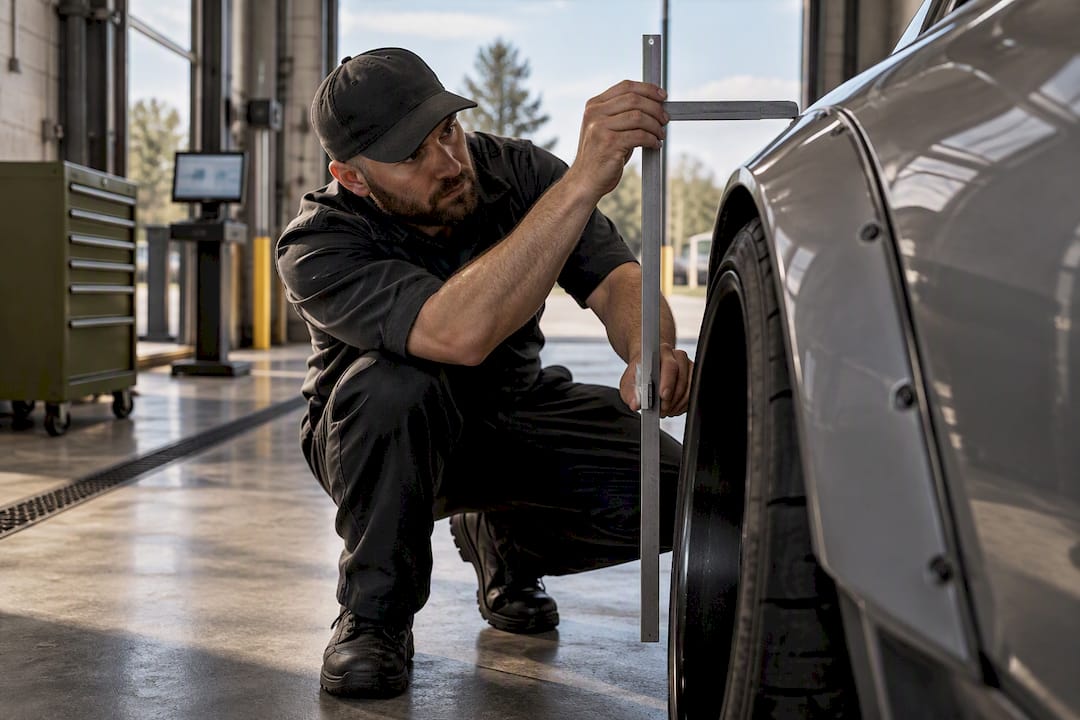
- Most states limit vehicle width to around 102 inches, including mirrors, so measure carefully before installing widebody panels.
- Proper tire coverage at full steering lock is crucial, as poke beyond fenders can lead to citations for debris projection.
- Blocked or misaligned lights and license plates are frequent reasons for enforcement tickets, even on legally installed widebody kits.
- Federal law mostly targets manufacturers and does not criminalize personal owner modifications unless safety equipment is made inoperative.
- Accurate, chassis-specific fitment data and documented installation practices significantly reduce the risk of legal or safety issues.
Table of Contents
- Widebody Kit Legality: State Rules Are What Actually Get You Ticketed
- What Federal Law Actually Regulates (and What It Doesn’t)
- Installation Mistakes That Turn a Legal Kit Into an Illegal Vehicle
- Your Pre-Drive Compliance Checklist
- Fitment-First Practices That Cut Legal and Safety Risk
- Style, Function, and Staying on the Right Side of the Law
- Where to Get Chassis-Specific Kits and Fitment Data
- Sources
- FAQ
Widebody Kit Legality: State Rules Are What Actually Get You Ticketed
Federal law sets the ceiling for what manufacturers can sell, but your state vehicle code decides whether your build passes inspection or draws a citation. That distinction trips up more builders than anything else, and it’s the real answer to “is widebody kit legal” for your specific car.
Width is the first number to check. Most states cap overall vehicle width somewhere near 102 inches, or 8.5 feet, a figure borrowed from commercial trucking law but frequently applied to passenger vehicles too, according to the FHWA summary of state truck and size laws. Measurement conventions vary, so don’t assume mirrors are excluded just because your buddy’s state ignores them. Pull your own state’s statute before you finalize flare width.
Tire coverage is the second trap. Widebody kits exist to cover wider wheels and more aggressive offset, but “poke,” where the tire’s outer edge sits past the fender lip, is a common citation trigger because it raises debris projection risk.
Lighting and plate visibility round out the list of common failure points:
- Turn signals and marker lights blocked or relocated without proper aim
- License plates recessed behind flares or obscured at normal viewing angles
- Rear reflectors covered by extended bodywork
Enforcement style differs by state, too. California and a handful of others run referee stations or formal inspection programs for modified vehicles, while many states rely on roadside enforcement, meaning an officer decides on the spot whether your car looks unsafe. That variability matters for widebody kit rules as much as the text of the statute itself.
What Federal Law Actually Regulates (and What It Doesn’t)
Federal Motor Vehicle Safety Standards, or FMVSS, primarily govern manufacturers and the equipment they certify as new. They’re not a personal permission slip system for owner-installed mods, and that surprises a lot of builders researching widebody conversion legality for the first time.
The relevant statute is 49 U.S.C. §30122, which prohibits manufacturers, distributors, dealers, and repair businesses from knowingly making required safety equipment inoperative. It does not criminalize an individual owner modifying their own vehicle in their own garage. That’s a real liability gap between DIY builders and commercial shops.
NHTSA’s position: whether a bumper or guard interferes with airbag deployment “depends on the combined design of the guard and vehicle,” according to NHTSA interpretation letter nht94-386, and commercial installers can be liable if their work affects FMVSS compliance.
A few points worth locking in:
- FMVSS mostly targets new equipment and OEM certification, not aftermarket cosmetic panels.
- NHTSA interpretations note that replacement sheet metal and body panels usually fall outside direct FMVSS coverage.
- NHTSA can still order a recall if a safety-related defect surfaces, even for aftermarket crash parts, though it historically has not done so for sheet metal absent evidence.
- Individual owners aren’t held to the same “rendering inoperative” standard as commercial installers under §30122.
Installation Mistakes That Turn a Legal Kit Into an Illegal Vehicle
A widebody kit itself can be perfectly compliant and still produce an illegal, unsafe vehicle once it’s bolted on. Fitment and installation quality are where legality actually gets decided.
- Removing or replacing the OEM impact beam. Cutting out the factory bumper’s structural beam to make room for a wider fascia guts crash energy absorption unless the replacement is engineered to match it.
- Blocking or relocating factory sensors. Parking sensors, radar modules, and airbag related components sometimes sit right where widebody fenders and bumpers need clearance. Move them wrong and deployment behavior changes.
- Leaving tires partially exposed. Even an inch of “poke” at full steering lock invites a citation for debris projection risk.
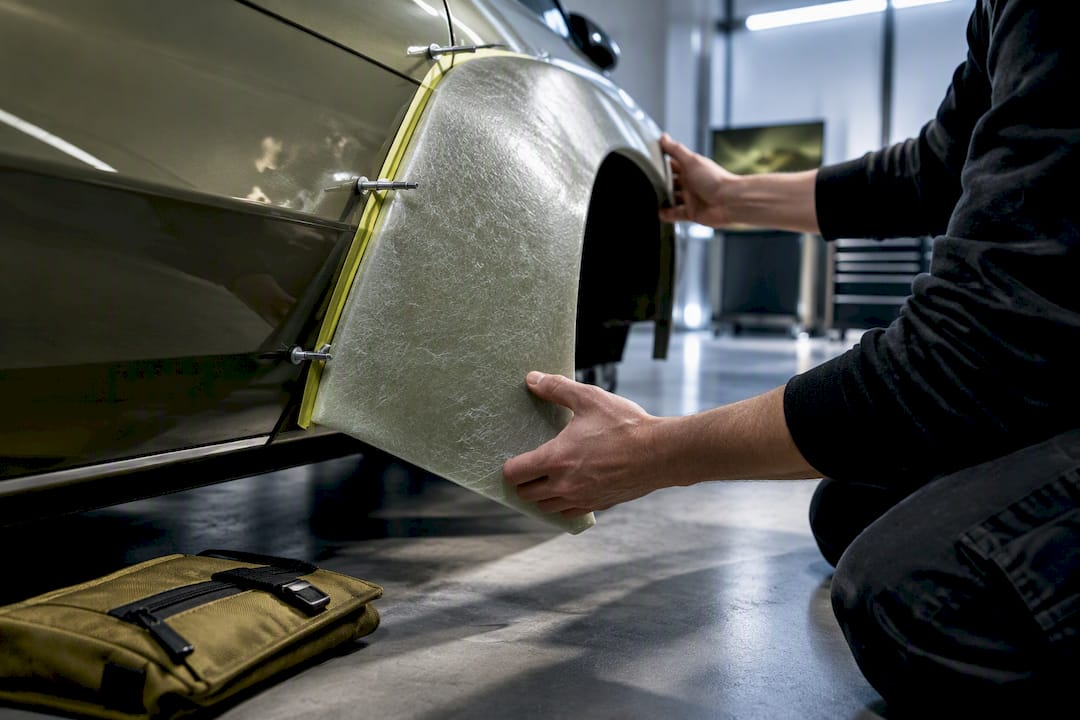
- Using inadequate fasteners on flares. Rivets or adhesive alone on a heavy fiberglass flare can shed panels at speed, which is both a safety hazard and an easy target for roadside enforcement.
Pro Tip: Photograph every stage of the install, especially bumper beam retention and sensor relocation. If you’re ever questioned at inspection or after an accident, those photos are the fastest way to prove the work was done right.
Undocumented structural changes also complicate insurance claims. Insurers can dispute coverage on modifications that altered crash performance without records showing the work was done to spec, and resale buyers will ask the same questions you should be asking now.
Your Pre-Drive Compliance Checklist
Before your widebody build sees public roads, work through this in order:
- Measure final overall width, mirrors included, and compare it against your state’s statutory limit. Write the number down.
- Confirm tire coverage at full steering lock, not just at rest, since inner arches need continuous coverage through the wheel’s full range of motion.
- Check every light and the plate for visibility and correct aim after the flares or bumper go on.
- Photograph critical areas, especially the bumper beam, sensor mounts, and fender-to-tire clearance.
Keep a documentation folder alongside that process:
- Manufacturer fitment data and mounting templates for the exact kit you installed
- Installation photos from each stage
- Receipts or work orders if a shop did any of the labor
- A copy of your state’s relevant width and equipment statutes
If your state runs a formal inspection or referee program, get a third-party check before you register the car. If a shop handled the install, confirm in writing that no safety equipment was rendered inoperative in the process, since that’s the exact language federal law uses to define commercial installer liability.
Fitment-First Practices That Cut Legal and Safety Risk

Most widebody legal trouble traces back to fitment guesswork, not the kit itself. Underground Dynamics builds its catalog around chassis-specific data for exactly this reason: a fender flare engineered for your exact platform closes gaps that generic kits leave open.
A few habits worth adopting before you touch a cutting wheel:
- Mock-fit every panel dry, with the wheel and tire mounted, before any cutting or welding begins.
- Preserve the OEM impact beam whenever possible; only remove it with an engineering sign-off on the replacement’s energy absorption.
- Choose bolt-on flares over full panel replacement when your width target is modest. Bolt-ons are reversible, easier to certify, and simpler to explain at inspection.
- Cross-reference your platform’s widebody fender fitment workflow before ordering, not after.
Undocumented rework is the most expensive version of this process. Getting fitment data and installation guidance sorted before parts arrive saves you from cutting twice and from explaining a mystery gap to an inspector.
Style, Function, and Staying on the Right Side of the Law
Widebody builds live or die on fitment discipline, not on how aggressive the flare looks in a photo. Every mistake worth worrying about here traces back to skipping a mock-fit, cutting a structural beam without a plan, or ignoring the tire coverage question until it’s too late.
My honest bias is toward bolt-on solutions and documented, chassis-specific data over improvised panel work, because a car that’s easy to certify is also a car that’s easy to insure and resell. Measure first. Document everything. Read your state’s statute before you touch a grinder, not after a citation. The build should make your car better, not create a legal liability you didn’t budget for.
— Ismael
Where to Get Chassis-Specific Kits and Fitment Data
Underground Dynamics is the alternative to guessing your way through a widebody build. Instead of buying a generic flare and hoping it clears your tires, you get platform-specific carbon fiber and fiberglass body kits built around real fitment specs, so the gap between “looks right” and “measures right” closes before you ever pick up a grinder.
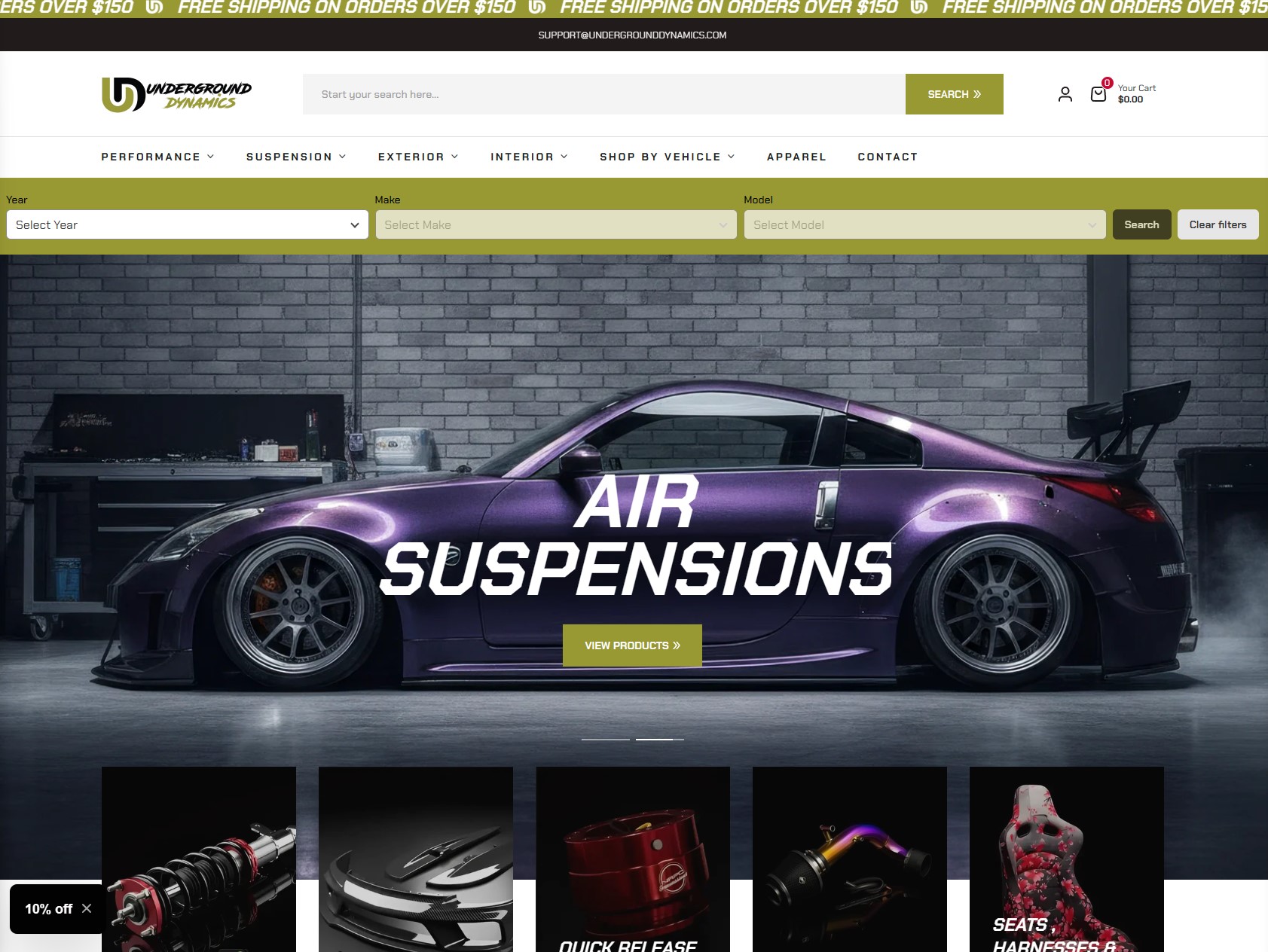
The catalog covers body kits, fenders and flares, hoods, and the spoiler and body panels that go with a widebody conversion, plus the suspension components, like coilovers and lowering springs, that keep ride height and clearance in check once the wider fenders go on. Fitment-first parts mean fewer test fits, less rework, and fewer surprises at inspection time. Browse the current lineup at Underground Dynamics and start with your platform’s fitment data before you order a single panel.
Sources
Before you install anything, go straight to the source instead of a forum thread:
- FHWA summary of state truck and size laws
- 49 U.S.C. §30122 — Rendering inoperative certain devices or elements of design
- NHTSA interpretation letter nht94-386 on bumper guards and airbag interaction
Use these to answer the two questions that actually matter: what’s my state’s width cap, and does my area require a formal inspection or rely on roadside enforcement?
FAQ
Are Widebody Kits Legal in the U.S.?
Widebody kits themselves aren’t banned federally; legality depends on the finished vehicle meeting your state’s width, tire coverage, and lighting rules. Many states cap overall width near 102 inches, so measure your build against that before registering it.
What’s the Difference Between Widebody Kits and Fender Flares?
A widebody kit typically replaces or extends structural body panels to widen the whole car, while fender flares (or overfenders) bolt onto existing fenders to add coverage without a full panel swap. Bolt-on flares are often the simpler, more easily reversible path to legal tire coverage, which is why Underground Dynamics stocks both formats.
Can I Get in Trouble for a Widebody Kit That Blocks My Lights?
Yes. Blocked or misaimed turn signals, marker lights, and license plates are among the most common citation triggers after a widebody install, regardless of whether your state runs formal inspections or roadside enforcement.
Does Removing My Bumper’s Impact Beam Affect Legality?
Removing or replacing the OEM impact beam without an engineered equivalent can hurt crash performance and create both safety and insurance problems, even though FMVSS doesn’t directly regulate replacement sheet metal in most cases, per NHTSA’s interpretation. Keep the factory beam in place unless you have a documented, tested replacement.
Where Can I Find Fitment Data for My Platform?
Underground Dynamics publishes chassis-specific fitment resources, including a widebody fender fitment workflow, so builders can confirm tire coverage and panel clearance before cutting anything. Current pricing and availability for specific kits can be found on the relevant sites.