FREE SHIPPING ON ORDERS OVER $150

Cart
0
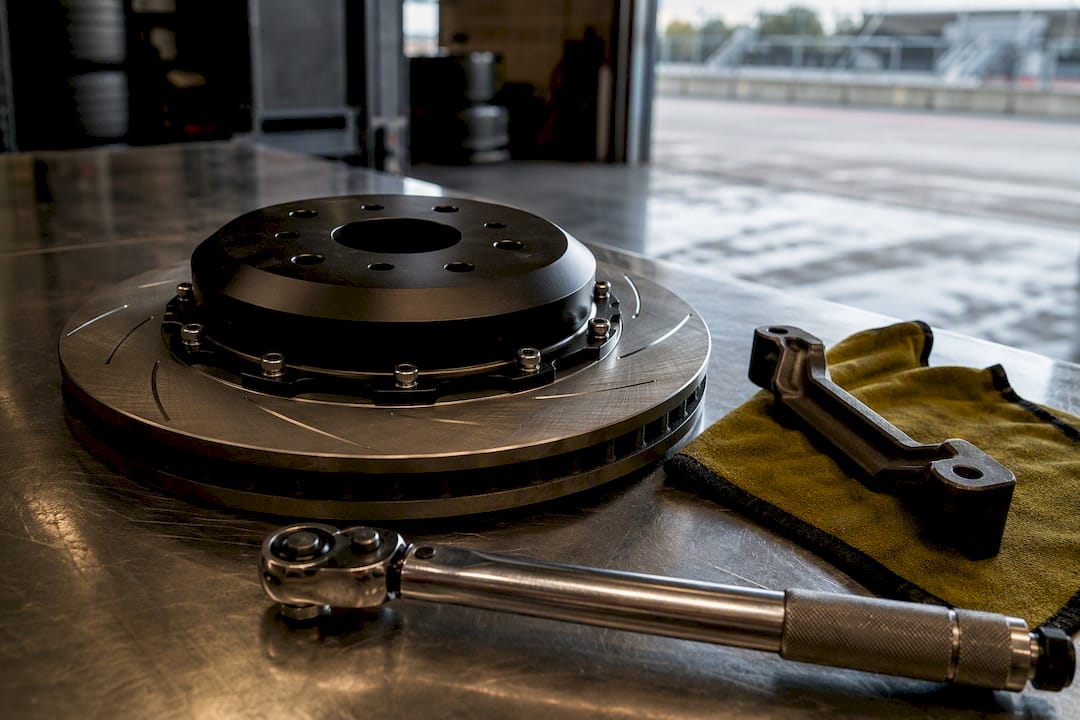
Two-piece rotors earn their keep on short, intense braking cycles. They cut unsprung and rotational mass, keep heat from cooking your hub and bearings, and hold their shape lap after lap instead of warping under repeated abuse. The tradeoff shows up in cost and upkeep, and it matters most if you’re lapping a road course or hammering canyon roads, not towing a trailer through a mountain pass.
TL;DR:
- Two-piece rotors reduce unsprung weight by approximately 4 to 7 pounds per corner, which enhances suspension response and reduces braking effort.
- They manage heat better through limited contact at the interface, protecting hubs and bearings from thermal damage during repeated high-heat stops.
- The design allows the friction ring to expand independently, decreasing warping and providing more consistent pedal feel across multiple stops.
- Owners should inspect and replace hardware during ring changes, especially in salt or rough conditions, to prevent seizure and maintain performance.
- These rotors are most advantageous for track, canyon driving, or aggressive street use, while daily commuters may find high-quality one-piece rotors more cost-effective.
Table of Contents
- What Are Two-Piece (Floating) Rotors, Exactly?
- What Do Two-Piece Rotors Actually Improve?
- Which Drivers And Vehicles Benefit Most?
- What Does Owning Two-Piece Rotors Actually Cost Over Time?
- Why Do Two-Piece Rotors Handle Heat Differently?
- Should You Actually Upgrade To Two-Piece Rotors?
- Find The Right Rotor Fit Through a Trusted Catalog
- Sources
- FAQ
What Are Two-Piece (Floating) Rotors, Exactly?
A two-piece rotor splits the job that a solid disc does alone. You get a cast iron friction ring, the part your pads actually grip, bolted or pinned to a separate hat (also called a bell) that bolts to your hub. The hat is usually aluminum on performance applications, though some setups still run iron for cost reasons.
The ring “floats” on drive pins or bobbins instead of being rigidly fused to the hat. That means:
- The friction ring can expand and contract with heat independently of the hat
- The hat stays cooler and lighter since it’s no longer cast iron
- The ring stays iron because nothing beats it yet for friction consistency and wear resistance under hard braking
This split design is the entire reason two-piece rotors behave differently than a one-piece casting once things get hot.
What Do Two-Piece Rotors Actually Improve?
Here’s where the benefits of two-piece brake rotors stop being marketing talk and start showing up on a stopwatch or a scale.
-
Reduced unsprung and rotational mass. Swapping a solid iron hat for an aluminum one trims real weight right at the corner of your car. Industry reporting puts typical per-corner savings in the 4 to 7 pound range on many performance applications. That’s mass your suspension no longer has to control over every bump, and mass your engine and brakes no longer have to accelerate and decelerate every time you get on the throttle or the pedal.
-
Thermal management and hub protection. The bolted iron-to-aluminum interface acts as a heat chokepoint. Limited contact area and the material transition throttle how much heat reaches your hub and wheel bearings, which matters a lot when you’re stringing together hard stops from a road course’s back straight.
-
Lower risk of warping and better lap-to-lap repeatability. Because the ring isn’t locked rigidly to the hat, it can expand radially as it heats up instead of fighting against a fused center section. That freedom of movement is what reduces the differential thermal stress that causes runout, commonly called warping, after repeated heat cycles.
-
Airflow and cooling geometry. Many two-piece designs pair with vented or directional rotor geometry that moves more air across the friction surface between stops, helping the ring shed heat faster than a solid casting of similar size.
-
Serviceability. When the friction ring wears out, you can often reuse the hat and just replace the ring and its hardware. That’s a meaningfully different ownership model than tossing an entire one-piece rotor.
-
Consistency, not shorter stopping distances. This is the point most buyers get wrong. Two-piece rotors don’t reliably shorten a single panic stop. Stopping distance depends far more on pad compound, tire grip, and vehicle weight. What two-piece rotors actually deliver is consistent pedal feel and clamping force across stop after stop, which is why factory and aftermarket performance packages lean on them.
Pro Tip: Don’t chase two-piece rotors expecting a shorter 60-to-0 number. Chase them expecting your tenth stop from 100 mph to feel as sharp as your first.
Which Drivers And Vehicles Benefit Most?
Duty cycle decides whether two-piece rotors are worth it, not enthusiasm alone.
- Track day and road-course drivers: This is the textbook case. Short, repeated, intense heat spikes are exactly what floating rings are built to handle, and it’s why you see two-piece setups on so many dedicated track and muscle-car performance packages.
- Spirited street and canyon driving: You’ll feel real gains in pedal consistency during aggressive back-road sessions, though you’ll also take on the maintenance responsibilities that come with floating hardware.
- Towing and sustained heavy loads: Long, moderate, sustained heat is a different animal than short spikes. Premium high-carbon one-piece rotors are often the better metallurgical match here.
- Daily commuting: For casual driving, the upgrade is optional at best. You’re paying for a duty cycle your commute rarely demands.
What Does Owning Two-Piece Rotors Actually Cost Over Time?
Two-piece rotors cost more to buy than a comparable one-piece unit, sometimes by a significant margin depending on the brand and material combination. The lifecycle math gets more interesting from there.
Because the hat and ring separate, replacing just the friction ring instead of the whole rotor assembly can lower your cost-per-service over the life of the car. That savings come with strings attached: you’ll need to buy fresh hardware (pins, bobbins, fasteners) every time you swap a ring; skipping that step is how floating rotors earn a bad reputation.
- Inspect drive pins and bobbins for wear or corrosion at every ring change
- Replace mounting hardware whenever you replace the ring, never reuse old fasteners
- Check runout with a dial indicator before final installation
- Torque to the manufacturer’s spec, then follow a proper bedding procedure before hard use
Pro Tip: Salt, road grime, and neglect accelerate bobbin and pin seizure faster than mileage does. If you autocross or track your car through winter months, inspect hardware more often than the manual suggests.
Why Do Two-Piece Rotors Handle Heat Differently?
The engineering behind two-piece rotors comes down to two separate physics problems: heat flow and mass distribution.
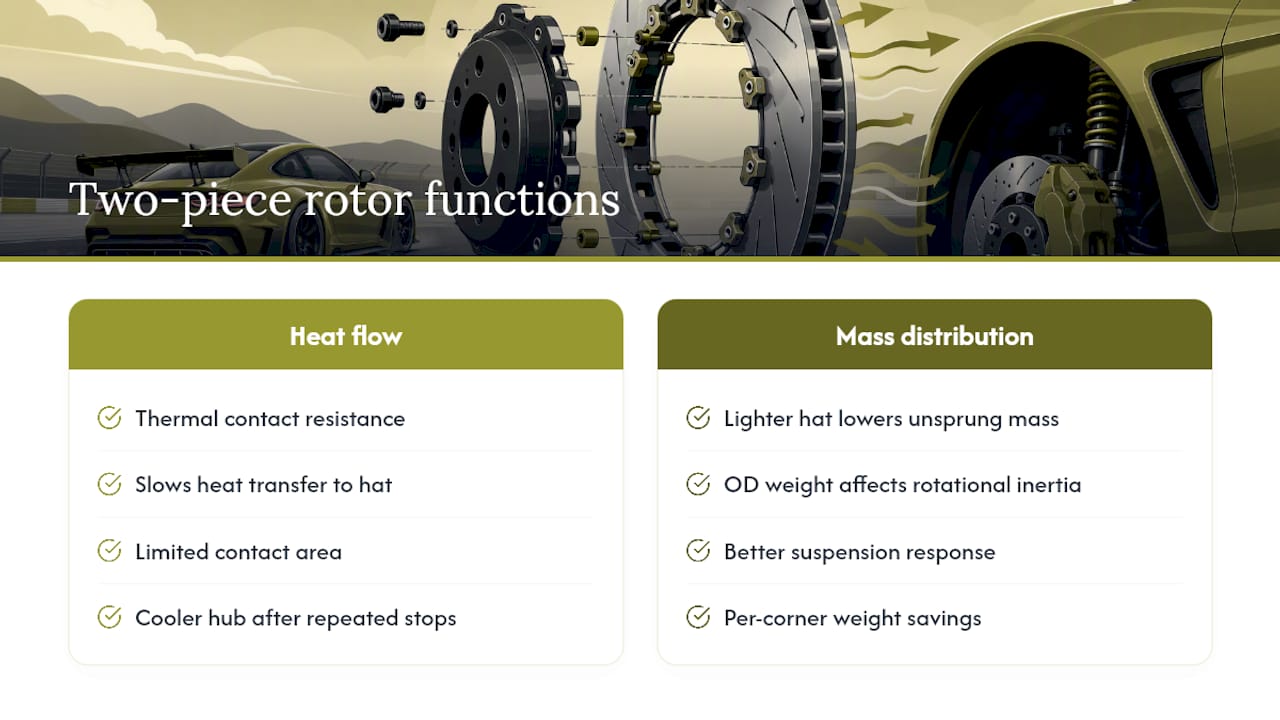
At the bolted iron-to-aluminum interface, engineers deliberately introduce what’s called thermal contact resistance. The interface isn’t a perfect thermal bridge. Limited contact area and a discontinuous joint between two different metals slow the rate heat can travel from the friction ring into the hat, hub, and bearings. Geometry does as much work here as material choice.
Mass distribution is the second piece. Unsprung mass, everything your suspension has to control, drops with a lighter hat, which is why road-race setups notice a measurable improvement in suspension responsiveness. Rotational mass matters differently: weight removed near the rotor’s outer diameter affects rotational inertia more than equal weight removed near the hub, so the hat-swap savings help unsprung mass more directly than they help outright acceleration or deceleration.
Hub-side temperature reductions and per-corner weight savings vary by model and material quality, but the pattern holds consistently across tested applications: lighter hat, cooler hub, more consistent ring behavior under repeated heat cycles.
None of this changes physics on a single stop. It changes what happens on your fifteenth stop compared to your first.
Should You Actually Upgrade To Two-Piece Rotors?
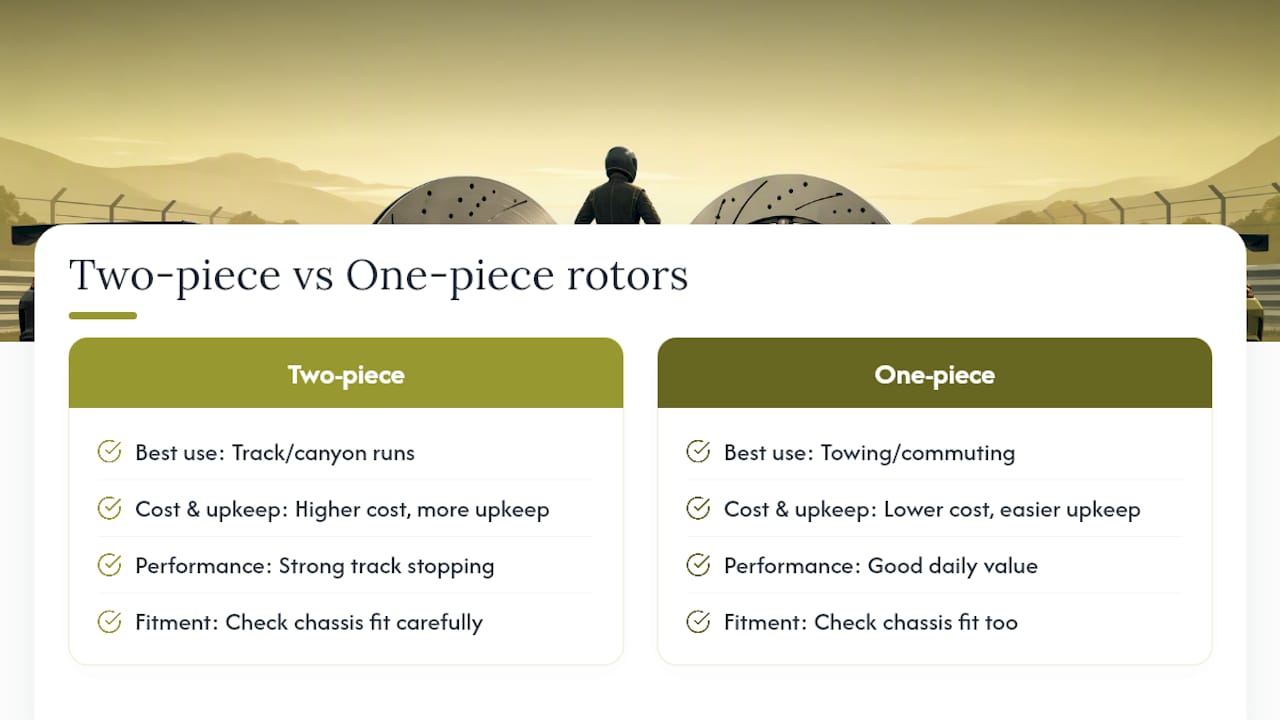
If you’re building a car for track days or aggressive canyon runs, two-piece rotors earn their spot on the upgrade list. If your car mostly tows or sits in commuter traffic, a quality high-carbon one-piece rotor probably serves you better and costs less to maintain.
Sequence matters more than most builders admit. Tires, pads, and suspension geometry usually deliver more stopping and handling improvement per dollar than rotors alone, so get those dialed in first. Once you’re there, check fitment carefully against your specific chassis before you buy.
— Ismael
Find The Right Rotor Fit Through a Trusted Catalog
This catalog is built around fitment data intended to be reliable, not generic parts thrown up with a stock photo. If you’re chasing the benefits this article just walked through, thermal stability, lower unsprung mass, better repeatability, you need a rotor that’s confirmed to match your exact chassis and caliper setup, not a “universal fit” guess.
Browse the performance rotor lineup with full technical specs listed against your platform, and pair any rotor upgrade with the right pad compound for your duty cycle. If you’re planning a broader handling upgrade alongside your brakes, the coilover and suspension catalog is worth checking before you finalize your build order. Head to the Underground Dynamics catalog to confirm fitment and get your build moving.
Sources
- Understanding two-piece rotors - HFM Parts
- 2-Piece vs 1-Piece Brake Rotors: Truck Towing vs Muscle Car Track Use | Ghost Brakes
- Benefits Of Two Piece Rotors | BuyBrakes
FAQ
Are Two-Piece Brake Rotors Worth It?
They’re worth it if you regularly track your car or drive it hard on back roads, where the improved thermal stability and lower unsprung mass pay off across repeated hard stops. For daily commuting or towing duty, a quality one-piece rotor typically delivers better value.
What Type Of Rotors Are Best For Daily Driving?
A solid, one-piece rotor built from good metallurgy is usually the better daily-driver choice since it handles moderate, sustained heat loads without the added maintenance of floating hardware. Two-piece rotors shine on short, intense heat spikes more than steady commuter use.
Is There A Downside To Slotted Rotors?
Slotted rotors can slightly accelerate pad wear and, on some designs, generate more brake dust and noise compared to a plain-face rotor. The tradeoff is usually worth it for track use, where slots help clear gas and debris from the pad surface during hard braking.
Can Two-Piece Rotors Be Resurfaced?
The iron friction ring on a two-piece rotor can typically be resurfaced the same way a one-piece rotor can, as long as enough material remains above the minimum thickness spec. Check your ring’s minimum thickness stamp before resurfacing, and inspect the floating hardware while it’s off the car.