FREE SHIPPING ON ORDERS OVER $150

Cart
0
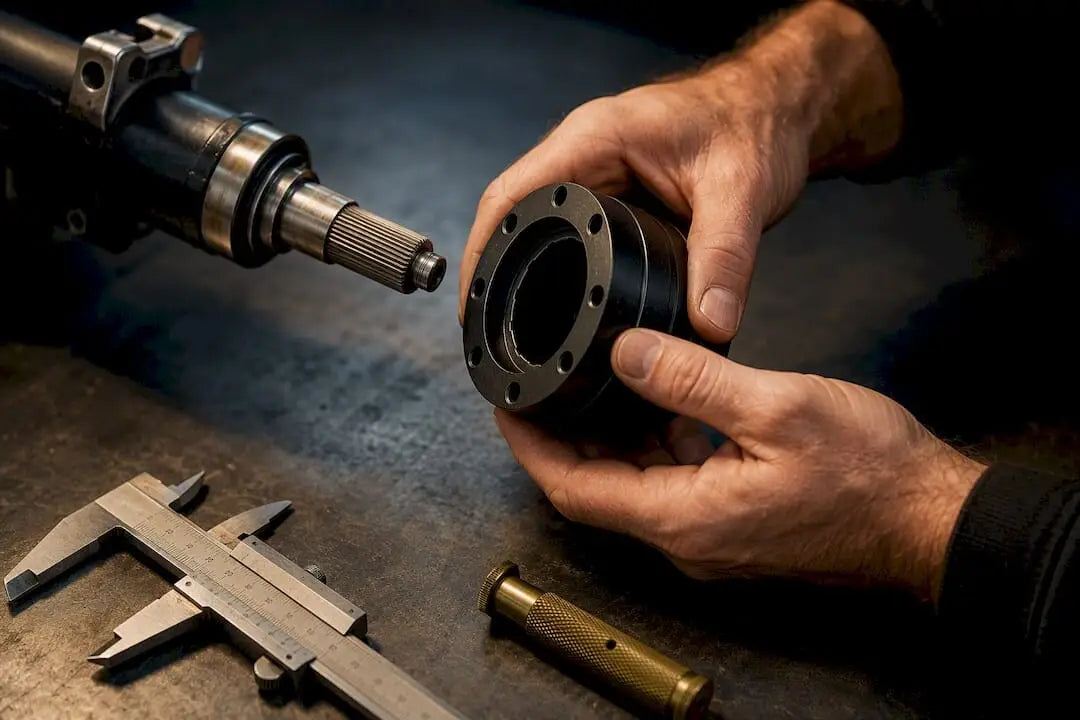
Fitment comes down to four measurements: wheel outer diameter, hub bolt pattern, column shaft spline or Double D size, and hub depth or offset. Get those four numbers before you buy anything. Skip one, and you’re either sending a wheel back or drilling holes you shouldn’t be drilling. Measure first, order second.
TL;DR:
- Measuring all four key fitment points — wheel diameter, hub bolt pattern, column shaft type, and hub depth — prevents costly errors and returns.
- Most passenger wheels are 14 to 15.5 inches, while smaller sizes up to 14 inches are preferred in drift and autocross builds for quicker response.
- Confirm spline count or flat-to-flat width by hand measurement rather than relying solely on generic charts, especially for common domestic shafts.
- The industry-standard bolt pattern is 6x70mm, and most aftermarket wheels and boss kits are designed around this, simplifying cross-brand compatibility.
- Adding quick releases and spacers affects reach and clearance; always verify gauge visibility, airbag wiring, and knee space after modifications.
Table of Contents
- Steering Wheel Hub Sizing Starts With Diameter
- Identifying Your Steering Column Shaft: Splines and Double D Sizes
- How to Measure Your Steering Wheel and Column Correctly
- Boss Kits and the 6x70mm Bolt Pattern Most Aftermarket Wheels Use
- Checking Clearance: Gauge Visibility and Airbag Compatibility
- Quick Releases and Spacers: What They Add to Your Reach
- Fitment Checklist: Confirm These Before You Buy
- How Underground Dynamics Documents Fitment
- What I Check First Before Any Hub Swap
- Get Fitment Right the First Time With Underground Dynamics
- Where to Verify Exact Spline and Dimension Specs
- Sources
- FAQ
Steering Wheel Hub Sizing Starts With Diameter
Wheel diameter sets the tone for how the car drives, and most passenger cars run between 14 and 15.5 inches (350 to 395 mm), with sports and performance models trending smaller and trucks or SUVs trending larger. That range isn’t arbitrary. It reflects a balance between leverage, gauge clearance, and how much arm travel a driver needs at speed.
Go smaller and you get quicker steering response, tighter turn-in feel, and a more direct connection to the front tires. That’s why drift builds and autocross cars often run 13 to 14 inch wheels. Go bigger, or keep the factory diameter, and you keep the softer, more forgiving feel that’s easier to live with in daily traffic and preserves airbag geometry if the car still runs a factory airbag module.
- 13 to 14 inches: common in dedicated performance and drift builds
- 14 to 15.5 inches: standard passenger car range
- 15.5 inches and up: typical for trucks and larger SUVs
A smaller wheel also changes how much of your dash and gauge cluster stays visible, which matters more than most builders expect until they’re sitting in the seat.
Identifying Your Steering Column Shaft: Splines and Double D Sizes
Before you shop for a hub or boss kit, you need to know what your column output shaft actually looks like. Columns generally use one of two configurations: a splined shaft or a Double D (DD) shaft, and mixing up the two is the single most common cause of a hub that bolts on but won’t seat correctly.
Splined shafts are identified by diameter and spline count. Reference charts covering many domestic applications list common sizes like 5/8"-36, 3/4"-36, and 1"-48, meaning a 5/8 inch shaft with 36 splines cut into it, and so on. Double D shafts skip the splines entirely and use two flat sides milled into a round shaft, so fitment there depends on the flat-to-flat width instead of a spline count.
- Splined shafts: identify by shaft diameter plus total spline count
- Double D shafts: identify by flat-to-flat width, measured with a caliper
- Ford, GM, and Chrysler columns have historically used different combinations of both styles, so never assume your application matches a friend’s build
Statistic Callout: Spline charts covering common domestic steering columns list at least three distinct diameter-and-count combinations still in wide use today, which is exactly why counting splines yourself beats guessing from memory.
When you’re not sure which chart entry matches, count the splines yourself and measure the flat width on a DD shaft rather than trusting a listing that may not cover your exact trim year.
How to Measure Your Steering Wheel and Column Correctly
You need four tools: a tape measure, a digital caliper, a length of string, and your own eyes for counting splines. None of this requires a lift or specialty equipment.
- Measure outer diameter. Run the tape measure across the wheel’s face through the center. If spokes or a horn button block a straight line, wrap a string across the rim and measure the string instead.
- Measure grip thickness. Use the caliper to check the rim’s diameter where your hands actually sit, not just the outer edge.
- Inspect the column shaft. Count splines if it’s a splined shaft, or measure flat-to-flat width with the caliper if it’s a Double D shaft.
- Record hub depth and gauge clearance. Note how far the current wheel sits from the dash so you know how much room you have to work with.
Pro Tip: Write your four numbers down in one line, like “14.5 in / 3/4-36 spline / 6x70mm hub / 1.25 in depth,” and post that exact string when asking a supplier or forum to confirm compatibility. It reads faster than a paragraph and gets you a straight answer.
Boss Kits and the 6x70mm Bolt Pattern Most Aftermarket Wheels Use
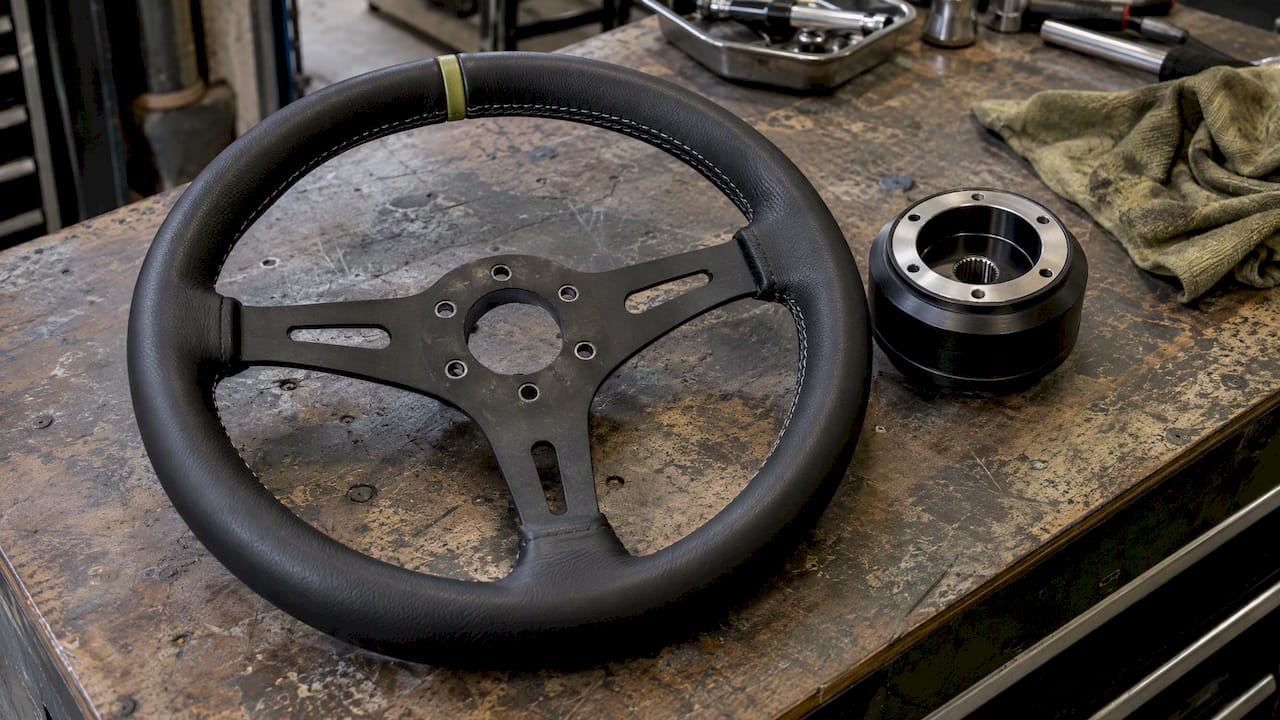
A boss kit is the adapter that bridges your factory column spline or DD shaft to the bolt pattern on an aftermarket wheel. Without it, spline and bolt pattern don’t talk to each other at all.
Most aftermarket steering wheels are built around a 6x70mm, 6 bolt pattern, which has become something close to an industry default. That’s good news for builders switching between wheel brands, since a 6x70mm wheel will typically bolt to a 6x70mm boss kit or quick release regardless of who made either part.
- Confirm the boss kit’s output pattern matches the wheel’s bolt pattern before ordering, not after
- Some wheels come dual drilled, meaning they accept two different bolt patterns on the same hub face, which solves cross-brand mismatches without an extra adapter
- If your boss kit and wheel patterns genuinely don’t match, a dual drilled wheel or a different boss kit is the fix, not a drill and a prayer
Checking Clearance: Gauge Visibility and Airbag Compatibility
Getting the bolt pattern right doesn’t mean the wheel will actually fit your seating position or your dash. Depth and clearance are their own problem, and they’re the one most builders discover too late.
SAE interior dimension references define steering wheel center coordinates and clearance minimums that automakers use to keep gauges visible and knees clear. You’re checking the same thing, just with a tape measure instead of a CAD file.
- Sit in the seat with the new wheel test fit in place and confirm you can read every gauge, not just the speedometer
- If your car still has a factory airbag and clock spring, verify wiring and connector type for your specific model before you disconnect anything permanently
- When depth is tight against your knees or the column stalks, a thinner spacer or a low-profile quick release solves it faster than swapping the whole boss kit
Pro Tip: Mark the factory hub-to-wheel relationship with a nonpermanent marker before you pull the old wheel. If your aftermarket stack ends up sitting differently than expected, you’ll know exactly how far off you are from stock.
Quick Releases and Spacers: What They Add to Your Reach
A quick release lets you pop the wheel off the column entirely, which is great for entry and exit in a caged car, but it isn’t free. Most quick releases add roughly 50 to 60 mm of stack depth, and that pushes the wheel noticeably closer to your chest.
In a roomy cabin that’s a non issue. In a tight bucket seat and harness setup, it can put the wheel closer than you want it.
- If 50 to 60 mm is too much, a thin spacer or a low-profile quick release keeps most of the convenience without eating all your legroom
- Recheck gauge visibility and knee clearance after adding a quick release, since the added depth changes both
- Quick release hardware has its own legal considerations depending on where you drive and whether the car sees street use, so confirm local rules before committing to a street-driven build
Fitment Checklist: Confirm These Before You Buy
Run through this list before you place an order. It takes ten minutes and saves you a return shipment.
- Wheel outer diameter, measured across the face or with the string method
- Column shaft type: splined with exact spline count, or Double D with flat-to-flat width
- Hub bolt pattern, confirmed against the wheel’s published pattern
- Hub depth and offset, measured from your current setup
- Gauge cluster visibility with the new wheel test fit
- Clock spring and airbag compatibility, if your car still runs a factory system
- Horn and wiring continuity after the swap
Red flags to watch for: a mismatched spline count between chart and reality, a seller who can’t confirm clock spring compatibility, gauges obscured by the new rim, or a boss kit listing with vague or missing depth specs. Any one of those is worth a phone call to the supplier before you check out, and confirming published fitment notes directly with the seller beats assuming universal fit.
How Underground Dynamics Documents Fitment
Underground Dynamics lists vehicle-specific fitment details on its product pages, including alignment tools like the 2011 Mustang alignment tool and the 2007 Mustang alignment tool, so you’re not guessing at specs from a stock photo. Builders working through Double D shaft swaps can also reference driveshaft product pages like the S14 RB swap driveshaft for how technical specs get presented.

What I Check First Before Any Hub Swap
Before final install, I always test fit the wheel loose on the splines first and confirm full engagement by hand. Skipping that step is how you end up with a wheel that looks seated but rattles or binds on lock.
— Ismael
Get Fitment Right the First Time With Underground Dynamics
Some suppliers save you the guesswork of matching hub, boss kit, and wheel by listing real fitment specs on their product pages instead of a generic “universal fit” label.
That means you can cross-check your spline count, bolt pattern, and depth numbers against the actual listing before you spend a dollar, not after your return window closes. If you’ve got a question that a product page doesn’t answer, reach out to support directly rather than rolling the dice on a forum guess. Browse the full Underground Dynamics catalog for hubs, boss kits, and alignment tools, or check the performance parts section if your build needs more than just a wheel swap. Start with your four measurements, then go find the part that matches them.
Where to Verify Exact Spline and Dimension Specs

For model-specific verification, reference the ididit spline and shaft chart and the SAE J1100 interior dimension extract before finalizing any order.
Sources
- STEERING BOX AND SPLINE IDENTIFICATION GUIDE — ididit techtips
- What is the diameter of my steering wheel? — KevinsAutos FAQ
- Aftermarket steering wheels: the full fitting guide — GSM Performance
- SAE J1100 steering wheel/interior dimensional references (extract)
FAQ
How Do I Know My Wheel Hub Size?
Measure your column shaft diameter and spline count, or the flat-to-flat width if it’s a Double D shaft, then match that against a spline identification chart or confirm with a boss kit supplier.
How Do I Measure a Steering Wheel Hub?
Use a digital caliper on the column output shaft to get diameter and flat width, and count splines by hand if the shaft is splined rather than Double D.
Does Hub Bore Size Have to Be Exact?
Yes. Bolt patterns like 6x70mm need to match precisely between hub and wheel, though dual drilled wheels can accept two patterns on one hub face if your parts don’t line up otherwise.
What Are the Most Common Wheel Hub Sizes?
Steering wheel diameters most often fall between 14 and 15.5 inches, while aftermarket hub bolt patterns overwhelmingly use the 6x70mm standard.