FREE SHIPPING ON ORDERS OVER $150

Cart
0
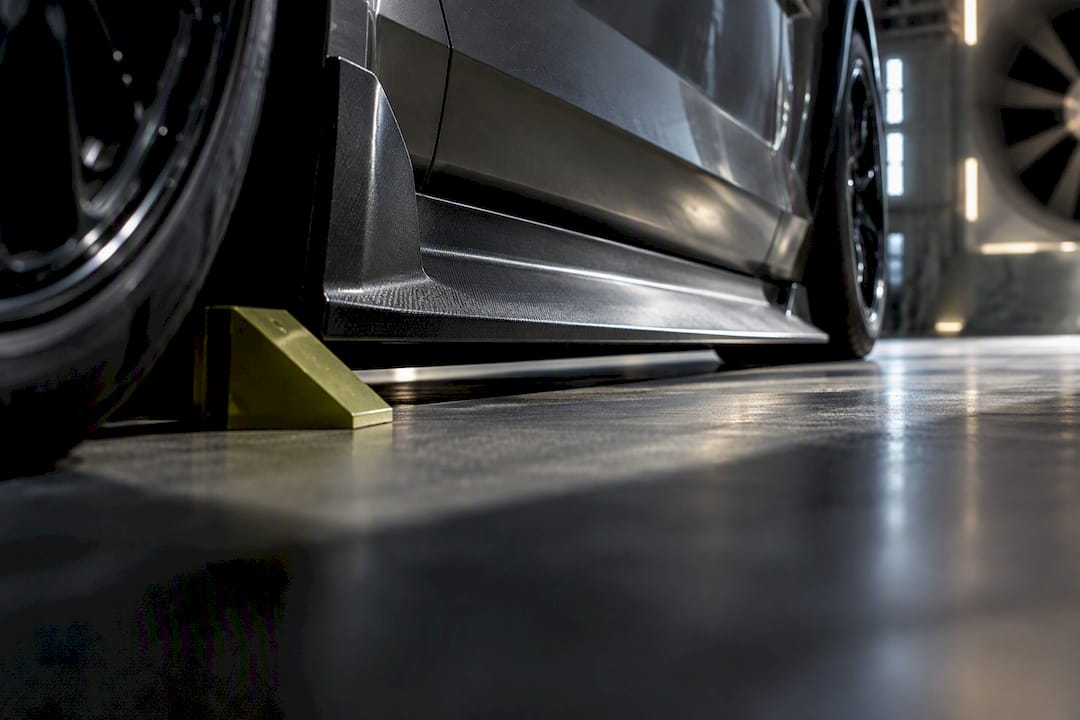
Yes, side skirts help, but only under specific conditions: a lower-edge gap tight enough to block side air from washing into the underbody, and integration with a front splitter or rear diffuser so the low-pressure zone they help create actually has somewhere to go. Wind-tunnel testing has measured drag reductions north of 5% on well-designed skirts. Sloppy fitment or a gap of several inches gets you almost nothing.
TL;DR:
- Properly fitted side skirts can reduce drag by over 5%, but only if the gap under the skirt is kept below 2 centimeters to ensure effective sealing.
- A tight seal is critical because high-pressure side air entering the underbody zone cancels out downforce and increases turbulent drag.
- Complex shapes like inclined panels and flexible flaps enhance sealing and redirect airflow, especially when integrated with front splitters and rear diffusers.
- Wind-tunnel and CFD studies show that on heavy vehicles, skirts can achieve up to a 9.5% reduction in drag, but gains on cars are typically more modest due to complex underbody geometry.
- Street use requires balancing reduced aerodynamic gains with practical concerns like ground clearance, heat management, and maintenance, especially when deploying aggressive, low-gap setups.
Table of Contents
- Side Skirt Aerodynamics: The Pressure and Sealing Mechanism
- Side Skirt Design: Geometry, Flaps, and System Integration
- What Wind-Tunnel and CFD Studies Actually Show
- Benefits and Trade-Offs for Street and Track Driving
- Materials and Fitment: Getting the Install Right
- How to Interpret Studies and Test Your Own Car
- Choosing Fitment-Correct Skirts from the Underground Dynamics Catalog
- Legal and Regulatory Considerations for Side Skirt Modifications
- Balancing Performance Goals With Daily Usability
- Ready to Fit Skirts? Here’s What to Check First
- Authoritative Studies and Reference Reading
- Sources
- FAQ
Side Skirt Aerodynamics: The Pressure and Sealing Mechanism
Here’s the physics you’re actually working with. Air moving under your car wants to move slower than the air moving over and around it, which creates a pressure difference between the underbody and the outside world. That pressure difference is where downforce comes from, but it only works if the low-pressure air stays put. The moment high-pressure air from the sides sneaks underneath, it fills the void, kills the pressure differential, and adds turbulent drag instead of reducing it.
That’s the whole job of a side skirt: seal the gap between rocker panel and pavement so side air can’t intrude. This isn’t a new idea. Lotus engineers figured it out in Formula 1 during the 1970s, running sliding skirts that hugged the track surface to lock in ground effect so aggressively that governing bodies eventually banned the practice outright. The sport banned it because it worked too well, which tells you everything about how much sealing matters.
Vortices play a supporting role here too. A properly shaped skirt edge sheds a small rotating air pocket that acts almost like a soft wall, reinforcing the seal even in the split second before airflow fully attaches. That’s part of why side skirt design has evolved past flat panels into shapes with subtle curves and trailing lips.
Proximity to the ground is the variable that decides whether any of this matters:
- A gap under roughly 2 cm gives you meaningful sealing and measurable drag reduction in wind-tunnel testing.
- Every extra centimeter of gap lets more side air leak in, and the sealing effect drops off fast, not gradually.
- A skirt sitting 3 to 4 inches off the ground is mostly cosmetic. It looks the part but does almost nothing for underbody flow.
Side Skirt Design: Geometry, Flaps, and System Integration
Not all side skirt shapes perform the same, even at identical ride heights. A straight, flat “curtain” panel is the simplest design and works fine as a baseline seal, but it’s rigid. Hit a speed bump wrong and you’re either grinding fiberglass or leaving the skirt at higher clearance than you’d like. Flap-type designs, hinged or semi-flexible at the bottom edge, hold a tighter seal at speed while flexing out of the way over rough pavement. Inclined panels that angle slightly inward toward the bottom edge have tested well because they help redirect side airflow downward and away from the underbody rather than just blocking it.
A few practical design notes worth building around:
- Continuous coverage beats gaps. A skirt with breaks or panel seams lets air punch through at exactly the point you least want it, undoing a chunk of the sealing benefit.
- Rear vents matter more than people expect. Enthusiast write-ups on skirt design consistently flag brake cooling as a real trade-off, and a small vent or louver behind the front wheel well keeps hot air moving instead of trapped against your rotors.
- Treat skirts as one piece of a system, not a standalone fix. A skirt without a front splitter to manage the high-pressure air ahead of it, or a rear diffuser to expand and exhaust the low-pressure air behind it, is doing half a job.
Pro Tip: If your car already runs a front lip and rear diffuser, adding skirts closes the loop and tends to deliver a bigger stability gain than any single piece installed alone.
What Wind-Tunnel and CFD Studies Actually Show
Scale-model testing gives you real numbers, and they’re worth knowing before you set expectations. Wind-tunnel work on 1/8-scale vehicle models found that advanced side skirt designs cut drag coefficient by more than 5% compared to an unsealed underbody.
The number that matters: Independent testing on long trailer skirts recorded a 9.5% drag reduction, while integrated aero packages combining skirts with other underbody devices showed even larger total gains.
That figure comes from heavy-vehicle testing, and that distinction matters. Trucks and trailers have huge, flat-sided underbodies where sealing pays off in a straightforward way. Passenger cars have more complex underbody geometry, exhaust routing, suspension arms, and a shorter wheelbase, so the percentage gains from skirts alone tend to be smaller.
Real-world driving also throws in variables a wind tunnel doesn’t have to deal with:
- Crosswinds and yaw angle change how air approaches the skirt edge, sometimes defeating a seal that tested perfectly straight-on.
- Suspension travel over bumps and dips constantly changes your gap, so the “ideal” clearance you set in the driveway isn’t the clearance you’re running at speed.
- Panel gaps, imperfect trim fitment, and aftermarket mounting hardware all leak a little air that a lab-perfect model wouldn’t.
For a street or track hobbyist car, treat the wind-tunnel figures as a ceiling, not a promise. A well-fitted, well-integrated skirt setup on a passenger car can realistically deliver a noticeable but more modest slice of that benefit.
Benefits and Trade-Offs for Street and Track Driving
Skirts pull their weight most obviously at speed. Once you’re past 60 or 70 mph, the sealed underbody helps keep your car’s aero balance consistent through sweepers and lane changes, which is the stability gain most builders notice first. Combined with a diffuser and splitter, that consistency shows up as more confident, predictable cornering, especially on a car that felt twitchy at speed before.
There’s a fuel-economy angle too, though it’s a secondary benefit rather than the reason to buy skirts. Reduced underbody turbulence at sustained highway speed means slightly less drag to fight, which matters more on a road trip than a daily commute full of stop-and-go traffic.
Now the trade-offs, because they’re real:
- Ground clearance is genuinely tighter. Steep driveways, speed bumps, and parking curbs become things you think about every time.
- Scraping and cracking are common on lowered street cars, especially with rigid materials at aggressive ride heights.
- Heat management needs attention. A tightly sealed underbody near the exhaust or brakes without adequate venting can trap heat where you don’t want it.
- Maintenance access gets harder. Some skirt designs require partial removal for oil changes or suspension work.
None of this makes skirts a bad idea. It just means the decision depends on whether your car lives mostly on the street or mostly at the track.
Materials and Fitment: Getting the Install Right
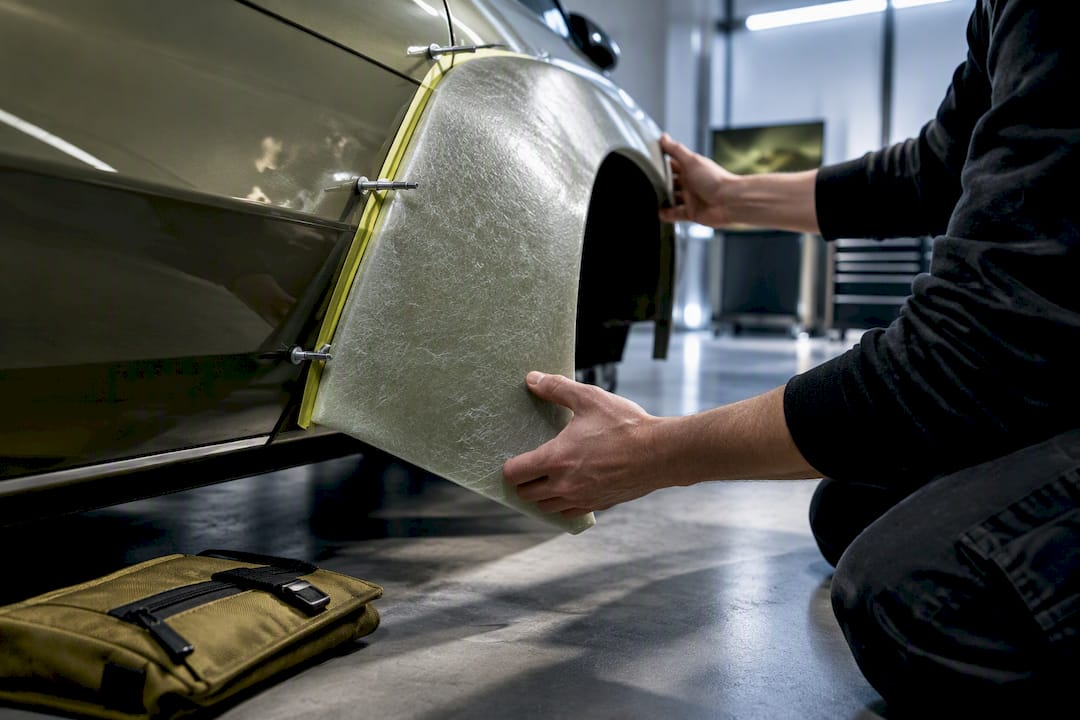
Material choice decides how well your skirt holds its shape and its gap over time, which is the entire point of installing one. Thin ABS plastic is cheap and easy to source, but it flexes, warps with heat, and rarely survives a curb strike without cracking. Carbon fiber and fiberglass hold rigidity far better, which means the lower edge stays where you set it instead of drooping or fluttering at speed and opening up the gap you worked to close.
Getting the mount right matters as much as the material:
- Use chassis-specific templates. A skirt designed for your exact platform will follow factory mounting points and rocker panel contours, instead of forcing you to improvise brackets that shift under load.
- Consider flexible trailing edges or rubber lips at the lowest point of the skirt. They absorb minor scrapes without cracking a rigid panel, which keeps your seal intact longer.
- Get a professional fitment check if you’re running aggressive ride height. DIY installs are fine for moderate setups, but a shop with a lift and experience on your specific chassis will catch clearance issues before they turn into a cracked panel on day one.
Fiberglass tends to be more forgiving and repairable if you do scrape it. Carbon fiber holds its shape better long term but costs more to fix if damaged.
How to Interpret Studies and Test Your Own Car
Published wind-tunnel numbers come from controlled, straight-line, zero-yaw conditions on scale models, or from heavy vehicles with underbody geometry nothing like your Miata or 350Z. Use those figures as a directional signal, not a number you should expect to replicate on your own dyno sheet.
If you want to know whether your specific install is actually working, you don’t need a wind tunnel:
- Tuft testing is the cheapest option. Tape lightweight yarn strands along your rocker panels and film them at speed (safely, with a passenger or GoPro mount) to see whether airflow is attaching smoothly or churning.
- Log fuel economy before and after over a consistent highway route, same speed, same conditions, to catch any real-world efficiency shift.
- Time the same handling loop before and after installation if you track your car, and note whether mid-corner stability feels different at the limit.
Pro Tip: Change one variable at a time. If you install skirts and lower your car simultaneously, you won’t know which change caused what you’re feeling.
Once you’ve got a baseline, iterate. Adjust gap height, add a small vortex-generating vane ahead of the skirt if you’re chasing more sealing without going lower, and retest.
Choosing Fitment-Correct Skirts from the Underground Dynamics Catalog
Chassis-specific fitment data is what separates a skirt that seals properly from one that flexes, gaps, or grounds out constantly. Underground Dynamics builds its body kit and skirt listings around real fitment specs for popular platforms like the Civic, BRZ, Supra, and Miata, so you’re matching a panel to your rocker geometry instead of guessing.
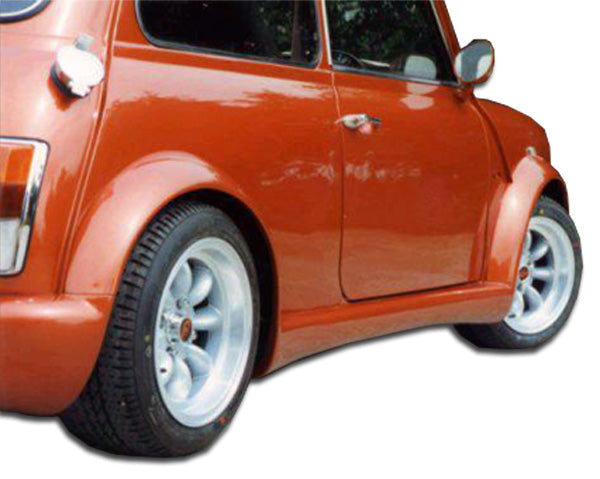
Material matters just as much as fit. Carbon fiber holds a tighter, more consistent gap over time for track-focused builds, while fiberglass tends to be the more forgiving, repairable choice for a car that sees regular street use and the occasional curb.
If you’re adding length or coverage to existing panels rather than replacing them outright, skirt extensions are worth checking before committing to a full skirt swap, especially if your factory rockers already sit reasonably low.
Legal and Regulatory Considerations for Side Skirt Modifications
Side skirts fall into a gray area that trips up a lot of first-time builders. Most states regulate ground clearance, projecting body panels, and sharp edges under general vehicle equipment codes rather than aero-specific rules, which means the legality of your setup often comes down to how your local inspector interprets “excessive modification” rather than a clean yes-or-no rule written specifically for skirts.
A few things to check before you commit to an aggressive gap:
- Minimum ground clearance laws exist in many states and can apply to any part of the vehicle, not just the frame, so a skirt sitting unusually low could technically violate local code even if it never scrapes.
- Edge and protrusion rules sometimes govern how far a body panel can extend beyond the wheel track or how sharp an edge can be, which matters if you’re running a wide-body kit alongside your skirts.
- State safety inspections in states that require them can flag aftermarket body modifications that alter the factory silhouette, even when the part itself is well made.
- Track-only builds generally have far more room to run aggressive gaps, since most circuits don’t enforce street vehicle codes, though individual track rulebooks may set their own minimums for clearance.
None of this means skirts are risky to run. It means checking your specific state’s vehicle code before finalizing ride height is smarter than finding out at an inspection station.
Balancing Performance Goals With Daily Usability
If your car spends most of its life on public roads, favor a conservative gap and a flexible lower edge. You’ll give up a slice of theoretical sealing, but you’ll also stop dreading every parking garage ramp. Save the aggressive, near-scraping setups for cars that live at the track, where clearance rarely matters and sealing does.
The mistake I see most often is builders chasing the tightest possible gap before checking whether their splitter and diffuser are even installed. Skirts amplify a system that’s already working. On their own, they’re a smaller piece of the puzzle than most people assume going in.
— Ismael
Ready to Fit Skirts? Here’s What to Check First
Underground Dynamics is built for exactly this kind of decision: instead of guessing at generic skirts, you’re working from real fitment data matched to your specific chassis, whether that’s a Civic, 350Z, BRZ, or Mustang. The body kit and skirt catalog covers carbon fiber and fiberglass options with the technical specs laid out up front, so you know what you’re bolting on before it shows up at your door.

If your car already has decent rocker coverage and you just need to extend or refine it, the skirt extension resources walk through fit and install without pushing you toward a full kit you don’t need. And if ride height is part of your plan, since gap control is half of what makes skirts work, it’s worth pairing that purchase with a look at coilovers and lowering options so the two systems are dialed in together, not fought against each other.
Measure your car’s current clearance, pull up the fitment guide for your platform, and reach out to support if anything about your setup looks nonstandard. That’s the fastest path to a skirt that actually seals instead of one that just looks the part.
Authoritative Studies and Reference Reading
- Reduction of drag in heavy vehicles with two different types of advanced side skirts
- Modified side skirts and drag reduction (ScienceDirect summary)
- Side Skirts in F1: Ground Effect History
- Making sense of aerodynamics — MotorTrend
Sources
- Reduction of drag in heavy vehicles with two different types of advanced side skirts
- Modified side skirts and drag reduction (ScienceDirect summary)
- Side Skirts in F1: Ground Effect History | Formula 1 Dictionary
- Making sense of aerodynamics — MotorTrend
FAQ
Do side skirts help with aerodynamics?
Yes, when fitted with a tight lower-edge gap and paired with a splitter or diffuser. Wind-tunnel testing has measured drag coefficient reductions over 5% on well-designed skirts, though loosely fitted skirts with large ground gaps deliver far less benefit.
What is the point of side skirts on a car?
Their main job is sealing the gap between the rocker panels and the ground so high-pressure side air can’t rush into the low-pressure underbody. That sealing effect is what preserves downforce and reduces turbulent drag, a principle borrowed directly from 1970s Formula 1 ground-effect cars.
Do side skirts add downforce?
Indirectly, yes. Skirts don’t generate downforce themselves the way a wing does, but by sealing the underbody they help preserve the low-pressure zone that a splitter and diffuser are working to create, which is where the actual downforce comes from.
Are side skirts aero?
Yes, side skirts are functional aerodynamic components, not just visual trim, as long as they’re mounted close to the ground and built into a broader underbody strategy. A skirt sitting several inches off the pavement is closer to a styling piece than a working aero part.
How close to the ground do side skirts need to be to work?
Motorsport and enthusiast guidance points to a lower-edge gap under roughly 2 centimeters for meaningful sealing. Every additional inch of clearance lets more side air intrude and reduces the aerodynamic benefit accordingly.