FREE SHIPPING ON ORDERS OVER $150

Cart
0
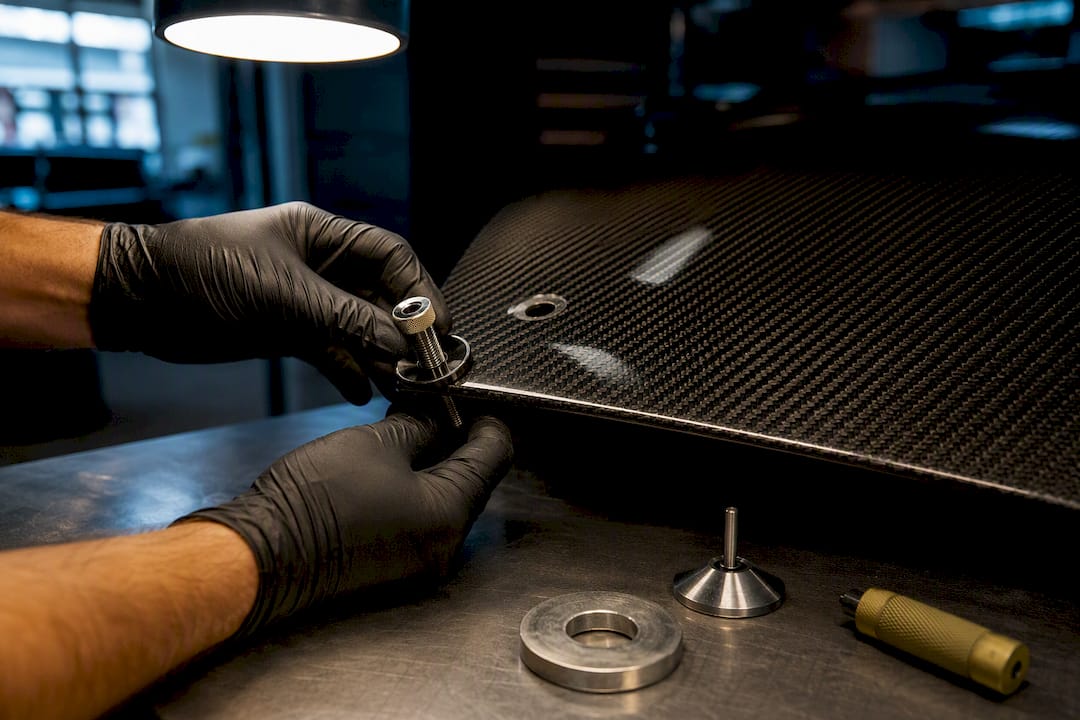
Hood pins are recommended, not optional, whenever a carbon fiber hood sees track time or sustained high speed, because composite panels and their latch tabs don’t fail the same way as stamped steel. Federal guidance under FMVSS-113 sets expectations for hood latch systems generally, but it doesn’t account for aftermarket carbon hoods, which is where a correctly installed pin kit earns its keep. Underground Dynamics treats pins as cheap insurance against an expensive mistake, provided the kit and the install match the hood.
TL;DR:
- Hood pins are mandatory for any track, race, or high-speed applications on carbon fiber hoods to prevent failure and ensure safety.
- Proper installation requires reinforcement such as backing plates or bonded washers, and careful drilling with specific hardware to avoid stressing the composite material.
- Re-torque fasteners after 100 to 200 miles and perform static and low-speed checks before reaching track speeds to prevent damage or failure.
- Hardware should include reinforcement hardware, stainless steel bolts, and clear instructions; kits lacking these features are a red flag for weaker setups.
- Costs involve inexpensive kits, but improper installation can result in costly hood damage or repainting, making professional help worthwhile for expensive or rare parts.
Table of Contents
- When hood pins are recommended or required
- What makes installing pins on a carbon fiber hood different
- Step-by-step installation workflow for hood pins
- How to choose the right hood pin kit for a carbon fiber hood
- Typical parts and labor costs
- Underground Dynamics’ installation rules for composite hoods
- Why builders accept the extra prep
- Getting your hood and hardware fitment-ready
- Primary sources on hood latch safety
- Sources
- FAQ
When hood pins are recommended or required
Street driving with a factory-style latch and a well-fitted carbon hood is usually fine without pins. Add track days, autocross, high-speed highway runs, or a hood that’s shown any flex, cracking, or hinge wear, and pins move from nice-to-have to necessary. Most tracks and time-attack organizations require secondary hood retention specifically because an unlatched hood at speed can fold back and block the windshield, which is a much bigger problem than a scratched hood.
Carbon fiber doesn’t bend and warn you the way steel does. Steel typically dents or deforms before it fails outright; carbon laminate can look fine right up until it delaminates or cracks at a stress point, often around the factory latch tab. FMVSS-113 requires a second latch position or system for front-opening hoods that block forward view, which is the same logic that makes pins worth adding to an aftermarket hood the standard was never written for.
Quick guide:
- Must have pins: any track, time-attack, or race-prepped car with a carbon hood.
- Strongly recommended: aggressive street builds, spirited highway driving, or hoods with visible wear at the latch.
- Optional: garage queens and mild street cars with a factory-matched latch in good shape.
What makes installing pins on a carbon fiber hood different
Drilling straight into a carbon fiber panel the way you would with steel is asking for trouble. Composite laminate doesn’t spread load the way metal does, and a bare hole around a fastener head concentrates stress into a small area, which is exactly how you get core crushing or a spreading crack a few months down the road.

Pro Tip: Always mock up hole placement with painter’s tape and a paper template before any drill touches the hood.
Reinforcement isn’t optional on composites. Depending on the hood’s construction, that means:
- Backing plates on the underside to spread clamping force across a wider area.
- Bonded washers or doublers epoxied into the laminate before the final hole is drilled.
- Rivnuts or nutserts sized to the hood’s skin thickness, never overtightened into a soft core.
Tool choice matters as much as the hardware. Step drill bits or sharp pilot bits reduce tear-out, a light countersink keeps the surface clean around the fastener, and masking the entry and exit points protects the clear coat and the core material from heat and splintering. Before any hole gets made, confirm hood thickness, check for a foam or honeycomb core that needs sealing, and verify the mounting point clears any structural ribbing underneath.
Step-by-step installation workflow for hood pins
A rushed install is the fastest way to turn a $50 part into a cracked hood. Following a repeatable sequence keeps the job clean and gives you (or a shop) a way to check the work afterward.
- Measure and mock up. Use the kit’s template or masking tape to mark pin locations, keeping clearance from hinges, latch cables, and body lines.
- Drill pilot holes. Start small, then step up gradually to the final diameter specified by the kit.
- Bond or install reinforcement. Set backing plates, bonded washers, or rivnuts before the receiver hardware goes in permanently.
- Torque to spec. Snug fasteners evenly; overtightening a composite panel crushes the core just as easily as skipping reinforcement altogether.
- Seal and protect. Edge tape and a bead of sealant around each hole keep moisture out of the laminate.
- Re-check after break-in. Plan to re-torque fasteners after the first 100 to 200 miles, since composite panels and adhesives settle slightly under vibration.
Fasteners on composite panels lose initial clamping force as the laminate and any bonded reinforcement settle, which is why builders following Underground Dynamics’ installation rules schedule a re-torque instead of assuming a one-time install is permanent.
Before trusting the setup at speed, run a static check: open and close the hood several times, confirm the pins seat fully, and look for any new stress lines around the mounting points. Follow that with a low-speed test drive, checking for movement or noise, before you take the car anywhere near track speeds.
How to choose the right hood pin kit for a carbon fiber hood
Material and mounting style matter more than brand names when the hood underneath is composite. Stainless hardware resists corrosion better than plated steel, which is worth the small price difference on a car that sees rain or road salt. Aluminum pins shave a little weight but wear faster at the contact point, so check the kit’s finish before assuming it’s the lighter, better choice.
Mounting style changes how much reinforcement you need:
- Through-hole with backing plate: the most common setup, spreads load well when the plate diameter matches the hood’s core thickness.
- Flush quick-release: cleaner look and faster access, but often needs a larger bonded flange to avoid stress concentration on thin laminate.
Check backing plate diameter, whether reinforcement hardware is even included, rod diameter and tolerance (loose pins rattle, tight ones bind), and whether the kit ships with any installation documentation. A kit that skips reinforcement hardware or offers no installation guidance is a red flag on a composite hood specifically, since steel hoods can sometimes get away with shortcuts that carbon can’t.
Typical parts and labor costs
Budgeting for pins is simple; budgeting for a botched install is not.
- DIY kit cost: hood pin kits themselves are inexpensive compared to the hood they’re protecting, typically a small fraction of what a replacement carbon fiber hood costs.
- Shop-installed labor: expect additional labor hours for template layout, reinforcement bonding, and any paint touch-up around the mounting points.
- Hidden costs: a cracked laminate, a botched hole, or a hood that needs repainting after a failed install can turn a simple upgrade into a repair bill that dwarfs the original part.
- DIY vs shop: DIY saves money if you’re comfortable with composite work and have the right bits; shop installation is worth paying for on an expensive or rare hood where a mistake isn’t easily undone.
Underground Dynamics’ installation rules for composite hoods
Underground Dynamics’ guide, 3 Hood Pin Installation Rules to Protect Composite Hoods, boils the process down to three checkpoints: back every mounting point with proper reinforcement, use fasteners sized and torqued for composite laminate, and re-torque after a short break-in period. As a fitment-focused seller of carbon fiber and fiberglass parts, Underground Dynamics builds its guidance around real installation data rather than generic advice. If you’re unsure how a specific hood is reinforced at the factory, reach out for fitment details before drilling.
Why builders accept the extra prep
Carbon fiber saves real weight over stamped steel, and that’s worth a little extra install care for anyone chasing lap times or a sharper front end. Pins aren’t about looking serious. They’re cheap insurance against a hood that lifts at the one moment you can’t afford it, and that trade only makes sense once you understand what carbon can and can’t take.
— Ismael
Getting your hood and hardware fitment-ready
Carbon fiber and fiberglass hoods are available that are built with real fitment data, not generic measurements, reducing guesswork about whether reinforcement points will line up with your chassis.

- Browse carbon fiber and fiberglass hoods matched to popular enthusiast platforms.
- Reach out through the site if you need fitment confirmation for your specific hood and chassis combination.
Once you’ve got the reinforcement question answered, the Underground Dynamics catalog is where you pick the hood, order the hardware, and get the fitment specs you need to install it right the first time.
Primary sources on hood latch safety
Federal and state rules shape how hood latch systems are expected to perform, even though aftermarket hood pins sit outside that framework as supplemental hardware.
- 49 CFR 571.113: the federal standard requiring a hood latch system and a second latch position for certain front-opening hoods.
- NHTSA interpretation nht87-211: explains how two-latch or two-position systems satisfy the secondary latch requirement.
- NHTSA interpretation nht92-953: clarifies when a secondary latch is and isn’t required based on hood design.
Sources
FAQ
Are hood pins necessary for carbon fiber hoods?
They’re necessary for track use and strongly recommended for aggressive street driving, since carbon fiber can crack or delaminate at stress points without the visible warning signs steel gives off. For mild street builds with a solid factory latch, pins are more of a precaution than a requirement.
What are the best hood pins for a carbon fiber hood?
The best kit for a composite hood is one that includes proper reinforcement hardware, like backing plates or bonded washers, and clear installation documentation. Stainless steel hardware holds up better against corrosion than plated steel, and mounting style should match how much reinforcement your specific hood can support.
Are hood pins legal?
Hood pins themselves aren’t restricted, since FMVSS-113 governs primary hood latch systems and treats pins as supplemental secondary retention rather than a replacement. Some state vehicle codes echo the same federal intent that front-opening hoods need both a primary and secondary latch, so pins generally support compliance rather than conflict with it.
How much does it cost to have hood pins installed?
A basic kit is inexpensive on its own, but shop installation adds labor for template layout, reinforcement bonding, and any paint touch-up around the mounting points. Costs climb fast if a rushed or unreinforced install cracks the hood, since replacement carbon fiber hoods cost far more than the pins meant to protect them.