FREE SHIPPING ON ORDERS OVER $150

Cart
0

For your Mustang, the direct answer is this: pick a direct-fit carbon fiber hood matched to your exact generation and trim, verify the spec sheet before you order, and confirm hood pin requirements upfront. Undergrounddynamics carries chassis-specific carbon fiber and fiberglass aero parts with the fitment detail you need to buy with confidence.
Before you click anything, check these three things:
- Exact fitment: Year, trim, and submodel matter. A hood listed for a 2015–2017 EcoBoost will not necessarily fit a 2018+ GT without modifications.
- Weave and finish: Most quality hoods use 3K 2x2 twill in gloss clearcoat or matte. Know which you want before ordering.
- Hardware: Hood pins are required on any composite hood. OE gas struts are not compatible with most carbon fiber panels.
Pro Tip: Before ordering, pull your VIN and cross-reference it against the supplier’s fitment sheet. If the sheet doesn’t list your specific trim, contact sales directly. Guessing costs you a return freight bill.
Table of Contents
- What styles of Mustang carbon fiber hood can you get?
- How do you choose the right carbon fiber hood for your Mustang?
- What does carbon fiber hood installation actually involve?
- What do carbon fiber hoods cost, and how does shipping work?
- How do you protect and maintain a carbon fiber hood’s finish?
- What trust signals should you require before buying?
- Key Takeaways
- Carbon fiber hoods reward buyers who do the homework first
- Undergrounddynamics has the fitment data to get this right
- FAQ
What styles of Mustang carbon fiber hood can you get?
Carbon fiber hoods for the Mustang fall into four practical categories. Each serves a different goal, and picking the wrong style for your use case is the most common buyer mistake.

OEM-style / direct replacement: Looks stock, fits like stock, weighs less. These are vacuum-infused panels using 3K 2x2 twill cloth with a bonded skeleton underneath. Best for daily drivers who want weight savings without changing the car’s profile.
Vented / heat-extractor (GTD-style): The functional pick for track builds. Vents evacuate trapped hot air from the engine bay and reduce hood lift at speed. The EOS GTD-style hood for recent Mustang models is a real-world example of this category, with documented fitment and premium pricing. If your Mustang runs hard on track, this style earns its cost.

Cowl / ram-air: Raised cowl section channels air toward the intake. More visual drama than a flat OEM-style, and useful on forced-induction builds where intake temps matter. Fitment complexity is higher than a flat replacement.
Forged carbon / visual panels: These use a chopped-strand or forged carbon aesthetic rather than standard twill weave. The look is distinctive, but structurally they behave similarly to standard vacuum-infused panels. No functional cooling benefit.
| Style | Weight reduction | Finish options | Fitment complexity | Typical price band |
|---|---|---|---|---|
| OEM-style | Moderate | Gloss, matte, raw | Low | $800–$1,500 |
| Vented / GTD-style | Moderate | Gloss, matte | Medium | $1,500–$2,200 |
| Cowl / ram-air | Moderate | Gloss, matte | Medium-high | $1,200–$2,000 |
| Forged carbon | Low-moderate | Gloss | Low-medium | $1,000–$1,800 |
On material process: Vacuum-infused parts are the standard for aftermarket hoods. Autoclave pre-preg construction, used by Ford Performance on parts like the M-16612-MG hood vent for 2024–2025 GT and Dark Horse models, produces a denser, more consistent laminate. Pre-preg parts cost more and are worth it for track use or concours builds.
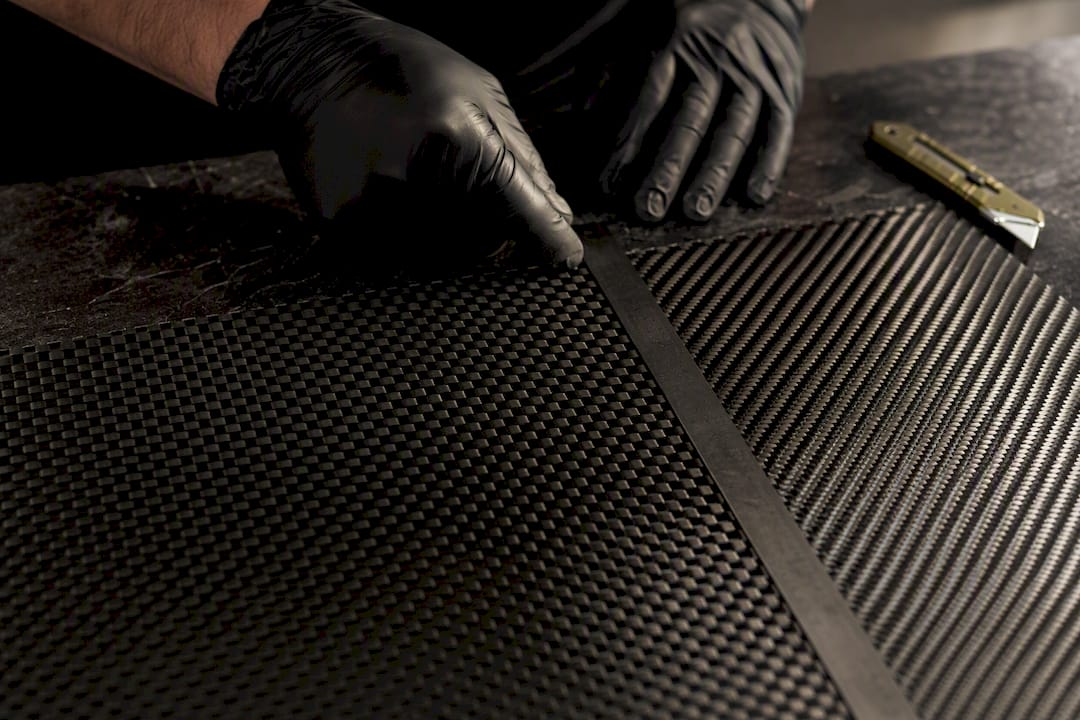
Pro Tip: To spot authentic 3K twill in a product photo, look for a consistent diagonal weave pattern with uniform cell size. Cheap overlays often show irregular spacing or a glossy “painted-on” texture with no depth.
How do you choose the right carbon fiber hood for your Mustang?
Work through this checklist in order. Fitment first, everything else second.
- Confirm year, trim, and submodel. A 2015–2017 EcoBoost and a 2015–2017 GT share a platform but may have different hood mounting geometry. Manufacturers like Anderson Composites list specific fitment by trim for S550 and S650 hoods. Match exactly.
- Check weight savings vs. OEM. Most carbon fiber hoods reduce hood weight meaningfully compared to stamped steel. Ask the supplier for the actual panel weight, not just “lighter than stock.”
- Confirm material and process. Vacuum-infused 3K twill is the baseline. Pre-preg/autoclave is the premium tier. Know what you’re paying for.
- Choose your finish. Gloss clearcoat, matte, or raw (no clearcoat). Raw panels need UV protection applied immediately after install.
- Ask about required hardware. Hood pins, heat shields, and prop rods are not optional on composite hoods. Get the full hardware list before checkout.
- Read the warranty and return policy. Freight items have different return rules than parcel shipments. Confirm before you order.
Red flags to walk away from:
- “Fits most Mustangs” with no trim or year range listed
- No downloadable spec or fitment sheet
- No customer photos for your specific generation
- No mention of hood pins or OE gas strut warnings
- Pre-preg pricing on what is clearly a vacuum-infused part
Pro Tip: Ask the seller: “Can you show me a customer photo of this hood on a [your year/trim] Mustang?” If they can’t, that’s your answer.
What does carbon fiber hood installation actually involve?
Even “direct bolt-on” hoods need minor fitment adjustments. Plan for it.

The typical install sequence runs: remove the OEM hood, transfer latches and hinges, set the new panel in place, adjust gap and alignment, install hood pins, and test latch engagement at low speed before driving. A shop experienced with composite bodywork will produce better results than a generalist body shop.
Anderson Composites explicitly warns against reinstalling OE gas struts on composite hoods. The pressure they place on composite mounting points can crack the panel at the hinge. Use a prop rod or aftermarket struts rated for lightweight panels.
Safety note: Hood pins are not a style choice on a composite hood. At highway speed, a composite panel without pins can pop open and cause catastrophic damage. Install them. Every time.
DIY vs. pro:
- DIY is reasonable if you have panel-handling experience, a torque wrench, and a drill for pin installation. Budget 3–5 hours for a careful first install.
- Go to a shop if you’ve never handled composite bodywork, you’re installing on a daily driver, or the hood requires cowl modifications. Labor typically runs $150–$300 at a composites-experienced shop.
What do carbon fiber hoods cost, and how does shipping work?
Mustang carbon fiber hoods vary widely in price depending on style and construction, with vented or premium pre-preg parts costing more than basic vacuum-infused OEM-style panels. Ford Performance’s OE-style carbon components, including the M-16612-MG hood vent, sit at a premium price point consistent with autoclave construction.
What drives cost up:
- Autoclave/pre-preg construction vs. vacuum infusion
- Integrated functional vents or inserts
- Forged carbon finish
- Custom paint or clearcoat matching
- Rush or expedited shipping
Shipping reality: Hoods ship freight, not parcel. Expect crating fees and potentially a liftgate service charge if you’re receiving at a residential address. Lead times for in-stock parts run 3–7 business days for freight delivery. Made-to-order or custom-finish parts can run 4–8 weeks.
Pro Tip: Always get a freight quote before checkout. Crating and liftgate fees can add $100–$200 to the delivered cost. Factor that into your budget comparison.
How do you protect and maintain a carbon fiber hood’s finish?
Your finish choice determines your maintenance routine.
Gloss clearcoat is the most forgiving. Wash with a pH-neutral soap, dry with a microfiber, and apply a UV-protective ceramic coating every 6–12 months. Avoid abrasive compounds entirely on clearcoated carbon.
Matte finish needs matte-specific detailing products. Standard waxes leave a sheen that ruins the look. Use matte-safe sealants only.
Raw / no clearcoat panels need UV protection applied immediately after install. Without it, the resin yellows. Cheap or poorly formulated resins are especially vulnerable to UV degradation, which is one reason price correlates with long-term appearance.
Maintenance schedule:
- Weekly: Rinse and wipe with a microfiber. No abrasive pads.
- Monthly: Wash with pH-neutral soap, inspect for chips or cracks at mounting points.
- Quarterly: Apply UV-protective sealant or ceramic coating topper.
- Annually: Full inspection of weave surface, mounting hardware, and latch engagement.
What trust signals should you require before buying?
A high-value freight part with no return guarantee is a real risk. Require these before you pay:
- Fitment/spec sheet listing your exact year, trim, and submodel
- Material and process notes (vacuum-infused vs. pre-preg, weave spec)
- Customer photos of the hood installed on the same generation Mustang
- Installation instructions or fitment notes covering hardware requirements
- Explicit warranty and freight return policy in writing
Non-negotiable: If a supplier can’t provide a fitment photo for your specific Mustang generation, don’t order. A photo from a different generation tells you nothing about your gap fitment.
In reviews, look for: Long-term notes on finish durability (6+ months), documented gap fitment across multiple trims, and any mention of hardware issues or OE strut incompatibility. Short “looks great!” reviews with no install detail are not useful.
Key Takeaways
A direct-fit carbon fiber hood matched to your exact Mustang generation, with hood pins installed and OE gas struts removed, is the correct baseline for any build.
| Point | Details |
|---|---|
| Fitment first | Always match by exact year, trim, and submodel — never order from a vague “fits most Mustangs” listing. |
| Hood pins are required | All composite hoods need hood pins; OE gas struts must be removed to avoid cracking the panel. |
| Process affects price and longevity | Autoclave/pre-preg parts outlast vacuum-infused panels in finish durability and structural consistency. |
| Budget for freight | Hoods ship freight; crating and liftgate fees can add $100–$200 to the delivered cost. |
| Undergrounddynamics | Carries chassis-specific carbon fiber hoods with detailed fitment data — verify your spec sheet or contact sales with your VIN before ordering. |
Carbon fiber hoods reward buyers who do the homework first
Most fitment problems with aftermarket hoods come down to one thing: the buyer skipped the spec sheet. The weave looks right in the photo, the price feels fair, and the listing says “Mustang” without specifying S550 vs. S650 or EcoBoost vs. GT. Then the hood arrives and the gaps are off by half an inch.
The carbon fiber category is not forgiving of lazy research. These panels are lighter and stiffer than stamped steel, which means they telegraph every mounting misalignment. A metal hood flexes slightly and closes anyway. A carbon panel does not.
What I’d tell any Mustang owner shopping this category: treat the spec sheet as the product, not the photo. If the supplier can’t hand you a PDF with your exact trim listed, move on. The hoods that are worth buying come with documentation. The ones that don’t are the ones you’ll be returning at your own freight cost.
Undergrounddynamics has the fitment data to get this right
Buying a carbon fiber hood without confirmed fitment is how you end up with a $1,500 panel that doesn’t close flush. Undergrounddynamics solves that with chassis-specific listings, detailed specs, and a direct line to sales for VIN-level fitment confirmation.
The carbon fiber and fiberglass aero catalog covers hoods and matched body components with the technical detail you need to order correctly. Before checkout, run through this:
- Confirm your year, trim, and submodel against the fitment sheet
- Add freight and crating to your cost estimate
- Ask about lead time for your specific part
- Confirm the return policy for freight items in writing
Ready to order or need fitment confirmation for your VIN? Contact Undergrounddynamics sales directly. They’ll match you to the right part before you pay.
FAQ
Do all carbon fiber hoods for Mustangs require hood pins?
Yes. Anderson Composites recommends hood pins for all composite hoods, particularly at highway or track speeds where a pop-open panel can cause serious damage.
Can I reuse my OEM gas struts on a carbon fiber hood?
No. OE gas struts place too much pressure on composite mounting points and can crack the panel. Use a prop rod or aftermarket struts rated for lightweight panels.
What’s the typical price range for a Mustang carbon fiber hood?
Expect $800–$2,200 depending on style and construction process. The EOS GTD-style hood for recent Mustang models is a real-world example of premium pricing; OEM-style vacuum-infused panels typically start lower.
How do I know if a carbon fiber hood will fit my specific Mustang trim?
Request the supplier’s fitment/spec sheet listing your exact year and trim. Vague listings like “fits S550 Mustangs” without trim detail are a red flag.
How do I protect a carbon fiber hood from UV damage?
Apply a UV-protective ceramic coating or sealant and avoid abrasive cleaners. Cheap resins yellow under UV exposure, so quality of construction matters as much as maintenance routine.