FREE SHIPPING ON ORDERS OVER $150

Cart
0
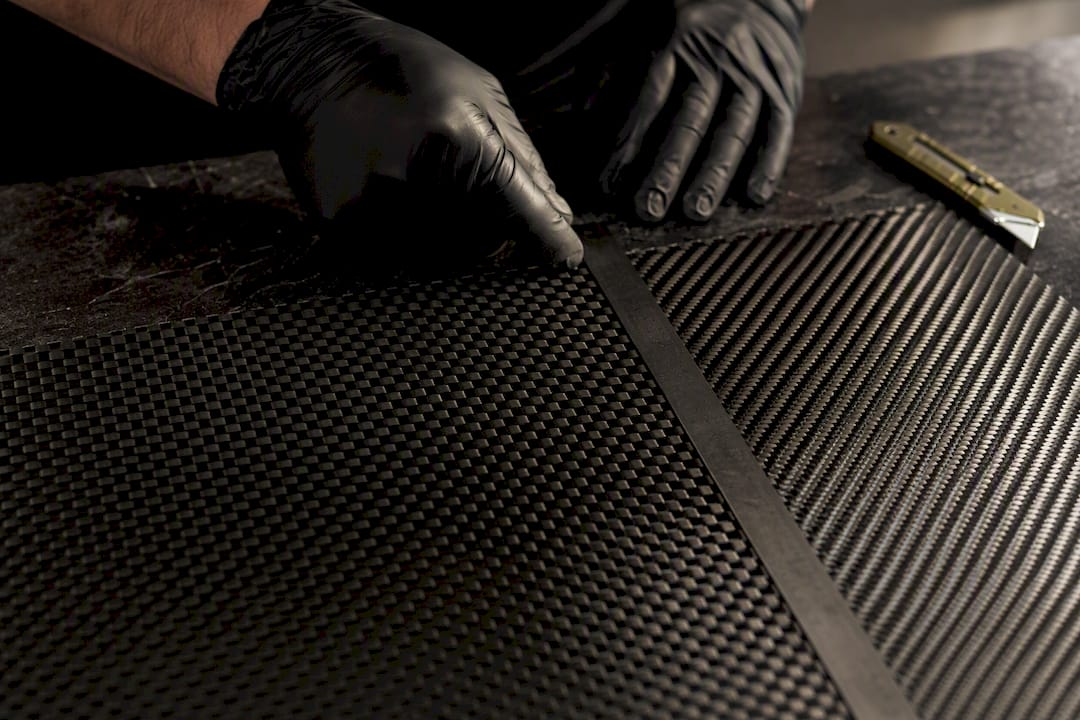
For most exposed, curved automotive parts, pick 2x2 twill for its drape and finish. For flat structural panels, pick plain (1x1) weave for its dimensional stability. The mechanical differences between them are modest, so the real decision usually comes down to part geometry and how you’re finishing it, whether that’s a 3K hood skin or a 6K structural brace.
TL;DR:
- Twill weave is preferred for curved parts because it drapes better and produces a more reflective, “wet” appearance under clear coat.
- Plain weave provides greater flatness and stability, making it ideal for structural backing, interior reinforcement, and hidden layers.
- Heavier tow counts, like 6K, build thickness faster with a bolder pattern, while lighter 3K fabric offers a finer, more premium finish suitable for small cosmetic parts.
- When selecting fabric, consider part geometry, finish type, tow size, and layup skill level; always verify specifications with the supplier before purchasing.
- Combining weaves in layered parts allows for both aesthetic appeal and structural integrity, especially when transitioning between flat and curved sections.
Table of Contents
- 2x2 Twill vs Plain Weave: A Side-by-Side Breakdown
- Which Parts Actually Call for Each Weave?
- How to Choose the Right Weave for Your Part
- Handling and Fitment Tips That Prevent Finish Problems
- A Builder’s Take on Twill and Plain Weave Trade-Offs
- How Underground Dynamics Helps You Buy the Right Part the First Time
- Sources
- FAQ
2x2 Twill vs Plain Weave: A Side-by-Side Breakdown
Every carbon fiber weave comes down to one simple question: how many tows does each strand cross before it dips under the next one? In plain weave, each tow alternates over one, under one, creating that tight checkerboard look you’ve seen on flat trim pieces and structural coupons. In 2x2 twill, each tow goes over two, under two, which produces the diagonal pattern most enthusiasts associate with “real” carbon fiber parts.
That difference in crossing pattern controls two things builders care about most: crimp and float. Crimp is the bend each tow makes every time it crosses over or under a neighboring tow. Float is the straight, uninterrupted stretch between crossings. Plain weave has short floats and lots of crimp, which locks the fabric into a tight, stable grid. Twill has longer floats and fewer crimps per inch, so the fabric flexes and wraps more easily.
That flex is why twill dominates cosmetic panels. Its diagonal lines catch light differently than a checkerboard, producing what a lot of shops call a “wet look” once clear coat goes over it. Plain weave reads flatter and more uniform, which is exactly why it shows up on tooling and structural layers where nobody’s staring at the surface.
On the strength side, don’t overthink it. Plain weave’s higher crimp count can create small stress concentrations at each crossing point, while twill’s longer floats spread that stress out more evenly and improve formability. In practice, that’s a nuance, not a knockout blow. Neither weave is “weak,” and resin system, layup quality, and ply count will move your part’s real-world strength far more than weave pattern alone.
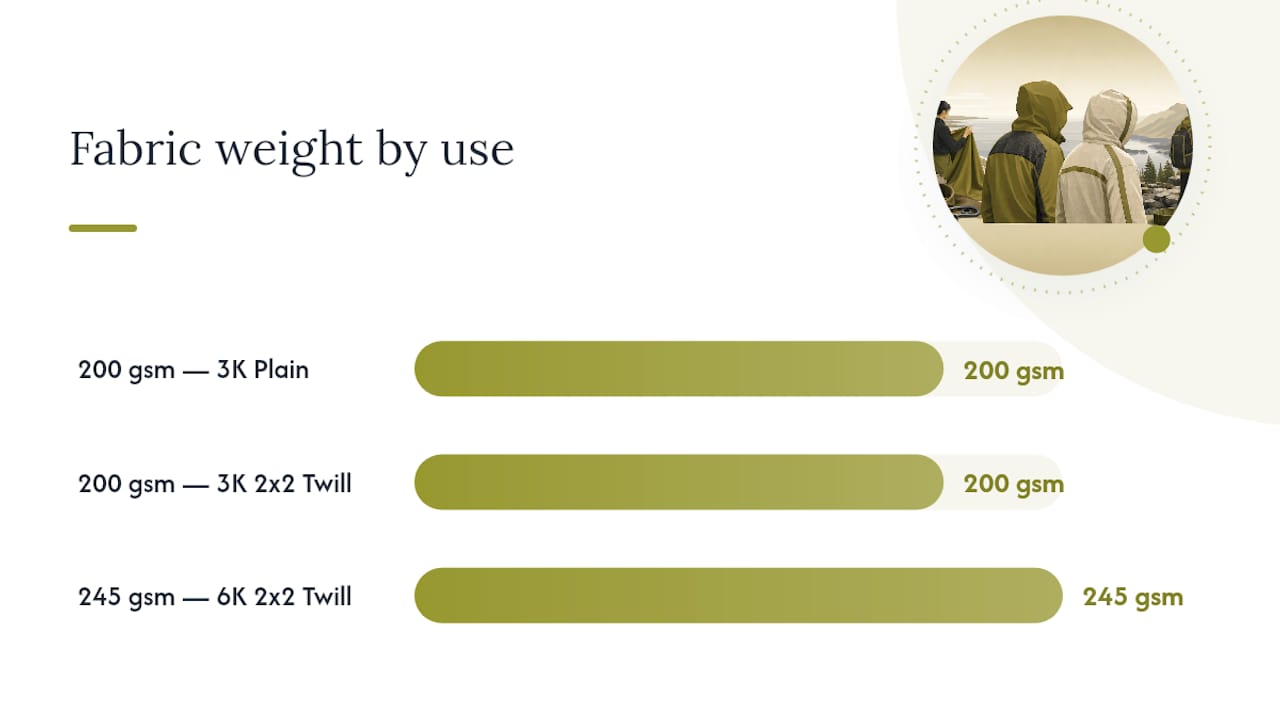
Tow count and fabric weight matter just as much as pattern. Here’s how the common combinations stack up:
| Spec | Typical Use |
|---|---|
| 200 gsm 3K plain weave | Flat panels, backing plies, tooling |
| 200 gsm 3K 2x2 twill | Visible trim, mirror caps, small cosmetic parts |
| 245 gsm 6K 2x2 twill | Hoods, fenders, larger exposed panels |
Those 3K and 6K numbers refer to tow size, or roughly how many carbon filaments bundle into each strand. Heavier tows show a bolder weave pattern and build thickness faster, while lighter 3K fabric gives a finer, tighter look that a lot of builders prefer for smaller cosmetic pieces.
A few quick rules of thumb worth keeping in your back pocket:
- Twill drapes better over curves because it has fewer crimps fighting the fabric as it bends.
- Plain weave holds its shape better on flat sections because its tight crimp resists shifting during layup.
- Heavier tow counts (6K) build thickness faster but show a bolder, chunkier weave pattern.
- Lighter tow counts (3K) give a finer finish that reads as more premium under clear coat.
Which Parts Actually Call for Each Weave?
Hoods, mirror caps, splitter trim, and anything with compound curves almost always favor twill. The fabric follows those contours without pinching or bridging, and the finished surface looks intentional rather than stretched. This is also why so many aftermarket carbon fiber body kits use twill as the outer layer.
Flat structural panels tell a different story. Interior reinforcement plates, mold masters, and backing layers hidden under a cosmetic skin usually run better on plain weave. Nobody sees them, and their job is dimensional stability, not visual drama.
A lot of production parts actually use both. A hood might carry a twill face ply for looks, backed by two or three plies of plain weave for stiffness. That layered approach lets you combine cosmetic drape with structural backing instead of picking one weave and hoping it does everything.
Weight choice tracks the same logic. A small trim piece might only need a light 3K face ply, while a full hood benefits from something closer to 6K for coverage and rigidity underneath the show-quality skin.
Pro Tip: If you’re building a part with both flat sections and curves, like a fender with a sharp wheel arch, don’t force one weave across the whole piece. Run twill over the curved section and plain weave on the flat run, then blend the transition during layup.
How to Choose the Right Weave for Your Part
Work through this checklist before you order fabric:
- Map the geometry. Compound curves point to twill. Flat or mildly curved sections work fine with plain weave.
- Decide the finish. Exposed, clear-coated parts benefit from twill’s pattern. Painted parts hide the weave entirely, so plain weave is fair game even on visible panels.
- Match tow size to the part. Small trim pieces suit 3K fabric; larger panels like hoods usually call for 6K.
- Confirm ply weight. Lighter gsm/oz fabric for detail work, heavier fabric for structural or large-surface layups.
- Check your layup skill level. Twill’s drape makes it more forgiving for wet layup beginners on curved molds.
Before you buy from any supplier, ask a few direct questions:
- Can you get an actual sample swatch, not just a photo?
- Does the listing specify tow count and gsm/oz, or just say “carbon fiber fabric”?
- What backing plies does the supplier recommend for this weight?
- What resin system and cure schedule does the fabric pair with?
Watch for red flags, too. Listings missing tow or gsm specs, product photos where the weave direction looks inconsistent between images, and vague fitment notes on automotive-specific parts are all signs to keep shopping. A supplier that can’t tell you the weight of its own fabric probably can’t tell you much else about how it performs on your car.
Handling and Fitment Tips That Prevent Finish Problems
Getting the weave right is half the job. The other half is handling it so the finished part actually looks like it’s supposed to. Line up your weave direction with the part’s main body lines before you commit to a final layup. A hood with twill running diagonally across the centerline looks off no matter how good the resin work is underneath.
Edges are where most amateur layups go wrong. Trim and seal raw edges early to stop fraying, and if you’re repairing a damaged section, follow a proper scarf repair ratio rather than just sanding a rough patch and hoping the resin bonds.
On the finishing side, work through your sanding grits in sequence before clear coat goes on. Skipping steps is the fastest way to trap orange peel under a glossy finish that’s supposed to show off the weave, not the sanding marks. Underground Dynamics covers this in more depth in its carbon fiber care guide, including how to keep clear coat from yellowing over time.
Before final bonding, dry-fit the part. Check mounting clearances and hole locations so you’re not drilling into a finished, clear-coated surface after the fact.
- Align weave direction with body lines before final layup.
- Seal edges immediately to prevent fraying during handling.
- Dry-fit every part before permanent bonding.
Pro Tip: Take your final fitment photos before clear coat, not after. If something’s off, you can still fix it without risking the finish.
A Builder’s Take on Twill and Plain Weave Trade-Offs
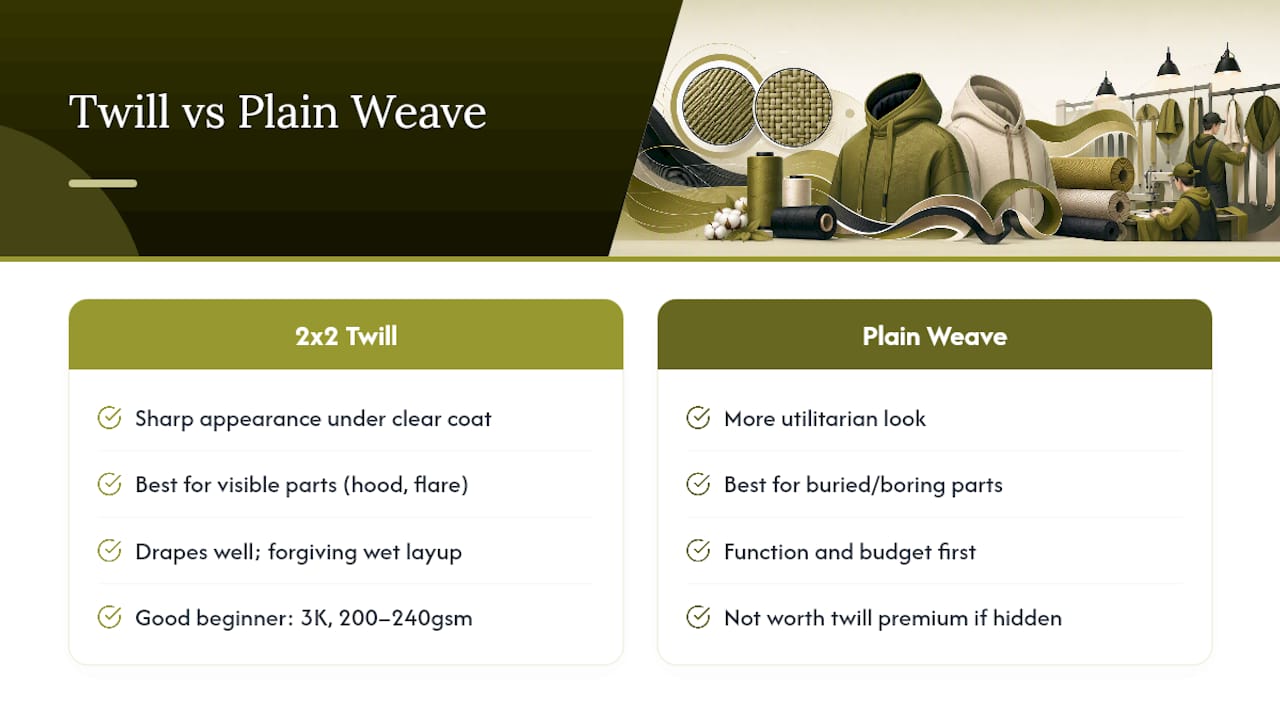
Aesthetics justify extra prep time when the part is going to sit in plain sight, like a hood or fender flare. Nobody’s paying a premium for a twill finish on a part buried under the dash. Function and budget should govern the boring parts, and looks should govern the parts people actually photograph.
If you’re new to working with carbon and picking your first fabric, a 3K, 200 to 240gsm 2x2 twill is a genuinely forgiving starting point. It drapes well, looks sharp under clear coat, and doesn’t punish you for a slightly imperfect wet layup the way heavier or tighter fabrics can. Both weave types are commonly available across catalogs, so you’re not stuck guessing which one fits your next part.
— Ismael
How Underground Dynamics Helps You Buy the Right Part the First Time
Choosing between twill and plain weave only matters if the part you buy actually fits your car. Some sellers provide carbon fiber body kits, hoods, and trim with fitment and spec details listed up front, so you can know what tow count, weight, and finish to expect before it ships.

Buying from a catalog with real fitment data cuts out the guesswork that turns a good weave choice into a bad installation. Every listing tells you what you’re working with, whether you’re hunting for a twill hood skin for your next show build or a structural component that just needs to fit right and stay put. Browse the current body kit lineup to see fitment specs for your platform, or check the suspension category if you’re rounding out the build beyond bodywork. If you want more visual reference before committing, the Supercars gallery is worth a look for exposed carbon inspiration. Ready to pick your part? Head to the Underground Dynamics catalog and start with your chassis and finish preference.
Sources
- 2x2 Twill vs Plain Weave Carbon Fiber: What Differs - Boat Suppliers
- Carbon Fiber 101: Understanding Weaves and Fabrics
- How To Choose The Right Carbon Fiber Fabric: Weave, Weight & Tow Guide - BulkComposites
- Carbon Fiber Weaves: What They Are and Why to Use Them - Elevated Materials
FAQ
Is Plain Weave Stronger Than Twill?
Not meaningfully. Plain weave has higher crimp, which can create small stress points, while twill’s longer floats spread stress more evenly. Layup quality and resin choice affect real-world strength far more than weave pattern.
What Are the Disadvantages of Twill?
Twill shows dust, scratches, and resin flaws more readily because of its glossy diagonal pattern, and it typically costs a bit more than plain weave. It’s also less common for flat structural panels where stability matters more than looks.
What Are the Main Differences Between Twill and Plain Weave?
Plain weave alternates over one, under one, creating a tight, stable checkerboard pattern best suited to flat panels. Twill goes over two, under two, giving it a diagonal look and noticeably better drape over curved surfaces.
Is Twill Too Hot for Summer Builds?
Weave pattern has no meaningful effect on how hot a carbon fiber part gets in the sun. Heat buildup depends on color, clear coat, and part location, not whether the fabric underneath is twill or plain weave.