FREE SHIPPING ON ORDERS OVER $150

Cart
0
For sustained performance driving, track days, or heavy off-road work, monotube shocks are usually the smarter pick because they resist aeration and shed heat faster. For a daily driver where ride comfort and cost matter more than lap times, twin-tube shocks are usually the better call. Either way, the final answer depends just as much on valving and spring rates as it does on tube design.
TL;DR:
- Monotube shocks offer superior heat dissipation and resistance to aeration, making them ideal for track days, heavy off-road use, and sustained high-performance driving.
- Twin-tube shocks provide a softer ride, lower cost, and better impact absorption, making them suitable for daily driving, casual street use, and vehicles prone to debris damage.
- Monotube units typically have larger pistons and operate at higher gas pressures (260-360 psi), increasing sensitivity but also demanding more precise manufacturing and tighter seals.
- Twin-tube shocks’ lower pressure and design make them more durable against impacts and debris, but they are more prone to aeration during extended hard use.
- Application demands drive the choice; advanced tuning, heat management, and mounting flexibility favor monotube shocks, while comfort, budget, and impact durability lean toward twin-tube options.
Table of Contents
- Monotube vs Twin Tube: How Each One Is Actually Built
- Monotube: Strengths, Trade-Offs, and Real-World Effects
- Twin-Tube: Strengths, Trade-Offs, and Real-World Effects
- Which Shock Type Fits Street, Track, Off-Road, and Towing?
- Fitment, Installation, and Maintenance Realities
- Practical Tuning Notes and Vendor Questions From Underground Dynamics
- Underground Dynamics’ Take: Balancing Cost, Comfort, and Control
- Where to Start: Suspension Pages and Fitment Resources
- Sources
- FAQ
Monotube vs Twin Tube: How Each One Is Actually Built
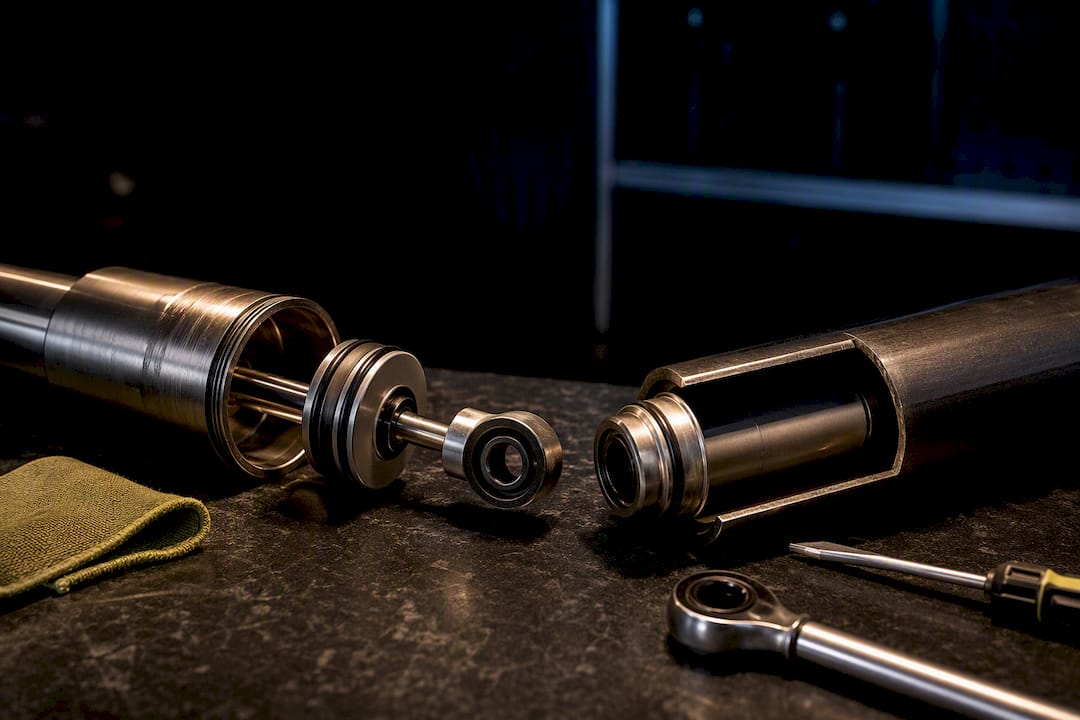
Crack open a monotube shock and you’ll find one tube with a floating piston separating high-pressure gas from oil. That floating piston is the whole trick: it keeps gas and oil from mixing, which is what causes foaming (aeration) inside a shock under hard use. Gas pressures in monotube designs typically run 260 to 360 psi, with the original Bilstein units at the higher end of that range. That pressure matters because it pushes back against seals constantly, which is why monotube shocks demand tighter tolerances and better seal materials than twin-tube units.
Twin-tube shocks work differently. Oil fills the space between an inner working tube and an outer tube, and a base valve at the bottom manages flow into a reservoir instead of relying on a floating piston. That reservoir gives twin-tube designs their characteristically softer low-speed response, but it also means oil and gas share more contact area, raising the chance of foaming under sustained hard driving.
Piston size is where the construction really shows its effects on feel:
- A monotube piston can run roughly 30% larger than a twin-tube piston in the same external diameter, which increases sensitivity to small road inputs.
- Larger piston area means the shock reacts to subtle wheel movement instead of only kicking in once forces build up.
- Higher gas pressure adds friction and seal load, one reason monotube units cost more to manufacture.
Monotube: Strengths, Trade-Offs, and Real-World Effects
Monotube shocks earn their reputation on tracks and trails for a reason. The single-tube layout dissipates heat directly through the outer wall, so oil stays cooler during repeated hard hits. That translates to less shock fade during a 20-minute lapping session, when a twin-tube unit might start going soft on the tenth lap.
Advantages that show up on the road:
- Better heat dissipation means more consistent damping lap after lap or mile after mile off-road.
- Larger piston area improves sensitivity to small bumps and chatter.
- Orientation flexibility lets builders mount monotube shocks inverted or sideways, useful for tight coilover packaging.
- Lighter unsprung mass is achievable in some designs since there’s no outer reservoir tube.
Trade-offs worth knowing:
- The ride tends to feel firmer by default, which some street drivers find harsh.
- Manufacturing cost runs higher because of the precision seals needed to hold 260 to 360 psi of nitrogen.
- The exposed single tube is more vulnerable to dents or damage from rocks and debris, since there’s no outer shell to absorb the hit.
Pro Tip: Check static ride height after installing monotube shocks. The gas charge applies a constant extension force, sometimes in the 230 to 300N range, which can nudge ride height slightly compared to a non-gas twin-tube setup.
Twin-Tube: Strengths, Trade-Offs, and Real-World Effects
Twin-tube shocks dominate factory suspension for a simple reason: they ride softer and cost less to produce. The outer tube acts as a shield, so a curb strike or road debris hit that would dent a monotube shell often just leaves a mark on a twin-tube unit without knocking it out of service.
What twin-tube gets right:
- Lower gas pressure (when gas-charged at all) reduces stress on seals, which keeps production and replacement costs down.
- The outer casing absorbs impacts that would otherwise damage the working components.
- Ride quality on rough streets tends to feel more compliant right out of the box.
Where it falls short under load:
- Extended hard use, like a long, twisty mountain run or repeated hard braking, raises the risk of aeration and cavitation, causing that spongy, inconsistent pedal-like feel in the damping.
- Heat has a harder time escaping through two tube walls instead of one.
- Smaller piston area means less sensitivity to fine road texture.
Twin-tube remains the right call for commuter cars, family SUVs, and budget coilover setups on daily-driven builds where sustained abuse isn’t part of the plan.
Which Shock Type Fits Street, Track, Off-Road, and Towing?
Application drives this decision more than any spec sheet. Here’s how the two designs stack up across common build goals:
- Track and competition: Monotube wins here almost every time. Repeated braking zones and sustained cornering loads generate heat fast, and monotube’s separated oil/gas chambers keep damping consistent lap after lap. Pair it with adjustable valving so you can dial in compression and rebound for your specific track layout, and read up on how damping tuning affects handling before you start twisting knobs.
- Street and mild spirited driving: Twin-tube is often the practical choice, even for cars with sportier intentions. Most street driving doesn’t generate the sustained heat load that causes aeration, so you get a comfortable ride without paying a premium for capability you won’t use.
- Off-road: This one depends on your terrain. Long, sustained runs through washboard trails favor monotube’s heat resistance, but if you’re constantly clipping rocks and stumps, twin-tube’s tougher outer shell might survive longer. Weigh expected impact frequency against expected heat buildup.
- Towing and hauling: Tube type matters less here than spring rate and valving. A shock with load-rated valving or adjustable damping will outperform either design if it’s mismatched to the weight you’re carrying. Talk to a supplier about spring rates before worrying about monotube versus twin-tube.
Fitment, Installation, and Maintenance Realities
Before you buy, check orientation requirements. Monotube shocks generally tolerate inverted or sideways mounting, which twin-tube units usually can’t handle without risking internal issues. That flexibility matters for tight coilover installs where clearance is scarce.
Watch for these warning signs during ownership:
- Oil residue or visible leaks around the seal area, a sign of gas or fluid loss.
- A spongy, inconsistent feel under repeated hard braking, often a sign of aeration.
- Reduced rebound control after extended track or trail sessions.
- Visible dents on a monotube shell, which can compromise the piston’s travel path.
Monotube units generally cost more upfront, and that premium is justified by adjustable valving and race-grade heat tolerance, not by the tube design alone. The higher internal gas pressure that gives monotube its edge, often in the 260 to 360 psi range, also means seals see more constant load, so budget for more frequent inspection if you’re running hard miles.
Practical Tuning Notes and Vendor Questions From Underground Dynamics
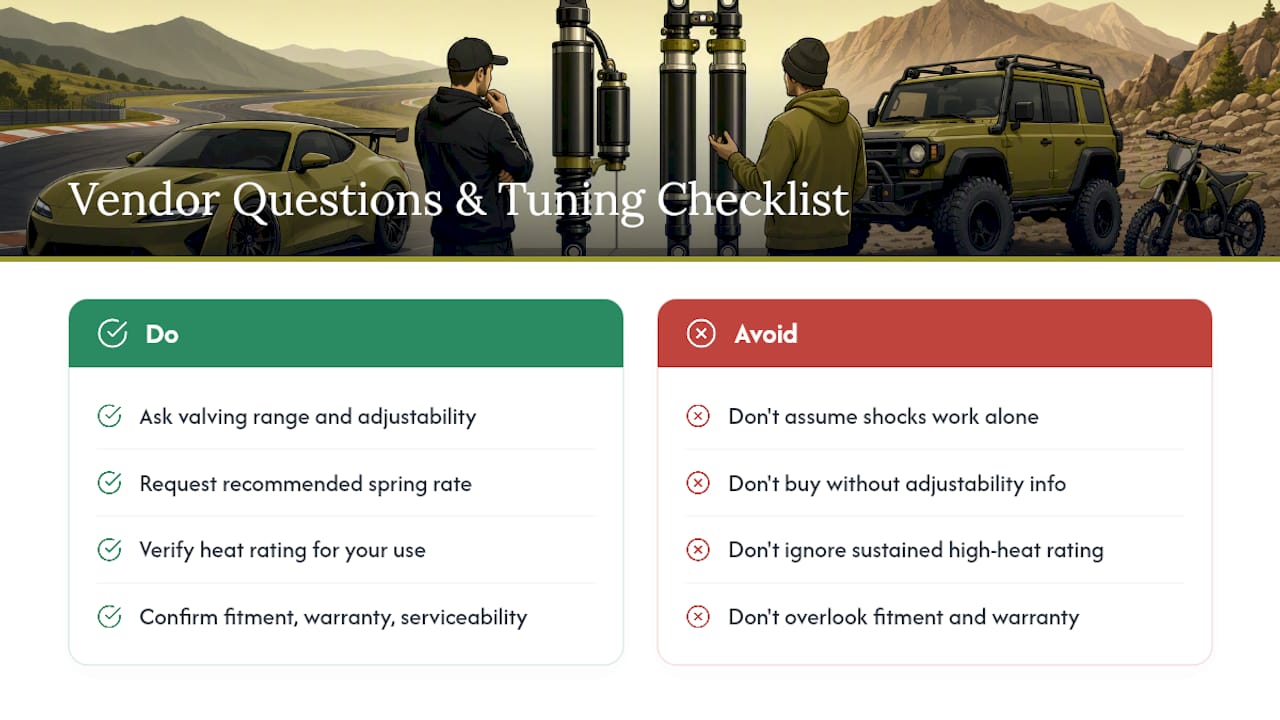
Walking into a shock purchase with the right questions saves you from a mismatched setup. Ask any vendor: What’s the valving range, and is it adjustable? What spring rate do they recommend for your weight and use case? Is the unit rated for sustained high-heat use, or built for occasional street duty only?
Shocks don’t work in isolation. Pairing them with the right springs and sway bars determines how the whole system behaves, and understanding compression damping basics helps you have that conversation intelligently. Before buying, confirm fitment specs, warranty terms, and whether the unit is serviceable or a sealed replace-only design.
Underground Dynamics’ Take: Balancing Cost, Comfort, and Control

Application should drive this decision, not brand loyalty or spec-sheet bragging rights. It’s better for a builder to run the shock type best matched to their car and build goals rather than choosing based on brand reputation or marketing.
Fitment pages available online often spell out compatibility details instead of vague marketing claims, helping buyers understand their purchase before they commit. When you’re ready, our suspension category is the place to compare options against your actual build goals.
— Ismael
Where to Start: Suspension Pages and Fitment Resources
Once you know whether your build calls for monotube control or twin-tube comfort, the next step is matching that decision to a real part number, not just a category label.
Functional suspension upgrades, including coilovers, air suspension, and lowering springs, are available from various sources featuring real fitment data instead of generic size charts. Our coilovers and suspension category lists full spec sheets for popular platforms like Civic, BRZ, Supra, 350Z, Miata, Mustang, Camaro, and G35 builds, so you’re not guessing whether a shock will clear your strut tower or match your spring rate. If you’re weighing suspension changes against other upgrades, our performance parts page rounds out the bigger picture. For builds where drivetrain and suspension tuning need to work together, especially AWD platforms, this AWD controller tuning guide from our partner is worth a read. Browsing suspension lineups online or contacting support teams with your vehicle’s specs can help you find the right fitment.
Sources
- Should one choose monotube or twin-tube dampers? — Vehicle Dynamics International
- Monotube Or Twin Tube, What Is The Best For The Application? — Tomorrows Technician
- Twin Tube vs. Monotube Shocks — Monroe
FAQ
Do Monotube Shocks Ride Better?
Monotube shocks generally provide more consistent damping under repeated hard use, but “better” depends on the goal. For sustained performance driving, monotube control tends to outperform twin-tube; for everyday comfort, many drivers actually prefer a twin-tube’s softer default feel.
What Shock Gives the Smoothest Ride?
Twin-tube shocks typically deliver the smoothest, most compliant ride for daily driving because of their lower gas pressure and softer low-speed response. Monotube shocks trade some of that plushness for firmer, more consistent control.
Which Is Better, Monotube or Twin-Tube Shocks?
Neither is universally better. Monotube suits track, competition, and sustained off-road use because it resists aeration and heat buildup, while twin-tube suits street driving where comfort, cost, and damage tolerance matter more than sustained thermal load.
What Are the Advantages of Monotube Shocks?
Monotube shocks dissipate heat faster, resist aeration, and can use a piston roughly 30% larger than a comparable twin-tube unit, improving sensitivity. They also allow orientation-independent mounting, which helps with tight coilover installs.