FREE SHIPPING ON ORDERS OVER $150

Cart
0
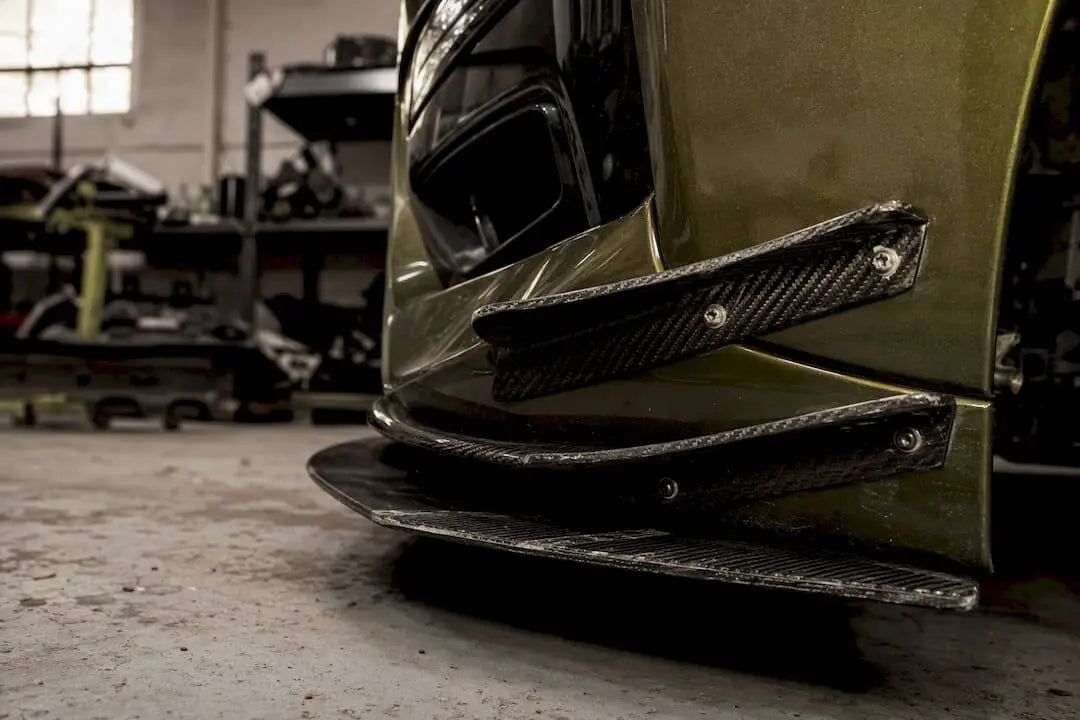
Canards can be effective at shifting aerodynamic balance forward and generating modest front downforce, but only when they’re integrated with a complete aero package. Bolted on alone, they often just add drag and disturb airflow to whatever is behind them. The honest answer to “canards effectiveness” is: real, but small in isolation, and highly dependent on the rest of your car’s aero setup.
Think order of magnitude, not miracle. Wind-tunnel and CFD data on canard-style surfaces consistently show forces measured in single-digit percentages of total downforce, not the dramatic shifts you’d guess from how aggressive they look on a fender. That force is still useful. It changes where your front axle sits under load, which matters a lot at 100+ mph on a track where every bit of front grip buys you confidence into a braking zone.
Canards are most effective when integrated into a complete aero system—positioned to feed clean vortices into downstream elements like a splitter or fender vent, on a car with functional underbody aero and a balanced rear wing. Conversely, poorly placed or standalone canards often disrupt airflow to rear aero elements, increasing drag without benefit.
The evidence behind this verdict comes from three different places: decades-old wind-tunnel testing on canard/foreplane surfaces, modern CFD parametric studies, and hands-on shop testing with corner scales on real cars. Each has blind spots, and we’ll walk through what each one can and can’t tell you.
Key Takeaways
Canards produce a measurable but modest force that mainly works by shaping vortices, so their real value depends on integration with a car’s splitter, underbody, and rear wing rather than on the part alone.
| Point | Details |
|---|---|
| Mechanism matters more than size | Most automotive canards work through vortex control, not pressure lift like a mini-wing. |
| Data is directional, not absolute | Wind-tunnel, DTIC, and CFD studies show trends in incidence and position, not a universal downforce figure. |
| Balance shift can go either way | Added front downforce helps understeer-limited cars but can trigger mid-corner oversteer on already-balanced setups. |
| Placement precision is critical | Small vertical offsets or wrong incidence angles can kill the intended vortex effect entirely. |
| Measure before assuming | Corner scales and simple flow visualization beat guessing at whether a canard is helping. |
| Build quality determines repeatability | Undergrounddynamics’s carbon fiber and fiberglass canards and splitters hold their molded shape under load, with fitment data provided per chassis. |
Table of Contents
- What Do Canards Do? The Two Mechanisms Behind Canards Effectiveness
- How Much Downforce Do Canards Actually Produce?
- How Do Canards Change Handling Balance?
- What Size and Placement Make Canards Actually Work?
- Do Canards Work Better as Part of a Full Aero Package?
- How Do You Test Canard Effectiveness on Your Own Car?
- What Are the Real Risks of Running Canards on a Street Car?
- A Builder’s Take on When Canards Are Worth It
- Where to Find Functional Canards and Fitment Help
- Sources
- FAQ
What Do Canards Do? The Two Mechanisms Behind Canards Effectiveness
Canards work through two distinct mechanisms, and knowing which one your car is actually using changes how you should size, angle, and mount them.
Pressure loading is the simpler of the two. A canard shaped like a small airfoil, angled into the oncoming air, generates lift or downforce as any wing does by creating a pressure difference across its surfaces, pushing the surface down (or, on an aircraft, up). This is straightforward physics, and it’s the mechanism most people picture when they hear “downforce.”
The problem is that most automotive canards aren’t shaped like airfoils. They’re flat or slightly curved fiberglass or carbon fiber blades bolted to a bumper corner. A flat plate at an angle still generates some pressure-based force, but nowhere near as efficiently as a proper cambered airfoil section. That’s why a canard’s raw downforce number, taken by itself, tends to disappoint people who expect wing-level performance from a part a quarter the size of a wing.
Vortex generation is actually the predominant mechanism for most well-designed automotive canards. Rather than acting as small wings, these canards disrupt airflow at their trailing edge to create tight vortices that adhere to the body and energize downstream boundary layers. This re-energized airflow can improve splitter sealing, reduce turbulent sideflow into wheel wells, or supply cleaner underbody air. Practical testing from Occam’s Racer supports that vortex effects often dominate over pure lift from the canard surface itself.
This distinction is also where aeronautical canards and automotive dive planes part ways, and conflating the two causes a lot of bad advice online. In aircraft, a canard is a forward lifting and control surface that actively manages longitudinal stability and stall sequencing, as Wikipedia’s aeronautics reference) lays out. Aircraft canards are sized and positioned as part of the entire stability envelope, sometimes coupled to fly-by-wire systems that constantly adjust for the trade-offs a canard introduces. A NASA technical review of canard-configured aircraft makes clear how sensitive these layouts are to handling-quality requirements, and how much engineering goes into making a canard aircraft behave predictably.
A car’s dive plane has none of that active management. It’s a passive device doing one of two jobs: making a small amount of pressure-based downforce, or shaping a vortex that helps downstream surfaces work better. There’s no fly-by-wire system correcting for a badly placed canard on your Miata.
Here’s how to think through which mechanism dominates on a given part:
- Look at the cross-section. A curved, airfoil-like blade favors pressure loading. A flat or simply-bent plate favors vortex shedding off the trailing edge.
- Check the mounting angle. Steeper incidence angles increase both force types but also increase drag disproportionately once you pass a certain threshold.
- Trace what’s downstream. If there’s a splitter edge, fender vent, or wheel-well opening within a foot or two behind the canard, vortex control is probably the intended (and dominant) effect.
- Consider the size relative to the car. Automotive canards are small relative to frontal area, which caps how much pure pressure-based force they can realistically produce, pushing designers toward the vortex-control approach almost by necessity.
Pro Tip: If your canards are flat fiberglass blades with a sharp trailing edge, don’t judge them by how much lift they’d generate as a standalone wing. Judge them by whether the airflow coming off that trailing edge is actually reaching your splitter or fender opening in a coherent vortex. That’s the job they were built to do.
How Much Downforce Do Canards Actually Produce?
The honest number is: not much on their own, and the published data backs that up consistently across three very different testing methods.
Start with the oldest and most rigorous dataset. A wind-tunnel technical report on canard roll-control effectiveness, run across a Mach 0.6 to 4.5 envelope with canard deflections from negative 3 to 5 degrees, found that small nose-mounted canards can produce measurable roll-control moments. But that effectiveness swings hard depending on longitudinal position and how the canard’s wake interacts with the tail or afterbody. That interaction sensitivity is the single most repeated finding across every canard study referenced in this article, aircraft or automotive.
A related DTIC wind-tunnel study on canard-wing systems found that canard-equipped configurations sometimes increased total lift but often reduced lift-to-drag ratio. In other words, force gains can come with efficiency losses, representing a trade-off for track drivers when parts add visible frontal drag along with downforce.
More recent, and more directly useful for anyone shaping a canard’s geometry, is a 2023 parametric CFD study published in MDPI Aerospace. Using a design-of-experiments approach across incidence angle, sweep, aspect ratio, and vertical position, the study found incidence angle is typically the dominant parameter controlling lift-to-drag outcomes, while sweep angle exerts the strongest influence over pitching moment. That’s a genuinely useful takeaway if you’re staring at three canard options that all look similar but differ by a few degrees of angle: the incidence number matters more than almost anything else on the spec sheet.
Shop testing reported by Occam’s Racer finds results vary greatly with canard size, placement, and the car’s overall aerodynamic setup. Their straightforward conclusion is that “sometimes canards will make your car faster,” reflecting the conditional nature of their performance.
A few things worth flagging about how these numbers get measured:
- Wind-tunnel data is the gold standard for isolating a single variable, but historical reports weren’t run on car-shaped bodies, so scaling factors matter more than the raw numbers.
- CFD studies let you sweep dozens of geometry variants cheaply, but results depend heavily on mesh quality and turbulence model choice; treat trends as more trustworthy than absolute values.
- On-car corner scales capture the real installed effect, including every interference factor a tunnel or simulation might miss, but they need careful methodology to separate aero load from mechanical noise.
Reality check: the sourced technical reports and CFD study here describe force trends and sensitivities, not a single universal downforce figure you can apply to your specific car. Nobody who has actually tested canards claims otherwise. Treat any product listing that quotes a precise downforce number without a testing methodology attached with real skepticism.
Translating this to lap time is necessarily qualitative. A forward load shift that improves turn-in confidence by even a small margin can be worth tenths per corner on a technical track, purely through a driver’s willingness to carry more speed into an apex. That effect is real but it lives in driver behavior as much as physics, which is exactly why the next section matters.
How Do Canards Change Handling Balance?
A canard’s real value or real cost usually shows up in how your car turns, not in a downforce number on a spec sheet.
Adding front downforce shifts the front-to-rear load share forward. Depending on how your car was already balanced, that shift plays out in one of two very different ways.
When it helps
If your car is naturally understeer-limited in fast corners, meaning the front tires wash out before the rear does, extra front downforce loading up the contact patch can genuinely improve turn-in bite and stability under braking. This is the scenario where canards earn their reputation. The added load helps the front tires generate more cornering force right when you’re asking the most of them, transitioning from braking into the corner.
When it hurts
If your car already carries good front grip, or worse, tends toward oversteer, piling on more front-biased downforce can push the balance the wrong way. You end up with a front end that hooks up hard and a rear end that suddenly feels light and nervous relative to it, especially mid-corner when speed and aero load are both high. That’s a scary trade to make on a fast sweeper.
The DTIC canard-wing report reinforces why this is unpredictable without testing: canard-downstream interactions were complex enough in wind-tunnel testing to sometimes reverse expected moments entirely. What looks good on paper for your specific chassis, tire compound, and existing rear aero can behave differently once installed.
If you install canards and the balance moves the wrong direction, here’s the order of operations for regaining it:
- Recheck ride height first. A few millimeters of front rake change can shift how canard-generated vortices interact with your splitter, sometimes fixing balance issues without touching a single suspension setting.
- Adjust the front anti-roll bar before touching springs. Softening the front bar slightly can claw back some rotation if the new front grip is making the car reluctant to turn in.
- Revisit damper settings, particularly front compression, if the car feels darty or over-responsive on turn-in after the install.
- Only then consider spring rate changes, since that’s the most disruptive and hardest-to-reverse adjustment in the chain.
The caveat that ties this whole section together: net lap-time impact depends on your entire aero package, not the canards in isolation. A canard that transforms one car’s balance for the better can do nothing, or actively hurt, on a different chassis with a different rear wing setup and different tire grip levels front to rear. That’s not a hedge, it’s the central lesson of every technical report referenced here.
What Size and Placement Make Canards Actually Work?
Geometry decisions separate a canard that does real aerodynamic work from one that’s purely there for looks, and the difference usually comes down to a handful of parameters you can actually control at install time.
Size and chord. Bigger isn’t automatically better. Oversized canards generate more drag faster than they generate useful force, and on many fender designs they simply won’t clear suspension travel or steering lock without rubbing. Most functional automotive canards use a chord (the front-to-back length of the blade) proportioned to fit cleanly within the existing fender or bumper line, generating a vortex sized appropriately for the downstream feature it’s meant to feed, whether that’s a splitter edge or a wheel-well vent.
Mounting height and longitudinal placement. This is where the MDPI CFD parametric study is most directly useful: vertical position had a measurable effect on outcomes right alongside incidence and sweep. A canard mounted an inch too high or too low can send its vortex over or under the surface it was supposed to energize. The deep-knowledge finding behind that same study is blunt about it: small vertical offsets can kill the intended vortex effect entirely, even when everything else about the canard’s shape and angle is correct.
Stiffness and material. A canard that flexes under aerodynamic load stops generating a consistent, repeatable effect the moment its shape changes at speed. A material and stiffness explainer on canard design points out that carbon fiber holds its molded shape far better than cheap plastic or thin fiberglass under the same loads, which matters because a canard that deforms at 80 mph is no longer the geometry you designed or tested. This is exactly why Undergrounddynamics builds its aero catalog exclusively around carbon fiber and fiberglass construction rather than injection-molded plastic bolt-ons.
Here’s a quick field checklist for telling functional from cosmetic:
- Trailing edge sharpness: a crisp, defined edge sheds a vortex cleanly; a rounded or blobby edge scatters the airflow instead.
- Mounting rigidity: if you can flex the canard significantly by hand, it’s flexing more at 100 mph.
- Surface finish and fitment: gaps between the canard base and body panel let air spill sideways, wasting the pressure differential the shape is trying to create.
- Presence of any incidence adjustability: functional designs often allow angle tuning; purely cosmetic ones are usually fixed at whatever angle looked good in a rendering.
Pro Tip: Before buying any dive plane, ask what trailing-edge geometry and incidence angle it ships at. If the seller can’t answer, or the part is a flat piece of stamped plastic with no defined edge treatment, you’re likely buying a styling cue, not an aero component. Undergrounddynamics’s carbon fiber and fiberglass body kit catalog lists fitment and material specs for exactly this reason.
Do Canards Work Better as Part of a Full Aero Package?
Canards rarely function well as a standalone part, and the reason comes down to how narrow their effective airflow window actually is.
The beneficial version of this interaction shows up when a canard’s vortex arrives at a splitter edge or diffuser inlet with enough coherence left to help seal the pressure differential those surfaces depend on. The MDPI parametric study frames this precisely: a forward shift in aerodynamic center from a canard can, in the right configuration, reduce how much rear-wing angle you need, or allow a lower front ride height, but only if the canard’s vortex stays coherent by the time it reaches the downstream surface’s height. Lose that coherence and the benefit disappears, even though the canard is still technically “working” in isolation.
The harmful version is just as real. A canard mounted without regard for what’s behind it can dump turbulent wake energy right into the intake path of a rear wing, or spoil clean flow into a wheel well, adding drag without adding any of the offsetting benefit. This is the scenario that gives canards a bad reputation among people who tried a bolt-on set and felt nothing but extra wind noise.
Before adding canards to your car, run through this quick audit:
- Do you already have a functioning front splitter or air dam? Canards without a splitter to seal have less to work with.
- Is your rear aero (wing or diffuser) already tuned and stable? Adding front-end changes to an untuned rear setup makes it harder to isolate what’s actually helping or hurting.
- Does your underbody have any flow management (panels, diffuser, flat sections)? Canards paired with a fully open underbody are fighting an uphill battle.
- Can you measure before and after? If you can’t put scales under all four corners, you’re guessing at outcomes rather than confirming them.
Undergrounddynamics’s guide to aero component interaction on small sports cars covers this system-level logic in more depth if you’re planning a build from the ground up rather than adding one part at a time. The practical recommendation across every technical source referenced here is the same: make incremental changes, and measure between each one, rather than installing five aero parts at once and hoping they all play nicely together.
How Do You Test Canard Effectiveness on Your Own Car?
You don’t need a wind tunnel to find out whether a canard is doing real work on your car. A repeatable corner-scale protocol tells you almost everything you need to know, and it costs a set of scales and an afternoon.
Here’s the sequence Ismael runs when validating a canard install before it goes into a customer build:
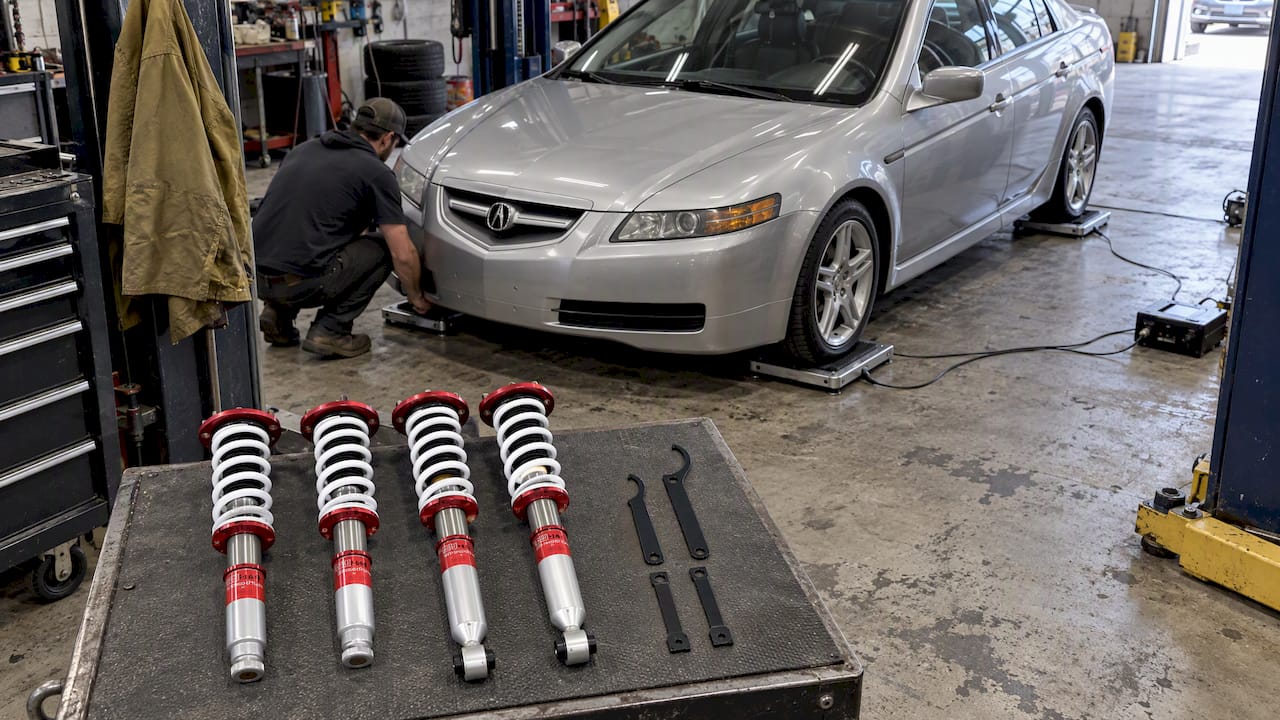
- Baseline the car with no canards installed. Weigh all four corners at rest, then again after a series of hard stops from a consistent speed to capture aero-influenced load transfer at realistic velocity, following the randomized-run methodology Occam’s Racer uses: three runs per configuration minimum, recording speed and ride height each time.
- Install the canards and repeat the identical sequence. Same speeds, same braking points, same tire pressures. Any variable you change besides the canards themselves contaminates the comparison.
- Extrapolate to track speed. Since scale-based testing happens at street-legal speeds, use a simple linearized extrapolation of the measured force against dynamic pressure to estimate what’s happening at 100+ mph, but expect nonlinearity to creep in at higher angles of attack.
- Cross-check with flow visualization. Cheap yarn tufts taped along the fender and splitter edge, or a can of test smoke on a dead-calm day, will show you immediately whether the canard’s vortex is actually reaching the surface it’s supposed to help. If the tufts show chaotic, non-attached flow instead of a clean rotating pattern, the canard is likely doing less than the scale numbers suggest.
CFD or a real wind tunnel is worth the money once you’re iterating on custom geometry rather than testing an off-the-shelf part, or when you’re chasing pitching-moment balance across a full aero package rather than a single component. If you do commission a CFD study, ask specifically for incidence and vertical-position sweeps, since those are the parameters the MDPI research found most influential.
Pro Tip: Record ambient temperature, tire pressure, and fuel load alongside every scale reading. Aero numbers get blamed for balance shifts that are actually just a quarter-tank of fuel moving your static weight distribution around.
What Are the Real Risks of Running Canards on a Street Car?
Canards fail in fairly predictable ways, and most of the damage comes from mounting decisions rather than the aerodynamic concept itself.
Scrapes and cracked mounting tabs are the most common failure mode, especially on lowered cars where a canard sits just a couple inches off the ground. Speed bumps, steep driveway aprons, and parking curbs are the real enemies here, not track curbs, which most drivers see coming.
Vibration fatigue is the quieter risk. A canard mounted with too few fasteners, or fasteners without thread-locker, can work loose over months of track vibration and highway miles, eventually cracking at the mounting flange or shearing a bolt entirely at speed.
Before you fit any canard to a car that also sees street use, walk through this list:
- Check ground clearance at your actual ride height, not the height the part looked fine at in a product photo.
- Confirm the mounting substrate is solid, not thin sheet metal that will flex or tear under load.
- Torque fasteners to spec and recheck after the first 100 miles, since new mounts often settle slightly.
- Inspect for stress cracks at the mounting base every few track days, particularly on fiberglass parts, which show fatigue differently than carbon fiber.
- Confirm your local vehicle-modification rules before committing to a street-driven install, since exterior aero additions fall under inspection scrutiny in some jurisdictions. A sports car exhaust legal checklist covers the broader modification-compliance mindset worth applying here, even though it’s written around exhaust systems specifically.
Undergrounddynamics’s downforce component inspection checklist walks through a fuller maintenance interval schedule if you’re running a complete aero package rather than a single bolt-on part.
A Builder’s Take on When Canards Are Worth It
Canards earn their keep when they’re the last piece of a system, not the first. If your car already has a splitter, functioning underbody panels, and a rear wing you’ve tuned, adding canards to fine-tune the front-to-rear balance makes sense, and stiffness matters more than most builders assume: a flexing part isn’t giving you the geometry you paid for.
Skip them if your car has no other aero to speak of. A canard bolted to a stock bumper on an otherwise unmodified car is mostly generating drag and a talking point. Measure before you install, and measure again after. That’s the only way to know whether “canards effectiveness” applies to your specific car, or whether you just bought a fiberglass hood ornament.
— Ismael
Where to Find Functional Canards and Fitment Help
Underground Dynamics builds its aero catalog around parts that do the job described throughout this article, not parts that just look the part. Every canard, splitter, and lip kit in the lineup ships in carbon fiber or fiberglass, with fitment data specific to the chassis it’s built for, so you’re not guessing at incidence angle or mounting geometry after the box arrives.

That fitment detail is the real advantage over generic aftermarket listings that quote a downforce number with no context: you get chord dimensions, mounting hardware specs, and chassis-specific compatibility notes before you buy, not after you’ve already drilled holes in a fender. The body kit and aero catalog covers canard-compatible splitters and lip kits across popular platforms like the Civic, BRZ, Supra, and Miata, and the performance parts section rounds out the suspension and chassis side if you’re planning to retune balance alongside a new aero setup. If you’re not sure which canard geometry pairs with your existing splitter or rear wing, reach out through Underground Dynamics with your chassis details and current setup, and get fitment guidance before you commit to a purchase.
Sources
- The Effectiveness of Canards for Roll Control.
- DTIC technical report on canard-wing systems (ADA087866)
- Parametric CFD investigation of canard design parameters — MDPI Aerospace (2023-03-09)
- How Much Downforce Do Canards Make? — Occam’s Racer (2023-11-12)
FAQ
Why Don’t US Fighters Commonly Use Canards?
American fighter designs have generally favored other stability and control layouts, relying on advanced fly-by-wire systems rather than canard configurations, partly because canard-tail interference effects require careful engineering to manage across a full flight envelope, as documented in NASA’s technical review of canard-configured aircraft.
What Are the Disadvantages of Canards?
On aircraft, canards can reduce lift-to-drag efficiency in cruise and complicate stall behavior, per DTIC wind-tunnel data. On cars, the main disadvantages are added drag when poorly placed, disrupted airflow to downstream surfaces like a rear wing, and inconsistent results if the part flexes or sits at the wrong height.
Are Canard Aircraft More Stable?
Not inherently. Canard aircraft can offer high angle-of-attack benefits through beneficial vortex generation, but they often trade off cruise efficiency and require careful design to manage stall sequencing, according to aviation engineering discussions on the topic.
What’s the Point of Canards on a Car?
Automotive canards mainly redirect and shape airflow into a coherent vortex that seals a splitter edge or reduces turbulent sideflow into the wheel well, shifting the front-to-rear aero balance forward in the process. Undergrounddynamics designs its carbon fiber and fiberglass canards around this vortex-control function rather than treating them as standalone lifting surfaces.
How Effective Are Canards Compared to a Front Splitter?
A splitter typically generates more total front downforce on its own than a set of canards, since it works across a much larger surface area. Canards are better understood as a way to help a splitter or underbody work more effectively, not as a replacement for one.
Recommended
- Underbody Aero Panels: What Performance Owners Need to Know – Underground Dynamics
- Advanced Aero Components for Track and Street Builds – Underground Dynamics
- The Role of Aero on Small Sports Cars: Builder’s Guide – Underground Dynamics
- Why Coilover Damping Matters for Faster Lap Times – Underground Dynamics