FREE SHIPPING ON ORDERS OVER $150

Cart
0
For most dual-purpose street-and-track builds, progressive springs give you ride compliance for daily roads, while linear springs give you the repeatable predictability a dedicated track car needs. The right call comes down to three things: how much you value consistent handling feedback, how rough your typical road surface is, and whether you’re running a lowered ride height that needs help avoiding harsh static rates.
TL;DR:
- On consistent track surfaces, linear springs make damper tuning and corner balancing more repeatable because their rate stays constant throughout suspension travel.
- Lowered street cars gain small bump comfort from progressive springs, but if big hits remain underdamped, increase compression valving moderately before changing spring rate.
- Set ride height before alignment and tune dampers last; preload changes spring position at rest, not its rate, and higher spring rates need more damping.
- Before buying, confirm free length, inner and outer diameter, spring rate, coil end style, seat fit, and coilover sleeve compatibility for your specific vehicle.
- A full coilover installation and corner balance typically cost $1,300–$3,000, with the final price depending on the shop and work required.
Table of Contents
- Linear vs Progressive Springs: A Quick Comparison
- How Spring Rate, Coil Geometry, and Load vs. Deflection Actually Work
- Why Progressive Springs Often Win for Street and Lowered Builds
- Why Linear Springs Usually Win for Track-Focused Cars
- Pairing Springs With Dampers, Preload, and Sway Bars
- What to Check Before Buying: Specs and Fitment Notes
- How We Approach Fitment at Underground Dynamics
- Three Enthusiast Picks: Daily, Dual-Purpose, and Track
- Ready to Spec Your Spring Setup?
- FAQ
- Sources
- Selected Reading: Engineering Papers and Practical Articles
Linear vs Progressive Springs: A Quick Comparison
The core difference is simple: a linear spring keeps the same spring rate from the first inch of travel to the last, while a progressive spring starts soft and stiffens as it compresses. That single trait shapes everything else about how each one drives.
- Predictability: Linear springs hold a constant rate, which makes lap-to-lap tuning and corner-balancing far easier to repeat.
- Small-bump compliance: Progressive springs soak up pavement seams and expansion joints better because the initial coils are softer.
- Bottoming resistance: Progressive springs ramp up stiffness under big impacts, which helps lowered cars avoid harsh bottoming without needing a stiff static rate.
- Best fit: Linear suits smooth, consistent track surfaces and single-purpose race builds; progressive suits daily roads, mixed conditions, and stance-focused lowered cars.
Practitioner guidance on progressive versus linear spring behavior backs this pattern: progressive works best where road conditions vary, linear works best where they don’t.
How Spring Rate, Coil Geometry, and Load vs. Deflection Actually Work
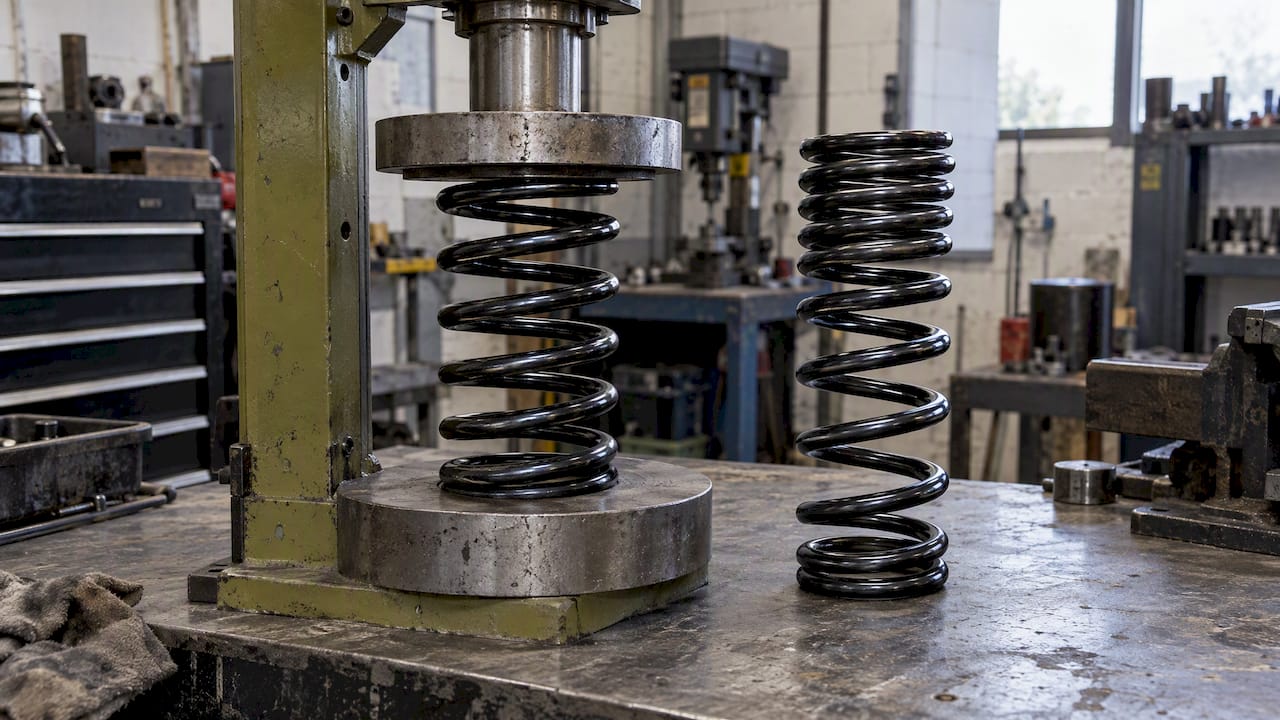
Spring rate is the force needed to compress a spring by one unit of distance, usually measured in pounds per inch or newtons per millimeter. A linear spring follows Hooke’s law almost exactly: double the compression, double the force, in a straight line on a graph.
Progressive springs get their changing rate from coil geometry rather than a different material. The coils are spaced unevenly, often tighter near one end, so the closely wound coils touch and go inactive earlier in the compression stroke. As more coils stack out, the remaining active coils get shorter and stiffer, which raises the effective rate the deeper the spring compresses.
Experimental testing on a Formula Student vehicle confirms this non-linear load-versus-deflection curve: soft at small compressions, progressively stiffer as coils engage, validated on a physical test rig rather than simulation alone. A 2004 SAE technical paper on progressive-rate coil spring design lays out the governing equations and recommends verifying both stiffness and fatigue life through finite element modeling, since variable coil geometry adds inspection and manufacturing complexity that a straightforward linear design doesn’t carry.
Why Progressive Springs Often Win for Street and Lowered Builds
If your car sees daily traffic, pothole-riddled streets, or a long commute, progressive springs tend to make more sense. The soft initial rate takes the edge off small bumps and rough pavement, which matters a lot more when you’re driving the same roads every day instead of a smooth closed circuit.
Progressive rates also solve a specific problem for lowered cars. Dropping ride height eats into your suspension travel, and a linear spring stiff enough to resist bottoming at that reduced travel often rides harshly over everything else. A progressive spring lets you run a softer initial rate for comfort while the rising rate further into the stroke still catches hard hits before you bottom out.
- Commuter builds: benefit from the softer initial rate on daily potholes and expansion joints.
- Canyon day drivers: get comfort on the way there and firmer support once the road gets twisty.
- Lowered stance cars that still see traffic: avoid the harsh ride that a stiff linear rate would otherwise demand.
Pro Tip: If a progressive spring still feels underdamped on big hits, a moderate bump in compression valving usually fixes it before you need to change the spring itself.
Why Linear Springs Usually Win for Track-Focused Cars
Once you’re on a dedicated track car or a build that sees consistent racing surfaces, linear springs tend to be the better tool. A constant rate means every corner, every bump, and every lap gives you the same weight transfer response, which is exactly what you want when you’re trying to isolate one variable at a time during setup.
- Predictable weight transfer: the same input produces the same chassis movement every lap.
- Simpler damper tuning: one known rate makes it easier to dial in compression and rebound without a moving target.
- Easier corner balancing: consistent behavior at each corner makes cross-weight adjustments more reliable.
- Driver feedback: linear rates tend to telegraph roll and nose dive more directly, which experienced track drivers often prefer for reading the car.
This is also the setup practitioners point to for smooth, repeatable surfaces: linear for controlled track conditions, progressive for the variability of daily roads, according to the same practitioner comparison on spring behavior.
Pairing Springs With Dampers, Preload, and Sway Bars
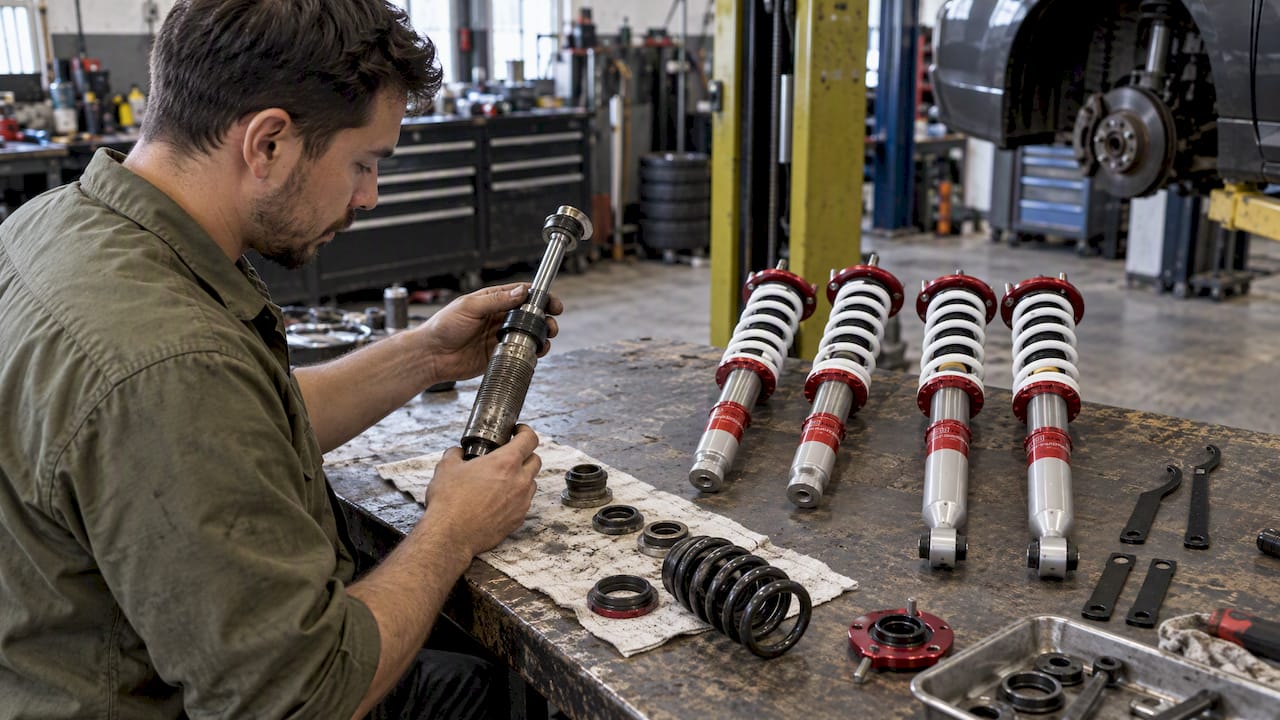
Springs are only half the suspension equation. Spring rate and damper valving need to move together, since a stiffer spring without added damping will tend to oscillate rather than settle.
- Fit the springs first and confirm ride height matches your target before touching anything else.
- Set ride height, since preload adjusts how much the spring is compressed at rest but doesn’t change its actual spring rate.
- Align the car once ride height is final, since camber and toe shift with any height change.
- Tune the dampers last, increasing compression and rebound damping when you’ve raised spring rate so the suspension still controls weight transfer properly.
That sequence matters more than most builders expect. Suspension design literature consistently recommends matching damper characteristics to spring rate and following this order rather than jumping straight to alignment or damper changes.
Pro Tip: Preload changes where the spring sits in its travel, not how stiff it is, so don’t rely on cranking preload to fix a rate that’s actually wrong for your car.
What to Check Before Buying: Specs and Fitment Notes
Before you order a set, confirm the specs that actually determine fit and behavior rather than guessing from a product photo.
- Free length and compressed length, which determine ride height and available travel.
- Outer and inner diameter, which must match your strut body or coilover sleeve.
- Spring rate in pounds per inch, confirmed against your vehicle’s weight and intended use.
- Coil end style and seat type, since mismatched ends can cause binding or poor seating.
These are the same checks industry parts references point to when verifying fitment before purchase. If you’re running coilovers rather than OEM shocks, confirm sleeve compatibility too, and budget for an alignment afterward, since lowering shifts camber and toe. Shop costs for a full coilover install and corner balance typically run in the $1,300 to $3,000 range, depending on the shop and the scope of work.
How We Approach Fitment at Underground Dynamics
We focus our catalog on chassis-specific fitment data rather than generic one-size-fits-all listings, which matters more with springs than with almost any other part, since rate and geometry are vehicle-dependent. We offer coilovers, air suspension, and lowering springs alongside aero components, and we aim to provide technical specs buyers need to confirm compatibility before ordering.
For dual-purpose builds, a common approach favors progressive springs paired with a coilover setup that allows damper adjustment, letting drivers dial in comfort for the street without giving up the ability to firm things up for a track day. Our coilover and suspension collections list rate and fitment data by platform for exactly this kind of planning.

Three Enthusiast Picks: Daily, Dual-Purpose, and Track
If you’re commuting daily, progressive springs are the easy call. The soft initial rate handles rough streets without punishing you every time you hit a seam.

For a dual-purpose build that sees occasional track days, we’d still lean progressive, paired with adjustable dampers so you can firm up compression before a track day and back off for the drive home.
For a dedicated track car, linear springs win. Consistent rate, predictable corner balance, and tuning that stays repeatable lap after lap matter more than comfort you’ll never need.
— Ismael
Ready to Spec Your Spring Setup?
We carry lowering springs, coilovers, and air suspension built around real fitment data, not guesswork from a generic catalog. Whichever direction you go, progressive for comfort or linear for consistency, we list the specs you need to confirm compatibility before you order.
Browse our suspension and aero catalog to find platform-specific options for your build, or check our air suspension collection if you’re weighing ride-height control against a traditional spring setup. If you’re running an AWD platform and wondering how suspension changes interact with drivetrain behavior, this piece on Haldex systems running rear-wheel drive only is worth a read before you finalize your setup.
FAQ
Which type of spring is better, linear or progressive?
Neither is universally better. Linear springs suit dedicated track cars and consistent surfaces because the constant rate makes tuning predictable, while progressive springs suit street and mixed-condition driving because they soften small bumps while still resisting bottoming.
What does progressive spring rate mean?
A progressive spring rate means the spring gets stiffer the more it compresses, rather than holding one constant rate. This comes from uneven coil spacing, where closely wound coils go inactive earlier in the compression stroke, raising the effective rate as the experimental load-versus-deflection testing shows.
Are progressive springs worth it for a lowered car?
For most lowered street cars, yes, since they let you avoid the harsh ride a stiff linear rate would require to prevent bottoming at reduced ride height. Engineering reviews note progressive and dual-rate designs are a practical compromise between comfort and bottoming resistance, though they’re costlier to design and inspect than a simple linear spring.
What specs should I check before buying coil springs?
Confirm free length, outer and inner diameter, spring rate in pounds per inch, and coil end style before ordering, since these determine both fit and behavior. These are the same checks industry fitment references recommend verifying against your specific vehicle before purchase.
Sources
- Progressive spring design and testing (FS vehicle) — experimental load v deflection results
- Progressive vs linear springs — practitioner comparison and use-case guidance
- Politecnico di Torino thesis on progressive spring behavior and vehicle applications
- 2004 SAE progressive rate coil spring design analysis for passenger cars
Selected Reading: Engineering Papers and Practical Articles
For readers who want the deeper technical grounding behind these recommendations, the sources below cover progressive spring testing, SAE design procedures, and practical street-versus-track comparisons.