FREE SHIPPING ON ORDERS OVER $150

Cart
0
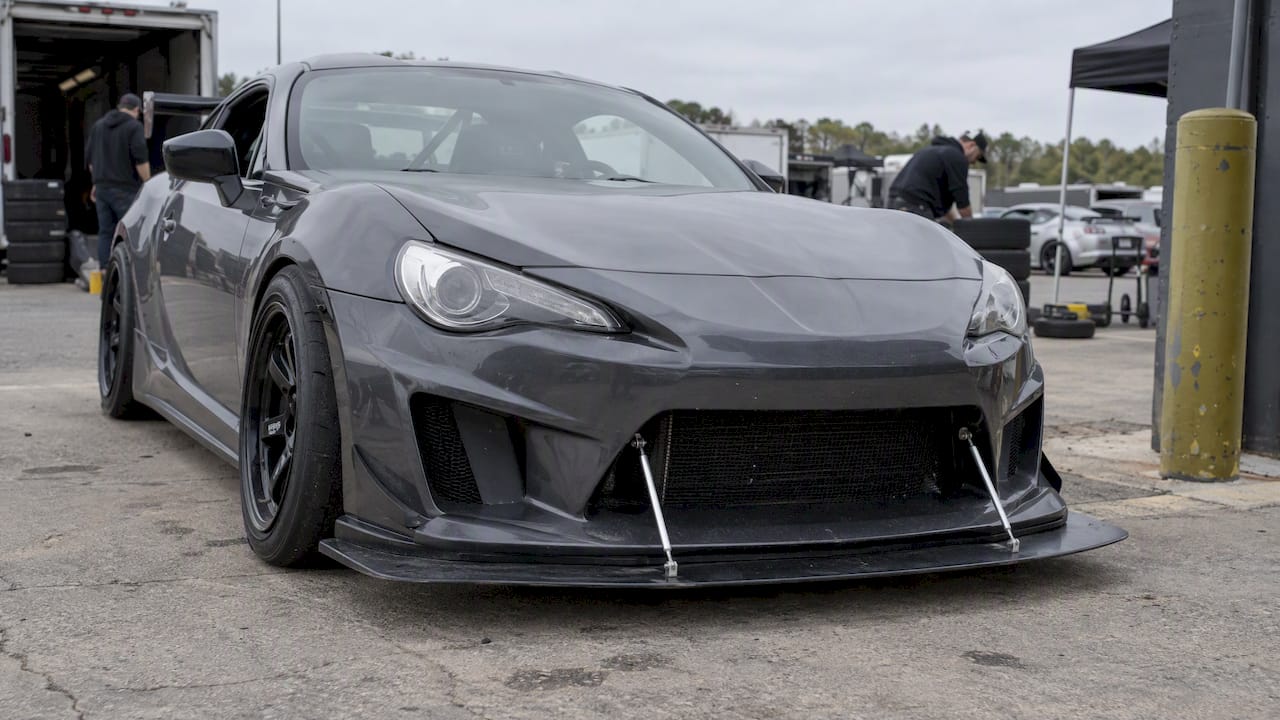
Budget $800 to $4,000 for a complete air suspension kit on a standard car, $2,000 to $4,000 all in once you add professional installation for a mid-range build. And anywhere from $5,000 to $10,000+ if you’re chasing a bespoke show setup with digital management. Basic DIY kits sit at the low end, mid-tier bolt-ons dominate the middle, and custom performance builds eat the high end. The breakdown below shows exactly where that money goes.
TL;DR:
- Choosing a kit appropriate for your vehicle and goal prevents unnecessary expenses and installation issues, especially avoiding universal kits that don’t fit well.
- The main cost drivers are the quality of the struts and the digital management system, which can significantly impact reliability and upgrade capabilities.
- Maintenance over time includes leaks, compressor failures, and bag replacements, with annual costs generally between $50 and $500, and major parts lasting 5 to 8 years.
- Labor costs vary from $300 to $1,400 depending on kit complexity, with additional expenses for alignment and custom wiring in more elaborate builds.
- Prioritize reliability by investing in quality components for key parts and match your kit precisely to your car’s fitment to avoid costly modifications.
Table of Contents
- Air Suspension Cost by Kit Type
- What Do Air Suspension Components Actually Cost?
- How Much Does Air Suspension Installation Cost?
- Why Do Air Suspension Prices Vary So Much?
- What Does Air Suspension Cost to Maintain Over Time?
- How to Budget for an Air Suspension Build
- Fitment Data You Can Actually Trust
- Does the Brand Matter for Air Suspension Cost?
- The Real Lesson Behind These Numbers
- Where to Find Fitment-Matched Suspension Parts
- Sources
- FAQ
Air Suspension Cost by Kit Type
Not every “air ride” kit is built the same, and the price tag tells you a lot about what’s inside the box. Once you know which tier fits your goals, the rest of the budgeting conversation gets a lot easier.
- Budget/manual kits ($800 to $1,800): Basic bags or struts, a single compressor, manual switches, and no electronic control. Fine for a daily driver that just needs to clear speed bumps without scraping.
- Mid-range bolt-on kits: Better strut construction, dual compressors, a tank for faster fill times, and often a basic digital controller with height presets.
- Premium and bespoke builds: Custom-tuned struts, management systems with Bluetooth apps, air-over-hydraulic setups for instant drop, and hand-fabricated brackets for chassis that don’t have a bolt-in kit available.
Vehicle-specific fitment matters here as much as budget. A BRZ air suspension kit built for that exact chassis will always outperform a universal kit forced into place with extra brackets, and it usually saves labor hours too.
What Do Air Suspension Components Actually Cost?
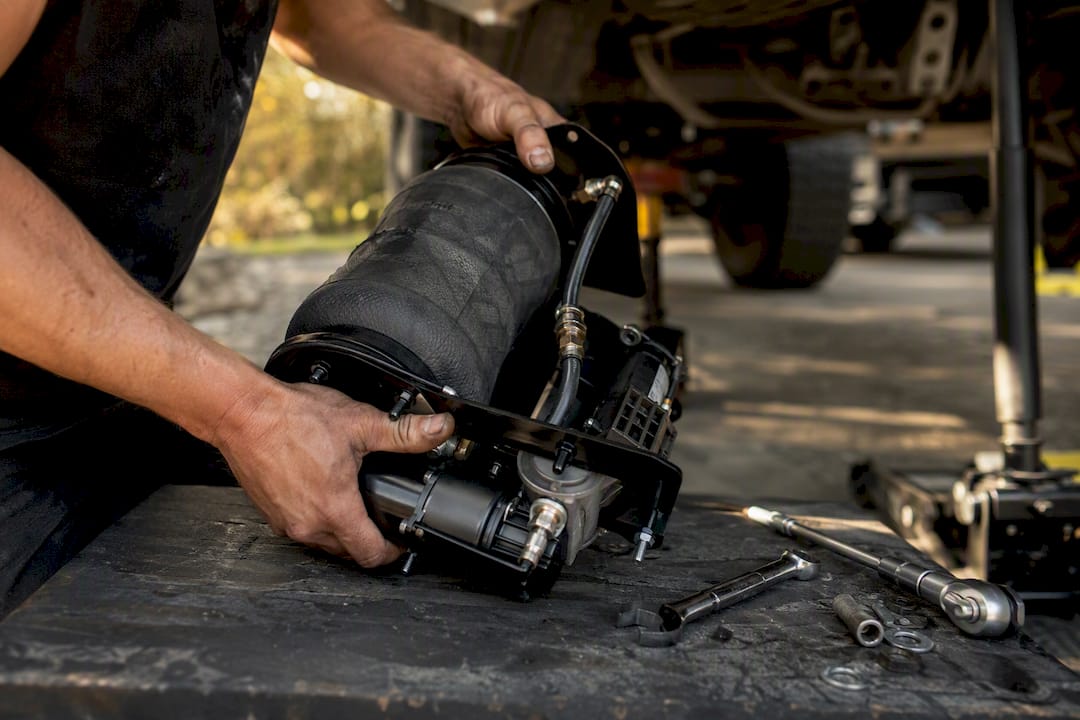
Every air suspension system breaks down into the same core parts, and each one carries its own price range and its own failure risk. Knowing where the money goes helps you decide where it’s smart to spend more.
- Air springs or struts (set of four): commonly $800 to $2,200, with the strut set typically representing the single largest line item in the whole kit.
- Compressor: costs can vary, with dual-compressor setups costing more for faster fill speed.
- Air tank: $100 to $400 depending on capacity.
- Valve manifold/block: controls airflow to each corner, with costs varying by quality.
- Management system: manual setups run $400 to $700, while digital controllers with app control and height memory run $1,200 to $2,500.
- Fittings, lines, and wiring: costs vary but are critical for a leak-free install.
Statistic Callout: The strut set and the management system are the two components that swing your total the most. A digital controller alone can add $800 to $1,800 over a manual switch box, which is often the single biggest upgrade decision in the whole build.
Cheaper struts and compressors save money upfront but tend to fail faster, especially under daily use, so the reliability gap between a $900 strut set and a $2,000 strut set is real.
How Much Does Air Suspension Installation Cost?
Installation labor is where a lot of first-time buyers get surprised, mostly because the hours vary so much by vehicle and shop. Typical labor runs 6 to 20 hours, which usually translates to $300 to $1,400 in shop charges depending on your region and the complexity of the setup.
- Basic bolt-in kit: lower labor hours and cost, mounting to existing hardware.
- Mid-range kit with digital management: more labor and cost due to wiring and air lines.
- Custom or bespoke build: highest labor and cost with fabrication work needed.
Watch for add-ons: alignment after ride height changes, custom wiring for trunk-mounted management, and troubleshooting fees if a shop has to diagnose a leak after the fact. A specialist air ride shop is worth the extra rate for anything digital or custom; a general suspension shop can usually handle a straightforward bolt-in kit just fine.
Why Do Air Suspension Prices Vary So Much?
Four variables drive most of the price swing between two builds that look similar on paper.
- Vehicle platform and weight: heavier trucks and SUVs need beefier struts and compressors, which raises both parts and labor cost.
- Management level: manual switches keep cost down; digital systems with presets and phone app control add $800 or more.
- Intended use: towing and heavy-load setups often require heavy-duty bags rated for higher pressure, pushing costs upward.
- Customization level: show builds with custom fabrication, unique drop heights, or hidden tanks always run higher than a bolt-on kit.
Pro Tip: If you’re building a daily driver, skip the digital management upgrade for now. You can add it later, but you can’t easily downgrade a strut set you overpaid for.
What Does Air Suspension Cost to Maintain Over Time?
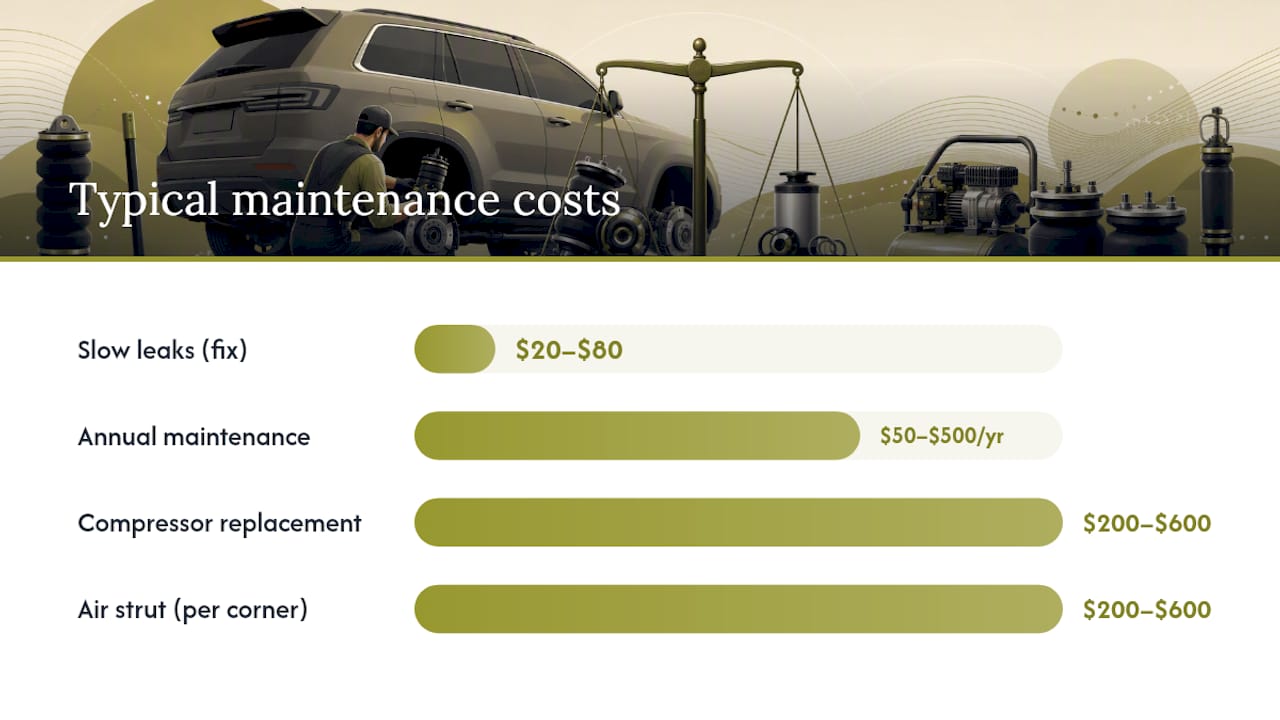
Air suspension isn’t a one-time purchase and forget it. Annual maintenance and small parts replacement typically runs $50 to $500 a year depending on how hard you drive and how good your original components were.
- Slow leaks at fittings: usually a $20 to $80 fix if caught early.
- Compressor burnout: $200 to $600 to replace, and it’s the most common failure tied to leaks that went unaddressed.
- Air strut replacement: $200 to $600 per corner when a bag finally splits, usually after several years of use.
Statistic Callout: A well-installed mid-tier system commonly lasts 5 to 8 years before major component replacement. Cheap kits or sloppy installs shorten that window considerably, since undetected leaks accelerate compressor wear and force early replacement.
Keep an eye out for the common warning signs of suspension trouble, like uneven ride height or a compressor that runs constantly. Catching those early is almost always cheaper than waiting for a full failure.
How to Budget for an Air Suspension Build
Matching your budget to your actual goal, rather than buying whatever’s popular on a forum thread, is the single biggest factor in whether you end up happy with the build.
- Define your goal: daily comfort, weekend show car, or towing/utility.
- Confirm fitment for your exact chassis before buying anything.
- Decide manual versus digital management based on how much you’ll adjust ride height.
- Verify your installer’s experience with air ride specifically, and check warranty terms.
- Add a 10 to 15% contingency for fittings, wiring, or unexpected labor.
Three sample budgets:
- Daily driver budget: ~$1,500 to $2,200 total (budget kit, manual controls, general shop install).
- Mid-range enthusiast: ~$2,800 to $4,200 total (bolt-on kit, digital controller, specialist install).
- Show/performance build: ~$5,500 to $10,000+ total (custom struts, app-based management, fabrication).
If cash is tight, financing through a shop or buying a reputable used management system can bridge the gap, but never cut corners on the strut set itself. If you’re weighing this against coilovers or lowering springs, the budget math looks very different since those options skip the compressor and management costs entirely.
Fitment Data You Can Actually Trust
I’m Ismael, and I look at a lot of suspension listings that skip the details that actually matter for fitment. Underground Dynamics lists air suspension and suspension components from $100 to $2,500 with chassis-specific fitment data attached to each listing, not vague “universal fit” language. That level of detail matters most in the mid-range and performance bands, where a struts-to-bracket mismatch turns a weekend install into a troubleshooting nightmare.
Does the Brand Matter for Air Suspension Cost?
Brand reputation moves the price needle almost as much as component quality does, and the two are usually connected.
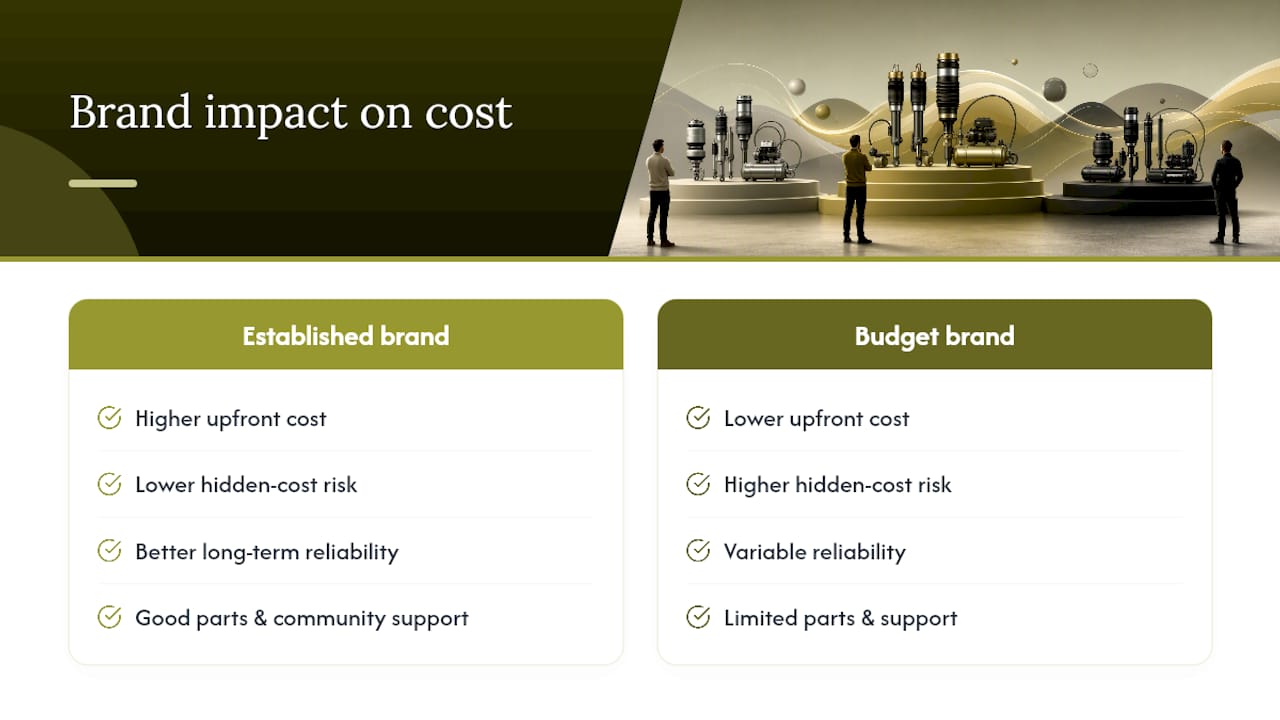
Cheaper, no-name kits can look tempting on price alone, but the hidden costs tend to show up later in the form of leaks, premature compressor burnout, and struts that sag unevenly within a year or two. That’s not a knock on every budget-tier product. Some smaller manufacturers build solid entry-level kits at fair prices. It’s a reason to research the specific brand behind a kit rather than assume price alone tells the whole story.
Reputation also affects resale and community support. A well-known air suspension brand has forum threads, replacement parts availability, and shops familiar with troubleshooting its specific quirks. A build using an obscure brand can leave you stuck when a part fails and the manufacturer’s support line has gone quiet. When you’re comparing two kits at similar price points, the one backed by a brand with actual longevity in the space is usually the safer bet, even if it costs a bit more upfront. Underground Dynamics sources air suspension components from established suppliers rather than manufacturing in-house, which is worth checking on any kit you’re considering, whether you buy from us or elsewhere.
The Real Lesson Behind These Numbers
Most guides treat air suspension shopping like a single price question, when it’s really three separate decisions stacked together: what your car needs, what your goal actually is, and how much risk you’re willing to accept on cheaper components. The conventional advice to “buy the biggest kit your budget allows” is backwards. A daily driver doesn’t need a $2,500 digital controller, and a show build shouldn’t cut corners on strut quality to afford flashy management software.
What the numbers actually support is this: spend where reliability lives, which is the strut set and the compressor, and treat management level as a separate, optional upgrade you can add later. Fitment data should drive your first purchase decision, not price alone, since a kit that doesn’t match your chassis correctly will cost you in labor hours no matter how cheap it looked online. If you take one thing from this whole breakdown, it’s that the smartest air suspension budget isn’t the biggest one. It’s the one that matches your actual use case, corner for corner.
— Ismael
Where to Find Fitment-Matched Suspension Parts
Once you know your target budget and your build goal, the next step is finding parts that actually fit your chassis instead of guessing from a universal listing. Underground Dynamics stocks air suspension, coilovers, and lowering springs with the fitment specs listed up front, so you’re not left comparing part numbers against forum threads to figure out if something bolts up.
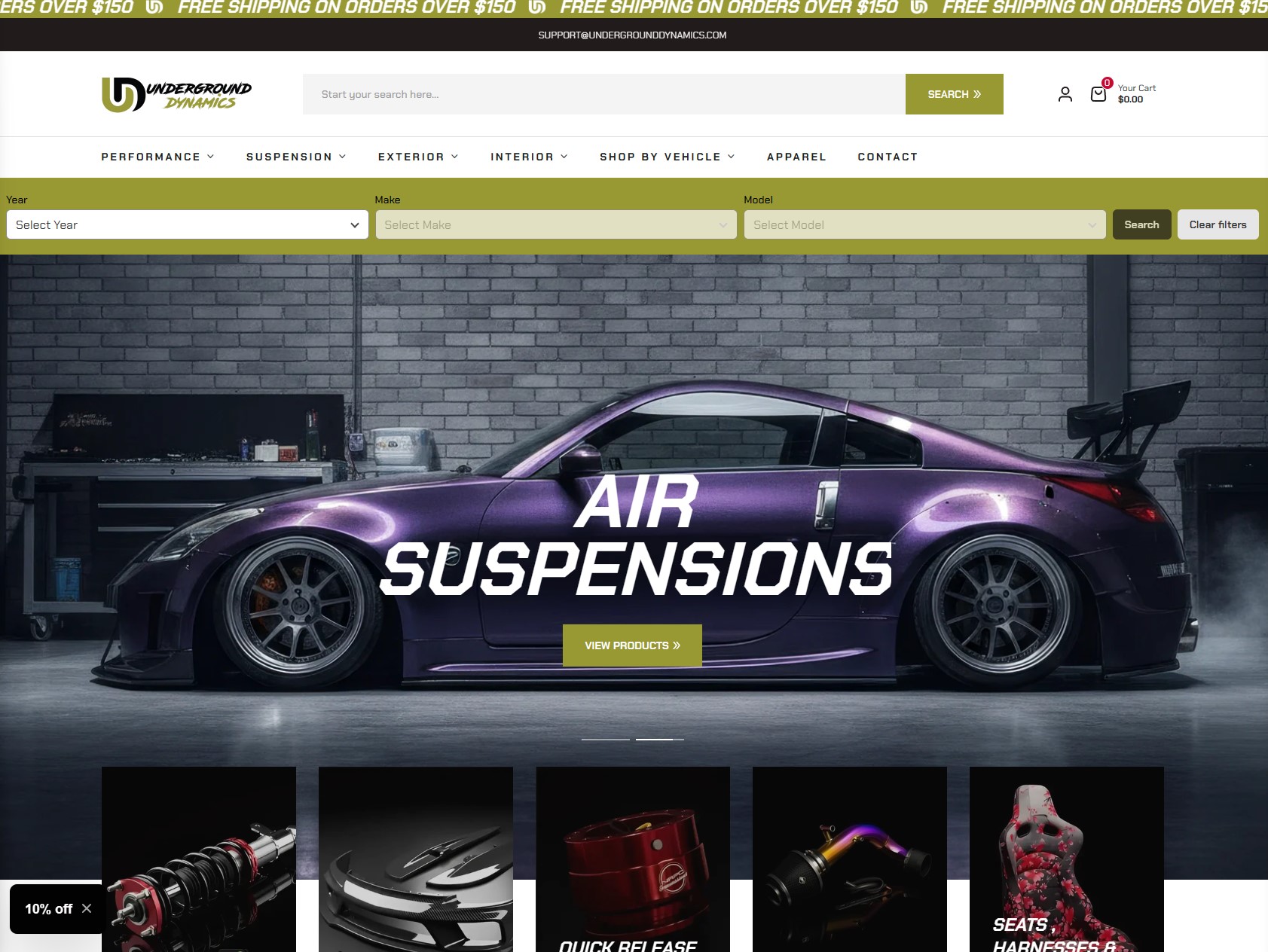
The suspensions category covers all three budget tiers this article walks through, from bolt-on kits for a daily driver to performance-oriented components suited to a show build. If your checklist points toward a mid-range or performance setup, that’s exactly where the catalog is strongest, with detailed technical specs so you can buy with confidence instead of hoping the fitment notes on some other listing were accurate. Browse the suspension lineup and match a kit to the budget tier you landed on above.
Sources
Prices above reflect commonly reported U.S. ranges and vary by vehicle platform, region, and shop rates.
- How Much Is Air Suspension For A Car: Honest Costs
- How Much Does It Cost For Air-Ride Suspension? (KOW Performance)
- Air Suspension Cost: How Much for a Car? 2024 Price Guide
- Airbag Suspension Cost Guide for U.S. Vehicles – Current Cost
FAQ
How much does air suspension cost?
A complete kit typically runs $800 to $4,000, with a mid-range project including installation landing between $2,000 and $4,000, and custom or premium builds reaching $5,000 to $10,000+.
Is air suspension worth the money?
For daily comfort and adjustable ride height, most owners find it worthwhile, though the higher upfront cost and ongoing maintenance make it a bigger commitment than traditional coilovers or springs.
How long will air suspension last?
A well-installed mid-tier system commonly lasts 5 to 8 years before major components need replacement, while cheap kits or poor installs can shorten that window considerably due to leaks and compressor strain.
How much does it cost to install air suspension?
Professional installation typically takes 6 to 20 hours and adds $300 to $1,400 in labor, depending on whether the kit is a basic bolt-in or a custom system with digital management.