FREE SHIPPING ON ORDERS OVER $150

Cart
0
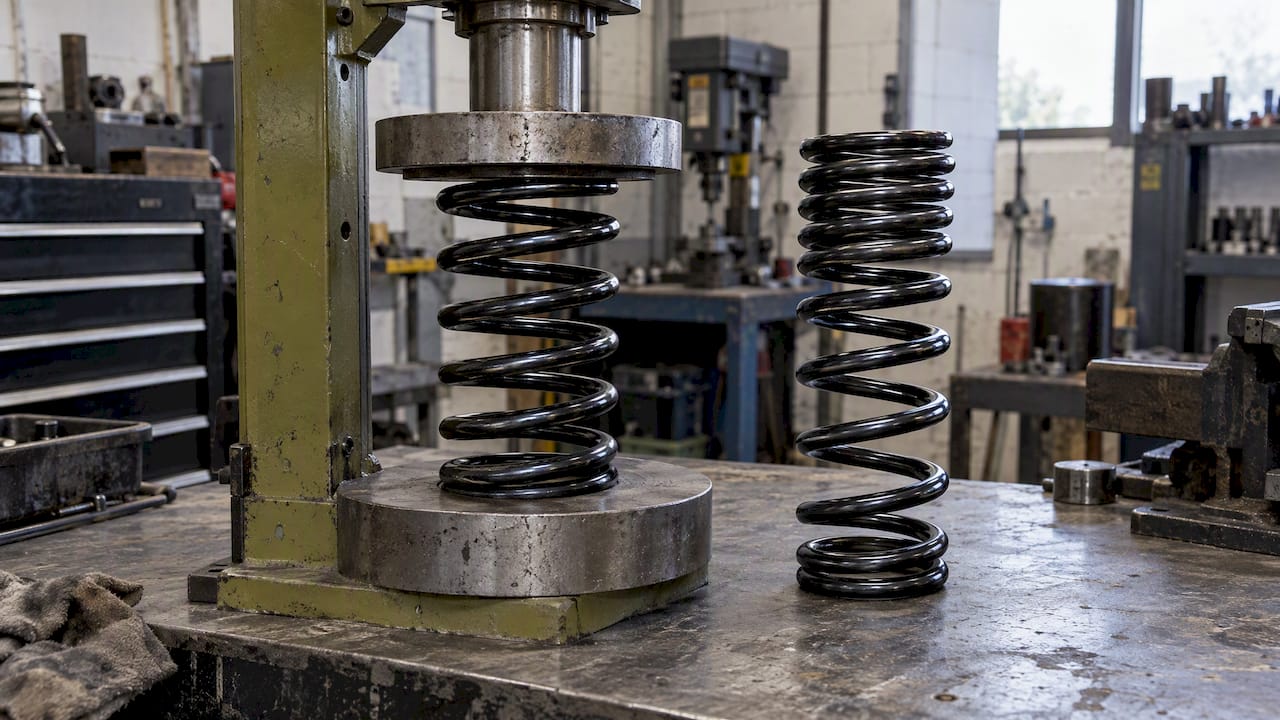
Spring rate measures how much force it takes to compress a spring one inch, expressed in pounds per inch (lb/in). Higher numbers mean stiffer springs. For a typical sport compact, street setups usually land within a moderate spring rate range up front and back, while track builds often use stiffer springs for better performance. The sections below walk through how to measure your car and calculate the right numbers yourself.
TL;DR:
- Weigh each corner with realistic fuel and the driver aboard; static sag is less accurate because it assumes the installed spring rate and preload.
- Calculate spring rate by dividing target wheel rate by motion ratio squared; a 0.85 ratio and 450 lb/in wheel rate require about 623 lb/in.
- Aggressive camber, front splitters, or very low ride heights favor stiffer rates; front aero can also call for extra stiffness to limit braking dive.
- Stiffer springs generally need firmer damping; increase rebound first, then compression if the car remains bouncy, changing one setting at a time.
- For mostly street driven cars, avoid track rates; make spring changes in 25 to 50 lb/in steps and track how each change affects balance.
Table of Contents
- Spring Rate, Wheel Rate, and Motion Ratio Explained
- What Determines the Right Spring Rate for Your Car
- Street vs Track: Starting Windows and Trade-Offs
- How to Measure Corner Weight and Calculate Spring Rates
- Matching Dampers and Valving to Your Spring Rate
- Common Mistakes When Choosing Spring Rates
- Underground Dynamics: Fitment-First Suspension Parts
- What Matters Most When Dialing In Spring Rates
- Ready to Shop Coilovers and Suspension Parts
- FAQ
Spring Rate, Wheel Rate, and Motion Ratio Explained
Spring rate is the stiffness of the spring itself: a 400 lb/in spring compresses one inch under 400 pounds of force. But the number stamped on the spring is not the number that controls how your car actually rides and handles. That job belongs to wheel rate, the effective stiffness measured at the contact patch.
Wheel rate depends on motion ratio, which compares how far the wheel moves to how far the spring compresses. On a strut-based coilover setup, the motion ratio is often close to 1:1, so wheel rate is close to spring rate. On multi-link or double-wishbone cars where the spring sits inboard of the wheel, the motion ratio can drop to 0.7 or lower, meaning the spring compresses less than the wheel travels and wheel rate ends up noticeably softer than the spring rate suggests.
This is why identical 500 lb/in springs behave differently on two different cars.
- Spring rate: fixed stiffness of the coil itself, in lb/in.
- Wheel rate: effective stiffness at the tire, after motion ratio is applied.
- Motion ratio: wheel travel divided by spring travel, usually between 0.6 and 1.0.
- Corner weight: the sprung weight resting on one wheel, which is what the spring actually supports, not the full curb weight.
What Determines the Right Spring Rate for Your Car
Picking a spring rate starts with real measurements, not guesswork. Corner weight is the foundation: a car’s weight is rarely split evenly, and adding a driver, fuel, or track gear shifts the number further. Front corners on a front-engine car often carry 55 to 60 percent of total weight, which is why front and rear rates are almost never identical.
Motion ratio and suspension geometry come next. A coilover bolted into a MacPherson strut sees most of the wheel’s motion directly, while a multi-link rear setup filters that motion through additional linkage, softening the effective rate. Ride height, spring free length, and available travel also limit what you can run: a spring too stiff for the available travel will transmit harsh impacts, while one too long or too short for the perch will bind or lose preload.
- Total and corner weight, including fuel, driver, and typical cargo.
- Motion ratio at each corner, which can differ between front and rear.
- Ride height target, since lower setups reduce usable travel.
- Unsprung mass and tire compound, which affect how harsh a given rate feels.
- Intended use: daily driving, spirited street driving, or dedicated track days.
Pro Tip: If you only have one data point to start with, get an accurate corner weight. Every other calculation depends on it.
Street vs Track: Starting Windows and Trade-Offs
Spring rate choice is a trade-off between control and comfort. Stiffer springs reduce body roll and sharpen turn-in but transmit more road imperfections and can upset grip over mid-corner bumps. Softer springs ride better and keep the tire planted on rough pavement but allow more weight transfer, which can make a car feel vague during quick direction changes.
For common platforms, reasonable starting windows look like this:
- Sport compact street setup typically uses moderate spring rates at front and rear.
- Sport compact track setup usually has higher spring rates for increased stiffness.
- Heavier performance coupe or sedan street setups generally need stiffer springs compared to sport compacts.
- Heavier performance coupe or sedan track setups often use stiff springs appropriate for their weight and track use.
Cars running aggressive camber, big front splitters, or slammed ride heights usually need rates toward the stiffer end of these windows to keep the suspension from bottoming out or losing geometry under load. A car with significant front aero may also want extra front stiffness to resist dive under braking.
How to Measure Corner Weight and Calculate Spring Rates
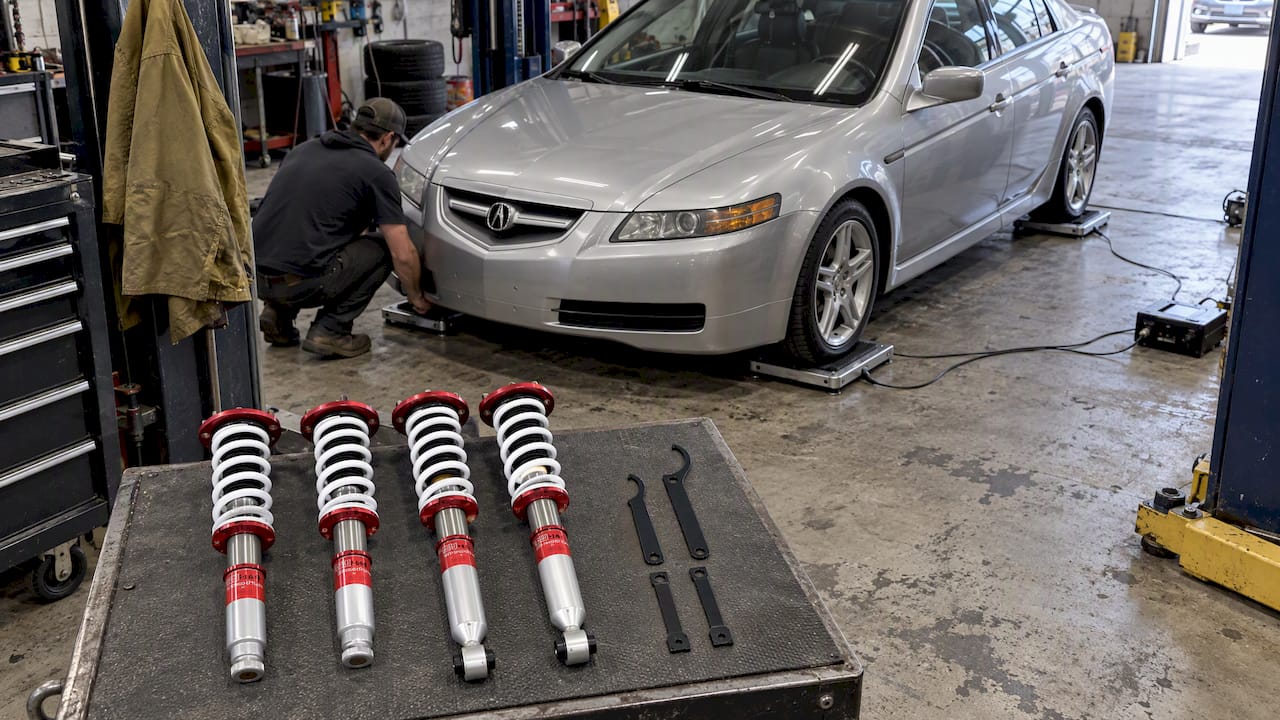
Step 1: Measure corner weight. Use four individual corner scales on a level surface, with the driver in the seat and a realistic fuel load. Record each corner’s weight separately since front and rear, and left and right, are rarely equal.
Step 2: Find your motion ratio. Measure wheel travel and spring travel over the same suspension movement, usually by compressing the suspension a known distance and recording how much the spring compresses. Divide spring travel by wheel travel to get the ratio.
Step 3: Apply the formulas. Wheel rate equals spring rate multiplied by motion ratio squared:
Wheel Rate = Spring Rate x (Motion Ratio)^2
Rearranged to solve for spring rate: Spring Rate = Wheel Rate / (Motion Ratio)^2
A reasonable starting wheel rate is often set around 1.5 to 2 times the corner weight’s natural ride frequency target, but for a worked example, say a front corner weight is 750 pounds and we want a wheel rate near 450 lb/in.
- Confirm corner weight using scales for an accurate measurement.
- Confirm motion ratio: say the strut setup measures 0.85.
- Apply the formula: Spring Rate = 450 / (0.85)^2 = 450 / 0.7225 = approximately 623 lb/in.
- Round to the nearest available spring, typically 600 or 625 lb/in.
Alternate method without a scale: Measure static sag, the distance the suspension compresses from full droop to its at-rest ride height, then estimate corner weight using the known or estimated spring rate already installed. This is useful for a rough check but less accurate than scales since it assumes the current spring rate and preload are already known quantities.
- Scales give exact corner weight; sag measurement only estimates it.
- Motion ratio errors compound in both methods, so measure carefully.
- Recheck corner weight after any major component change, including new springs.
Matching Dampers and Valving to Your Spring Rate
Springs store and release energy, but they do not control it. That is the damper’s job. A spring without matched damping will oscillate repeatedly after a bump, which hurts both ride comfort and tire contact. Stiffer springs generally need firmer compression and rebound valving to control the faster, higher-energy movement, while softer springs need lighter valving so the damper does not fight the spring’s natural motion.
- Stiffer spring upgrade: increase rebound slightly first, then compression if the car still feels bouncy.
- Softer spring setup: reduce both compression and rebound to avoid a harsh, underdamped feel.
- Adjustable coilovers let you fine-tune in small steps rather than guessing at a full setup change.
Pro Tip: Change one adjustment at a time. Run a baseline lap or drive, log how it feels, then adjust a single click before judging the result.
Common Mistakes When Choosing Spring Rates
The most frequent error is running track-stiff springs on a car that mostly sees daily traffic and potholes. That setup punishes ride quality without a payoff, since the car rarely sees the grip levels or speeds that justify the stiffness. Another common mistake is ignoring motion ratio entirely and assuming spring rate equals wheel rate, which leads to a car that feels far softer or stiffer than intended.
- Avoid jumping straight to track rates for a car used mostly on the street.
- Double check motion ratio before blaming the spring for a handling complaint.
- Make changes in small steps of 25 to 50 lb/in and note how balance shifts.
- If ride height, alignment, or corner weight still feel off after basic adjustments, a professional corner-weighting and alignment session is worth the cost.
Underground Dynamics: Fitment-First Suspension Parts
We built our coilovers and suspension catalog around real fitment data rather than generic descriptions, so you can match a setup to your specific chassis before you buy. Every listing is organized by platform, including detail pages like our Acura TL suspension fitment collection, and we cover air suspension options alongside coilovers for builders who want a different ride height strategy.

What Matters Most When Dialing In Spring Rates
Corner weight comes first. Motion ratio comes second, since it quietly changes every calculation that follows. Damper matching comes third, because the best spring rate on paper still rides poorly with the wrong valving behind it. Start there, change one variable at a time, and the rest of the setup falls into place.
— Ismael
Ready to Shop Coilovers and Suspension Parts
Coilovers, lowering springs, and air suspension products with fitment detail are available to help you match parts to your platform rather than guessing. Browse our parts collections to find your chassis, and check our coilover install cost guide if you are weighing a shop install against doing it yourself.

FAQ
What are good spring rates for coilovers?
Good starting rates depend on the car and intended use, but a typical sport compact street setup uses moderate spring rates at front and rear, with track setups usually having higher spring rates for increased stiffness. Heavier performance coupes and sedans generally need stiffer springs compared to sport compacts to control extra weight.
How do you calculate coilover spring rate?
You calculate spring rate by dividing wheel rate by the motion ratio squared: Spring Rate = Wheel Rate / (Motion Ratio)^2. You need an accurate corner weight measurement and a measured motion ratio first, since both numbers directly change the result.
How do coilover spring rates work?
Spring rate measures how many pounds of force compress the spring one inch, but the wheel only feels a portion of that stiffness based on motion ratio and suspension geometry. A stiffer spring resists compression more, reducing body roll and softening weight transfer, while a softer spring compresses more easily and rides more comfortably over rough pavement.
Is a higher spring rate stiffer or softer?
A higher spring rate is stiffer. It takes more force to compress the spring one inch, which reduces body roll and sharpens handling response but also transmits more road feedback into the chassis.