FREE SHIPPING ON ORDERS OVER $150

Cart
0

Damping in suspension tuning is the process of controlling and dissipating the energy stored in springs to stabilize a vehicle’s ride and handling. Without damping, a spring compresses and rebounds indefinitely, bouncing the chassis and lifting tires off the road surface. The role of damping in suspension tuning comes down to one job: killing those oscillations fast enough to keep the tire planted. Rebound damping is typically set 2–3 times stiffer than compression to hold the tire to the road during extension. Get this balance wrong, and no amount of spring rate adjustment will save your handling.
How does damping force work in suspension systems?
Damping force is proportional to piston velocity, not suspension position. That distinction matters more than most builders realize. A shock absorber does not simply resist movement. It converts kinetic energy into heat by forcing hydraulic fluid through calibrated valves inside the damper body. The faster the piston moves, the greater the resistance force generated.
Most passenger car dampers generate 800–1,500 N of force at 0.5 m/s piston velocity, and the 0.3–0.5 m/s range is widely considered the ideal tuning sweet spot for street and light track use. That force range gives you enough resistance to control body motion without locking the suspension solid over sharp inputs.
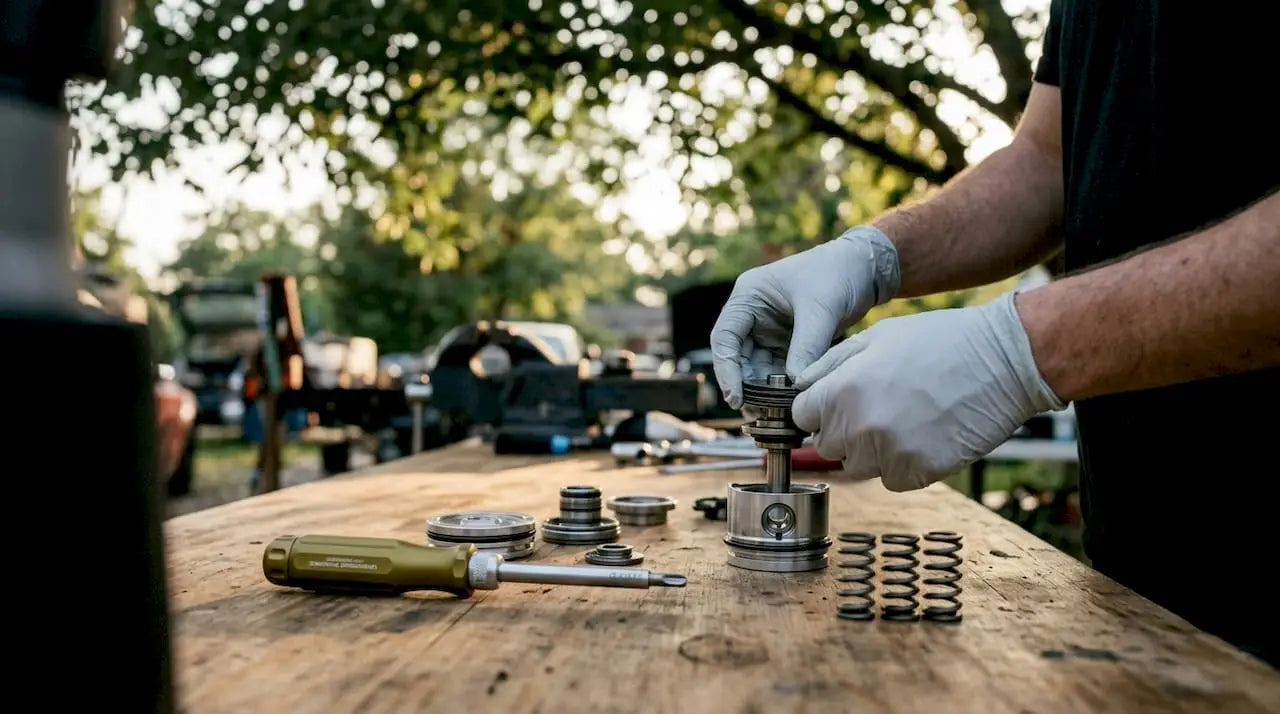
A spring alone is a terrible oscillation manager. A properly functioning damper kills oscillations in 1–2 cycles compared to 10 or more cycles for an undamped spring. That difference is the gap between a car that handles and one that wallows.
Digressive damping valving takes this further by allowing high resistance at low piston speeds for body control while limiting harshness at high piston speeds. Most modern race dampers use digressive curves for exactly this reason. It is the best of both worlds when the valving is calibrated correctly.
| Piston velocity | Damping behavior | Primary effect |
|---|---|---|
| Under 0.05 m/s | Low-speed damping active | Controls body roll and pitch |
| 0.3–0.5 m/s | Ideal tuning sweet spot | Balances ride comfort and handling |
| Over 0.5 m/s | High-speed damping active | Manages sharp impacts and potholes |
Pro Tip: If your car feels stiff over smooth roads but loose over rough ones, your damper valving may be too linear. A digressive curve solves this without sacrificing body control.
What is the difference between low-speed and high-speed damping?
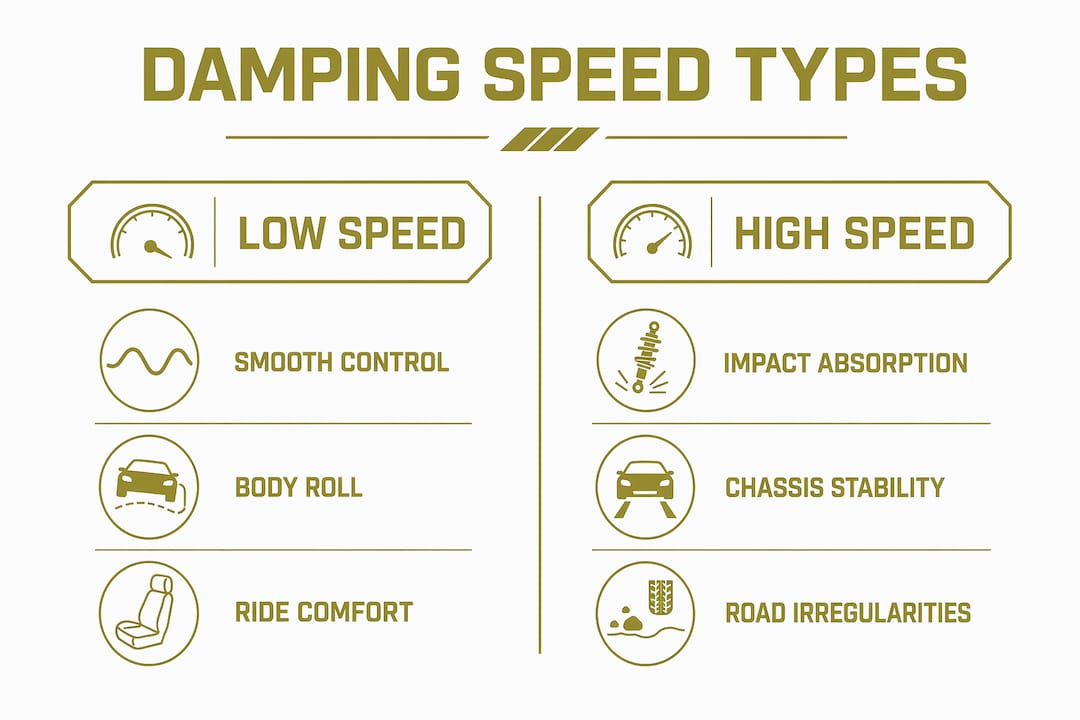
Low-speed and high-speed damping refer to piston velocity ranges inside the shock, not how fast the car is traveling. That confusion trips up a lot of first-time tuners. Low-speed damping under 0.05 m/s controls gradual body movements like roll during cornering, pitch under braking, and squat under acceleration. High-speed damping above 0.5 m/s handles sharp, sudden inputs like hitting a pothole or dropping a wheel off a curb.
Here is where the tuning trade-off gets real:
- Too much low-speed compression damping makes the car feel stiff and unresponsive on smooth roads. The suspension resists normal body motion, which kills driver feedback.
- Too little low-speed rebound damping lets the body float and wallow. The car feels vague, especially mid-corner.
- Too much high-speed compression damping causes a harsh, skittish ride on rough surfaces. The tire bounces rather than tracking the road.
- Too little high-speed rebound damping lets the suspension extend too fast after a big hit, which can unsettle the chassis at speed.
The interaction between these two ranges defines the ride-versus-handling trade-off every builder faces. Tuning suspension for comfort means softening both ranges, especially high-speed compression. Tuning for a smooth track means stiffening low-speed damping for body control while keeping high-speed settings moderate. Wheel choice also feeds into this equation. How wheels shape suspension performance affects the effective unsprung mass your damper has to manage at high piston velocities.
Pro Tip: Adjust low-speed and high-speed settings separately if your damper allows it. Changing one click of low-speed rebound on a smooth road tells you far more than a full-range adjustment on a rough surface.
How do rebound and compression damping settings affect handling?
Rebound damping controls how fast the suspension extends after compression. Compression damping controls how fast it compresses over a bump. Both matter, but they affect handling in very different ways.
Rebound damping is recommended to be 2–3 times stiffer than compression as a baseline. The logic is straightforward: the spring extends the suspension on its own, so the damper needs more resistance on the rebound stroke to prevent the tire from bouncing off the road. Compression damping works with the spring, so it needs less resistance to stay compliant.
| Setting | Too stiff | Too soft |
|---|---|---|
| Compression damping | Harsh, skittish ride on rough surfaces | Body dives excessively under braking |
| Rebound damping | Suspension packs down, loss of grip on successive bumps | Chassis bounces, tire loses contact after hits |
Over-stiff compression damping causes a skittish or harsh ride by preventing the suspension from moving quickly enough over uneven surfaces. The tire loses contact with the road instead of following it. Too much rebound damping causes suspension packing, where the shock cannot extend fully between bumps, progressively lowering the ride height mid-corner and killing mechanical grip.
Independent adjustment of rebound and compression is the reason quality coilovers justify their price. A suspension tuning checklist helps you work through these settings methodically rather than chasing your tail between adjustments.
Pro Tip: Start with the manufacturer’s baseline settings, then adjust rebound first. Rebound has the biggest effect on tire contact and driver feel. Compression is the fine-tuning layer.
What practical techniques improve performance through damping adjustments?
Damping adjustments only work correctly when the rest of the suspension setup is already dialed in. Start with spring rates and corner weights before touching damping. Trying to fix a packing suspension with stiffer rebound is a common mistake that masks the real problem and destroys traction.
Here is a practical tuning sequence that works:
- Set ride height and spring rates first. Damping cannot compensate for incorrect spring stiffness. Get the corner weights balanced before you touch a clicker.
- Adjust sway bars before damping for balance corrections. Sway bar adjustment corrects understeer and oversteer more directly than damping changes. Use damping to manage weight transfer rates, not to fix a fundamental balance problem.
- Match damping to surface conditions. On rough roads, run softer settings to keep the tire in contact with the ground. On smooth tracks, stiffer low-speed damping improves body control without punishing the chassis.
- Change one setting at a time. Changing multiple variables simultaneously makes it impossible to know what caused the change in feel. One click, one test, one note.
- Log every adjustment. Write down the setting, the surface, and the feedback. Memory is unreliable after a full day of testing. A logbook turns seat time into a repeatable system.
Heavier vehicles and EVs need extra attention on high-speed damping. EVs require specialized damping tuning due to heavier unsprung masses from battery packs and electric drivetrains. The unsprung mass challenge in performance vehicles is well documented, and it directly affects how much high-speed damping force you need to prevent harsh impacts from upsetting the chassis. If you are building on a heavier platform, start with higher baseline rebound settings and work down from there.
Pro Tip: Test on the same road section or track segment every time. Changing the test surface between runs introduces variables that make your damping feedback meaningless.
Key Takeaways
Damping controls suspension stability by managing spring energy dissipation, and rebound must be set 2–3 times stiffer than compression to maintain consistent tire contact.
| Point | Details |
|---|---|
| Damping is velocity-dependent | Force increases with piston speed, not suspension position, making tuning range critical. |
| Rebound vs. compression ratio | Set rebound 2–3 times stiffer than compression as a starting baseline for most builds. |
| Low-speed vs. high-speed settings | Low-speed controls body roll and pitch; high-speed manages sharp impacts and rough surfaces. |
| Tune in the correct order | Fix spring rates and corner weights before adjusting damping to avoid masking real issues. |
| Log every change | Document each adjustment and test on consistent surfaces to isolate the effect accurately. |
Damping is the detail most builders get wrong last
I have watched builders spend serious money on coilovers and then crank the compression damping to maximum because it “feels more planted.” It does not. What it actually does is reduce the tire’s contact patch on any surface that is not perfectly smooth, which is most roads and most tracks.
The thing that changed my approach was treating damping as a control system, not a stiffness dial. The goal is not maximum resistance. The goal is controlled energy dissipation at the right velocity range for your surface and your spring rate. When you get that right, the car feels planted without feeling harsh. The steering gets honest. You stop fighting the chassis and start driving it.
The other mistake I see constantly is tuning damping before spring rates are correct. If your suspension is packing down mid-corner, the answer is not more rebound stiffness. The answer is fixing your spring rate so the suspension has room to work. Rebound damping is there to control extension speed, not to substitute for mechanical grip. Confusing the two costs you lap time and tire life.
Modern builds, especially anything EV-adjacent or running heavy wheel and tire packages, need more high-speed rebound than a traditional lightweight build. Do not copy settings from a lighter car and expect them to work. Start fresh, log everything, and give the setup time to talk to you.
— Ismael
Suspension components built for builders who tune
Damping knowledge only goes as far as the hardware underneath you. If your shocks do not offer independent rebound and compression adjustment, you are tuning blind.

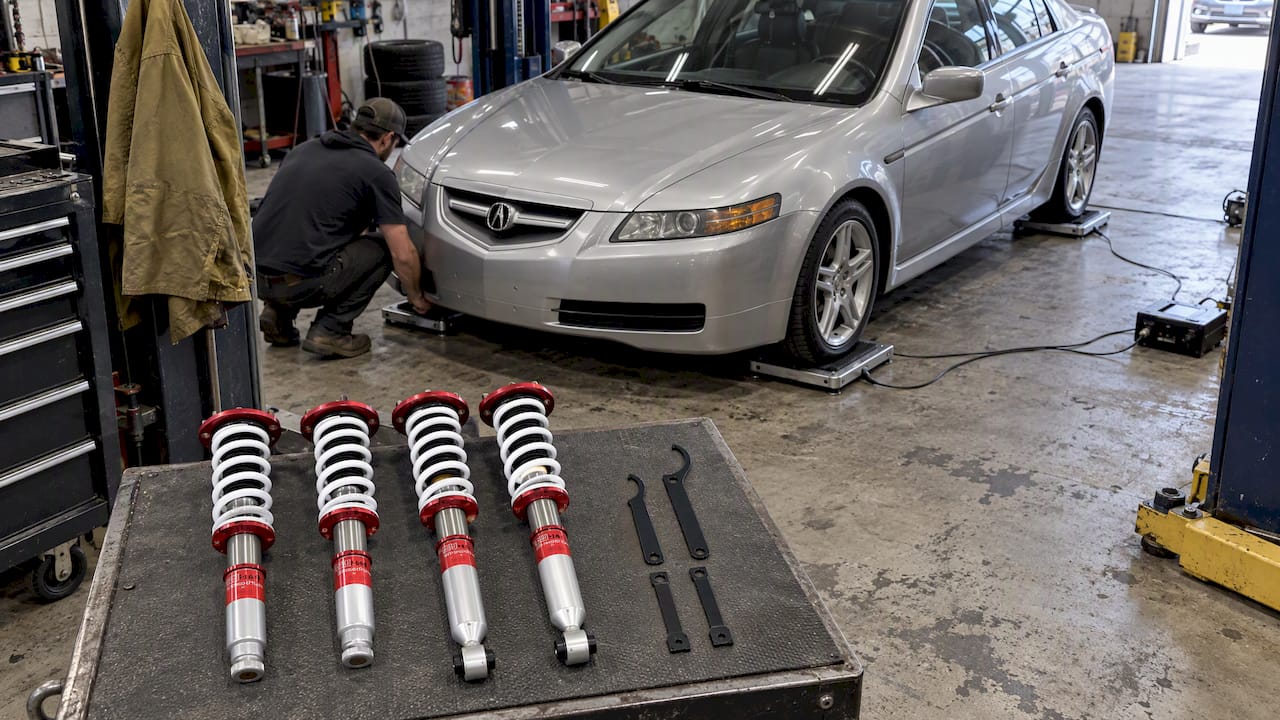
Undergrounddynamics carries coilovers, air ride, and lowering springs selected for real fitment and real adjustability, not just catalog filler. Every suspension component in the catalog includes the technical specs you need to match damping range to your spring rates and build goals. Whether you are setting up a street car for daily comfort or dialing in a track build for consistent lap times, the performance upgrades section has the hardware to back your tuning work. No guesswork on fitment. No vague product descriptions.
FAQ
What is the role of damping in suspension tuning?
Damping controls how quickly a shock absorber dissipates spring energy to stabilize the chassis and maintain tire contact. Without proper damping, springs oscillate freely and the tire loses grip on successive bumps.
How does rebound damping differ from compression damping?
Rebound damping resists suspension extension after a bump, while compression damping resists the initial compression stroke. Rebound is typically set 2–3 times stiffer than compression to prevent the tire from bouncing off the road surface.
What causes suspension packing and how do you fix it?
Suspension packing occurs when rebound damping is too stiff, preventing the shock from extending fully between bumps. The fix is to soften rebound damping and verify that spring rates are correct before making further adjustments.
How does damping affect EVs differently than traditional cars?
EVs carry heavier unsprung masses from battery systems and electric drivetrains, which increases the demand on high-speed damping. Standard damping baselines from lighter vehicles do not translate directly and require recalibration for heavier platforms.
When should you adjust damping versus sway bars?
Adjust sway bars first to correct understeer or oversteer balance, then use damping to manage weight transfer rates and refine ride quality. Using damping to fix a balance problem masks the root cause and creates inconsistent handling.