FREE SHIPPING ON ORDERS OVER $150

Cart
0
Air suspension is reliable when it’s built with quality bags, a properly rated compressor, and installed by someone who knows how to route lines and seal fittings correctly. The system’s biggest reliability gap isn’t the technology itself. It’s cheap components and lazy installations. Enthusiasts who buy OEM-spec parts and stick to a maintenance routine typically get a decade of service; those who cut corners often see problems within a year or two.
TL;DR:
- Proper installation with OEM-spec parts, correct line routing, and routine maintenance significantly extends air suspension lifespan beyond two years.
- Moisture buildup, poor sealing, and exposure to road salt or heat accelerate component failures, especially in cheap or neglected systems.
- Regular checks like tank draining, leak testing with soap solution, and replacing the dryer prolong system reliability and prevent costly repairs.
- Replacing individual components costs between $50 and $3,500, with conversions to coilovers recommended after repeated failures or control module issues.
- Properly matched dampers, quality fittings, and experience-focused shops are key to achieving a reliable air suspension setup.
Table of Contents
- What Determines Air Suspension Reliability: Component Breakdown and Failure Modes
- Typical Lifespan and Durability: OEM Systems vs Aftermarket Kits
- Common Symptoms, Quick Diagnostics, and Triage Steps
- Maintenance and Prevention Checklist (Monthly, Six-Month, Annual Tasks)
- Repair Costs, Common Replacement Parts, and When to Convert to Coils
- How to Choose a Reliable Air Suspension Setup and Installer
- How Temperature and Road Conditions Affect Air Suspension Reliability
- How Load and Driving Habits Affect Air Suspension Wear
- Underground Dynamics’ Practical Stance on Air Suspension
- Suspension Parts That Actually Fit Your Build
- Sources
- FAQ
What Determines Air Suspension Reliability: Component Breakdown and Failure Modes
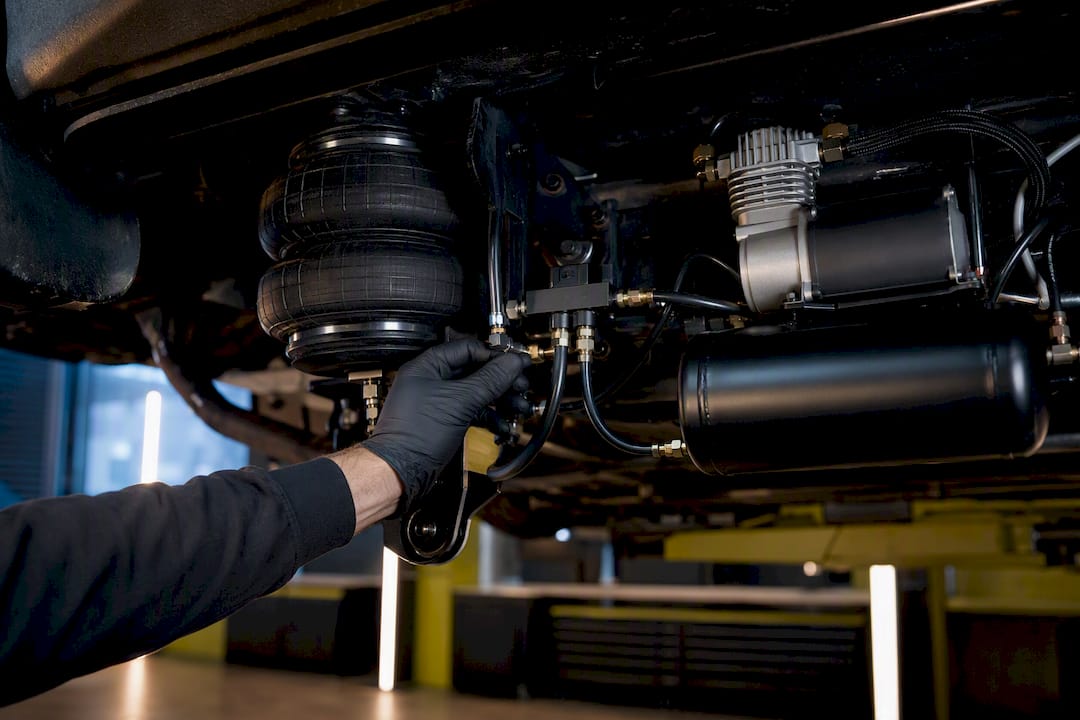
Every air suspension system is really five subsystems working together, and each one fails in its own predictable way. Understanding these failure points is the difference between diagnosing a problem in ten minutes and throwing parts at a car for a month.
- Air springs (bellows): Rubber ages, dries out, and cracks over time. Debris punctures happen on lowered cars, and over-extension during a bounce without proper travel limiters can blow a bag out entirely.
- Air lines and fittings: Chafing against a frame rail or exhaust heat shield is the number one cause of slow leaks. Cheap push-to-fit fittings are notorious for weeping air under pressure cycles.
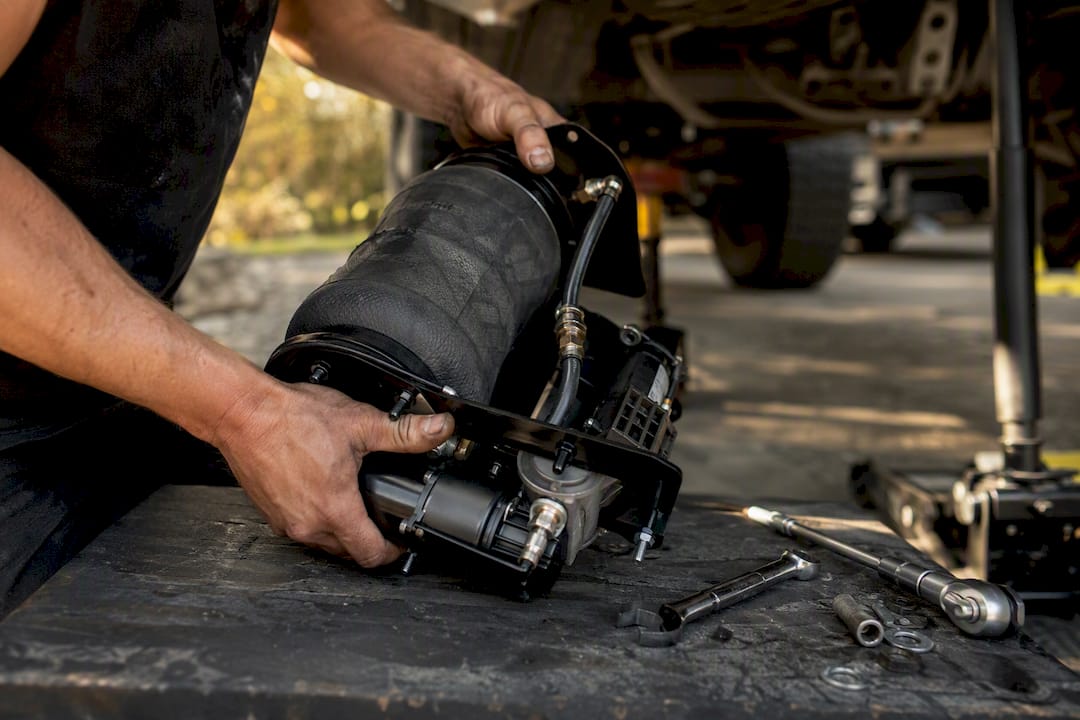
- Compressor and dryer: Compressors burn out from over-cycling, usually because they’re compensating for a leak somewhere else in the system. A saturated or missing dryer lets moisture into the tank, which corrodes internals from the inside out.
- Valves, solenoids, and sensors: Corrosion and electrical faults here cause erratic ride height, stuck valves, or a system that won’t respond to height commands at all.
Air bag failure traces back to a short list of causes, according to Wikipedia’s breakdown of air suspension mechanics: moisture, age-related rubber drying, debris punctures, chafing from bad routing, and over-extension. Compressors often burn out simply because they’re working overtime to compensate for a leak nobody caught early.
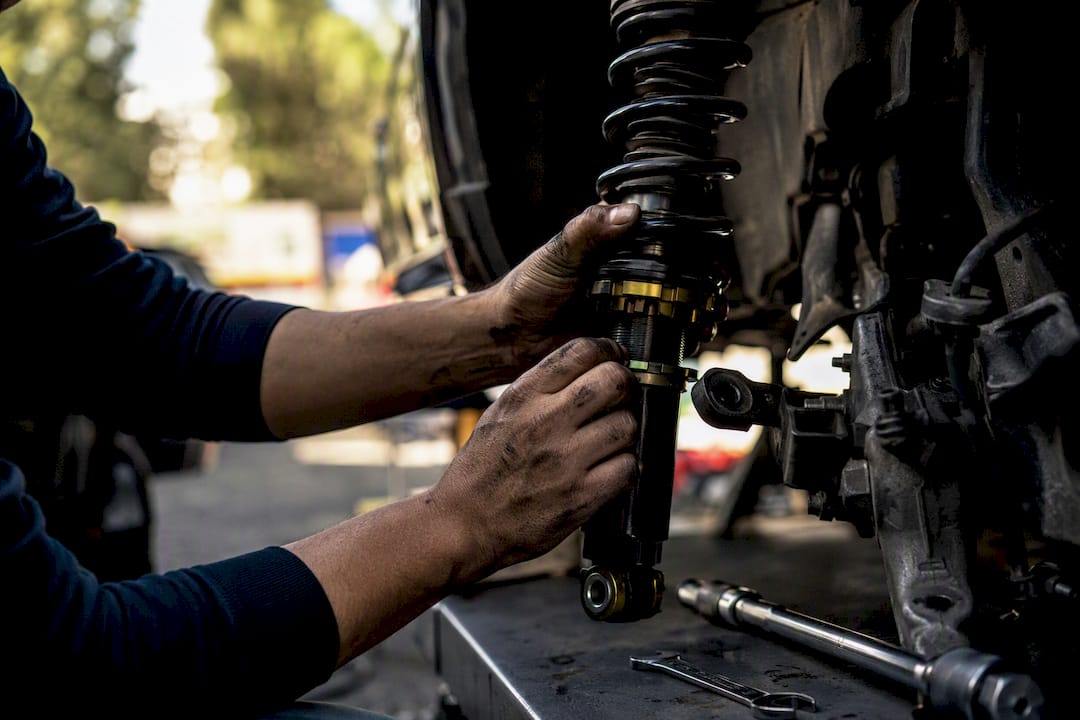
One detail that gets overlooked: shocks and dampers matter as much as the bags themselves. A mismatched shock makes a perfectly healthy air system ride poorly and wear faster, which is why MotorTrend’s technical explainer treats damper selection as a core reliability factor, not an afterthought.
Typical Lifespan and Durability: OEM Systems vs Aftermarket Kits
A well-maintained factory air suspension system commonly runs several years before major components need attention. Quality aftermarket kits, when properly installed, typically last similarly long. Budget kits with generic compressors and no dryer often start showing leaks or compressor strain much sooner.
Practitioner reporting backs this up: a properly installed and maintained system can last a decade or more, while a cheap kit or sloppy install can begin failing far sooner. What separates the two outcomes usually aren’t the brand on the box. It’s what happens during installation and the months after.
Factors that shorten lifespan across both categories:
- Undersized compressor duty cycle relative to how often the system cycles
- Missing or neglected dryer cartridge, letting moisture reach internal components
- Exposure to road salt, standing water, or constant moisture without drainage habits
- Cheap push-to-fit fittings instead of properly sealed, threaded connections
Installation quality moves the needle more than most buyers expect. Two identical kits, one installed with routed, protected lines and thread sealant, the other with lines zip-tied near a hot exhaust will have dramatically different service lives even though the parts are the same.
Common Symptoms, Quick Diagnostics, and Triage Steps
A sagging corner overnight is usually your first sign something’s wrong, but it’s rarely the only clue if you know where to look. Frequent, short compressor cycles, an audible hiss near a wheel well, a ride-height warning light, or a car that sits noticeably uneven all point to specific failure points rather than a mystery problem.
Run through these checks before you assume the worst:
- Soapy water test. Spray a diluted soap solution on fittings and bag seams with the system pressurized. Bubbles show you the leak location in minutes.
- Listen to the compressor. A compressor that runs constantly, even with the car parked, almost always means a slow leak somewhere in the lines or bags rather than a compressor problem itself.
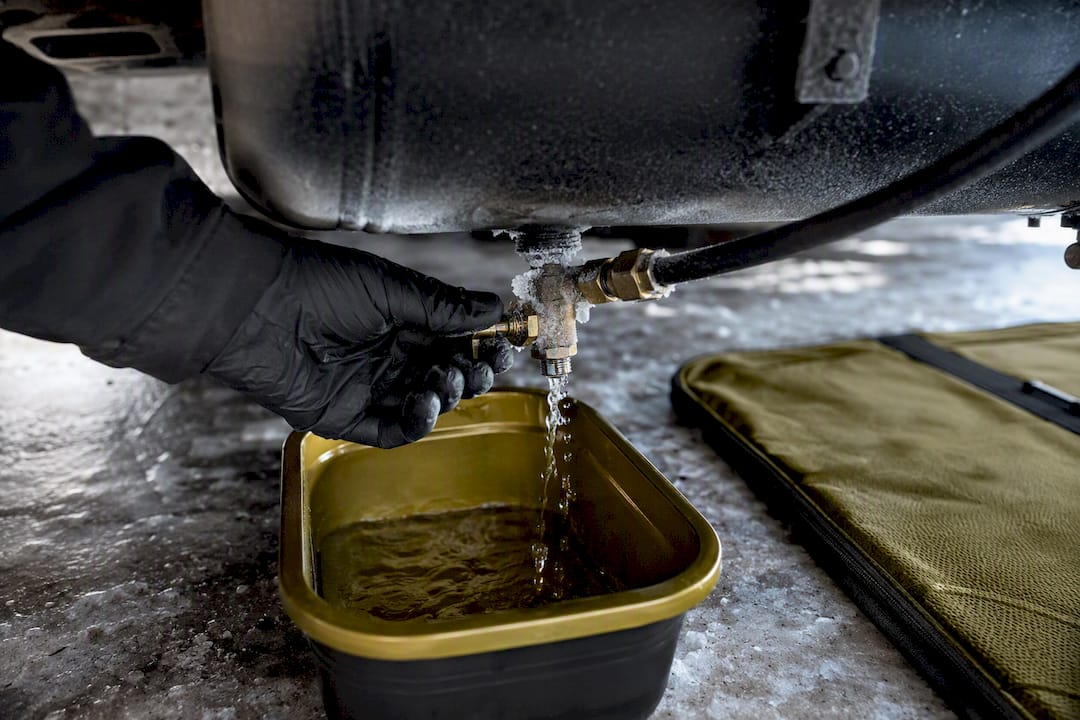
- Check the tank for moisture. Open the drain valve and see what comes out. Water where there should be dry air tells you the dryer has failed or was skipped.
- Scan for fault codes. Height sensor and solenoid faults often throw a code before the ride quality noticeably changes.
Pro Tip: If the compressor is running more than a few times per hour with the car sitting still, stop driving it that way and find the leak first. A worn or leaking air spring typically starts as a slow leak that gets worse gradually, and letting the compressor fight it constantly is what leads to a burned-out compressor on top of the original problem.
Treat any sudden, dramatic drop at one corner as a stop-and-inspect situation, not a drive-it-and-see-what-happens one. A blown bag at speed changes handling fast.
Maintenance and Prevention Checklist (Monthly, Six-Month, Annual Tasks)
Reliability with air suspension isn’t really about luck. It’s about whether you actually run a maintenance schedule or let the system fend for itself until something breaks. Here’s the cadence that keeps most systems running for years without drama.
Monthly:
- Drain accumulated moisture from the air tank using the drain valve. This single habit does more to prevent internal corrosion than almost anything else you can do.
- Do a quick visual check of air lines and fittings for chafing, kinks, or wet spots that indicate a slow leak.
Every six months:
- Inspect the dryer cartridge and replace it if it shows saturation. A saturated dryer stops protecting the system the moment it’s full.
- Check compressor mounting hardware for vibration wear and confirm the duty cycle isn’t excessive for how the car is driven.
Annually:
- Run a full system inspection, including bags, manifold, valves, and sensor connections.
- Re-route or add protective sleeving to any line sections showing early chafe marks.
- Replace bellows that show surface cracking or hardened rubber, even if they haven’t started leaking yet.
Draining the tank monthly and swapping the dryer on schedule materially reduces internal corrosion and adds years to component life. It’s a five-minute task most owners skip, and it’s usually the single biggest gap between a system that lasts a decade and one that doesn’t.
Pro Tip: If you’re upgrading rather than just maintaining, a second compressor for redundancy, OEM-spec bellows and quality threaded fittings paired with properly matched shocks solve most of the recurring failure points in one pass instead of chasing them individually later.
Repair Costs, Common Replacement Parts, and When to Convert to Coils
A single air spring replacement typically runs $150 to $500 in parts depending on the vehicle, plus labor. A compressor replacement lands in a similar $200 to $600 range, and a dryer cartridge is a comparatively cheap fix at $50 to $150. Manifold and solenoid valve work climbs higher, often $300 to $800 once labor is factored in, and height sensor replacement adds a smaller line item on top.
- Partial repair (one bag, one fitting fix): often $300 to $700 total
- Broader repair (compressor plus dryer plus a bag): frequently $700 to $1,500
- Full system refresh: can reach $2,000 to $3,500 depending on how many components need replacing
Repairs on air systems generally cost more than equivalent coil-spring fixes, a gap HowStuffWorks attributes to the added complexity of compressors, lines, and electronics that coil setups simply don’t have. That cost delta is exactly why some owners convert to coils after a second or third round of leaks.
Consider converting to coilovers if you’re facing repeated compressor burnout, multiple bellows failing within a short span, or a control module that’s failed once already. If cost and simplicity matter more to you than adjustable ride height, coils are the more predictable long-term choice. Our full breakdown of air suspension setup costs covers this math in more depth.
How to Choose a Reliable Air Suspension Setup and Installer
The parts you buy and the shop that installs them matter roughly equally. A great compressor installed poorly fails just as fast as a cheap one installed well, so vet both sides before you commit.
What to demand from the components:
- A compressor with a duty cycle rating that matches your driving habits, not just the cheapest unit in the kit
- An included, quality dryer, not an afterthought accessory
- OEM-spec bellows or a proven aftermarket brand with a real track record
- Threaded, sealed fittings over generic push-to-fit connectors
- A serviceable manifold that doesn’t require replacing the whole unit for one bad valve
What to demand from the installer:
- Documented experience with air suspension specifically, not just coilovers
- A routing plan that keeps lines away from heat sources and pinch points
- Correct use of thread sealant on fitting connections
- Shock and damper matching to the air springs, since mismatched dampers hurt handling and accelerate wear even on an otherwise healthy system
- A post-install pressure and leak test before the car leaves the shop
Pro Tip: Ask directly whether the shop pressure-tests every fitting after install. A shop that skips this step is gambling with your reliability, not protecting it. Red flags include no warranty on labor, no test drive after install, and a compressor swapped in as a cheap afterthought rather than matched to your setup. Our suspension tuning checklist walks through shock matching in more detail if you’re building the system yourself.
How Temperature and Road Conditions Affect Air Suspension Reliability
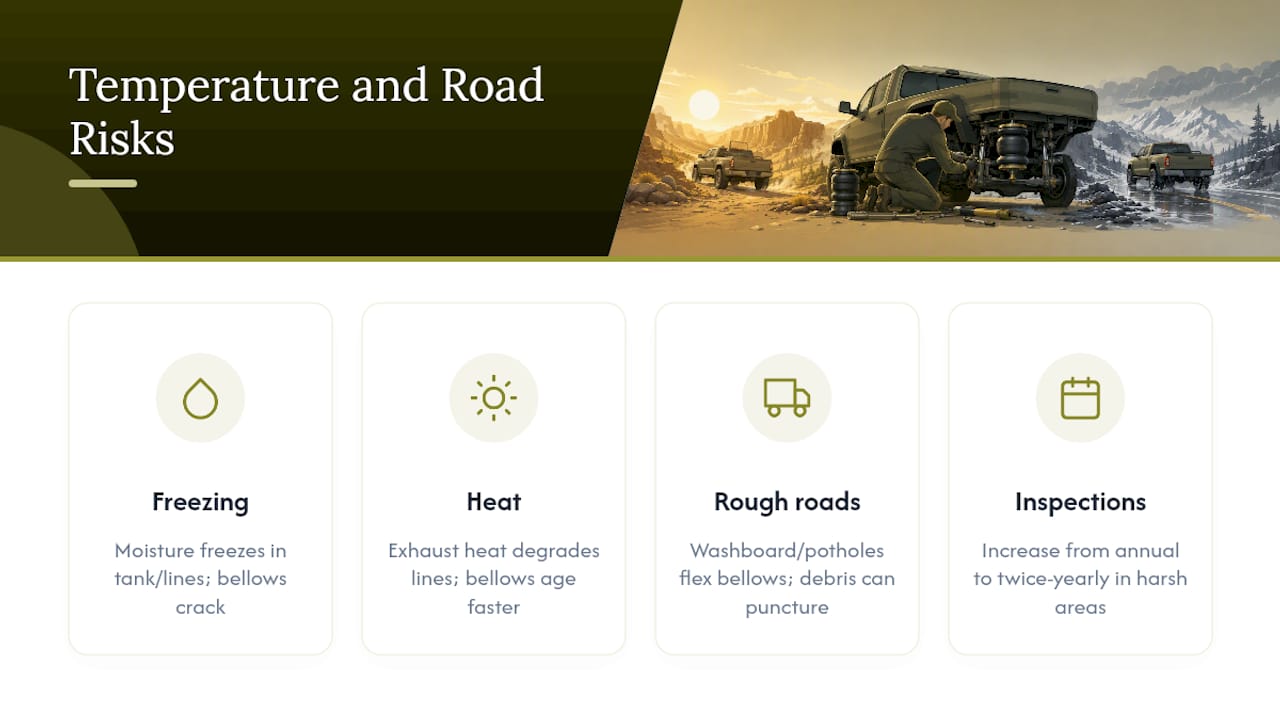
Cold weather is genuinely tough on air suspension. Rubber bellows stiffen and become more prone to cracking in freezing temperatures, and any moisture sitting in the tank or lines can freeze, blocking airflow or damaging seals as it expands. Owners in colder climates who skip the monthly tank drain are the most likely to see winter-specific failures, since that trapped moisture is exactly what freezing turns into a problem.
Heat brings a different set of risks. Lines routed too close to an exhaust or catalytic converter degrade faster from constant heat exposure, and rubber bellows exposed to prolonged sun and high ambient temperatures age faster than the same part in a mild climate. Road salt in winter climates accelerates corrosion on compressor housings, valve bodies, and any exposed metal fittings.
Rough roads add a mechanical stress that’s easy to underestimate. Constant washboard surfaces or aggressive potholes flex bellows repeatedly at their weakest points, and gravel or debris kicked up from unpaved roads is a direct puncture risk to exposed lines and bags. If you regularly drive rough roads or live somewhere with harsh winters, tightening your inspection interval from annual to twice a year on lines and bellows is a reasonable adjustment, not overkill.
How Load and Driving Habits Affect Air Suspension Wear
Air suspension has a real advantage over static coils when it comes to load. It’s designed to adjust ride height and firmness as weight changes, which is exactly why trucks and vans use it for towing and hauling. But that adjustability doesn’t mean the system is immune to load-related wear.
Consistently running at or near maximum load keeps the compressor cycling more often to maintain ride height, which accelerates the exact over-cycling wear pattern that leads to compressor burnout. Trucks and vans running heavy, frequent loads are precisely where common failure points like compressor strain and dryer saturation show up most often in service records, since the system is doing more work more often than a lightly loaded passenger car.
Driving style matters too. Stop-and-go city driving with constant height adjustments puts more cumulative cycles on the compressor than steady highway miles, even over the same distance. Lowered show cars that sit at minimum ride height for long stretches put sustained stress on bellows in a different way, keeping them compressed rather than cycling through their normal range. Neither pattern is wrong. Both just call for closer attention to the specific components taking the extra load.
Underground Dynamics’ Practical Stance on Air Suspension
Air suspension earns its reputation problems the same way most car parts do: through corners cut during manufacturing or installation, not through the technology itself. At Undergrounddynamics, we consider fitment accuracy essential to reliability, since a poorly matched bag or bracket risks failure before the car ever leaves the driveway.
We built our suspension catalog around components with real fitment data and pairing guidance for shocks and dampers, not just a part number and a hope. If you’re weighing air suspension against coilovers for a build, the honest answer is that both can be reliable. The variable is always the quality of parts and the person installing them.
— Ismael
Suspension Parts That Actually Fit Your Build
Underground Dynamics gives you an alternative to guessing your way through a suspension upgrade: real fitment data attached to every part, so you know a component matches your chassis before it ships, not after it’s on a lift.
Our coilover, air ride, and lowering spring catalog is organized by chassis compatibility, which cuts out the trial-and-error that sinks a lot of home installs and turns a reliable setup into a frustrating one. Whether you’re leaning toward air suspension for a show build or sticking with coils for simplicity, the fitment specs and component pairing information are laid out up front. If you’re not sure which route fits your goals, our complete air suspension system guide breaks down the tradeoffs in plain terms.
Ready to spec a setup for your build? Browse the suspension category page to compare options by chassis, or reach out to our team for installation recommendations before you buy.
Sources
- Air suspension — Wikipedia
- How Air Suspensions Work | MotorTrend
- How Air Suspension Systems Work | HowStuffWorks
- Air suspension: what it is plus the pros and cons | CarBuzz
FAQ
How Long Will Air Suspension Last?
A well-maintained system, whether OEM or a quality aftermarket kit, commonly lasts a decade or more. Poorly installed or budget kits can start failing within a year or two.
Are There Any Downsides to Air Suspension?
Yes. Repairs typically cost more than coil-spring fixes, the system requires ongoing maintenance like tank draining, and complexity means more potential failure points than a static setup.
Which Car Has the Most Reliable Air Suspension?
Reliability tracks part quality and installation more than any single make or model, since factory-integrated systems generally outperform poorly installed aftermarket kits regardless of brand.
Can You Drive Long Distances With Air Suspension?
Yes, a properly maintained system handles long highway drives without issue, and the load-leveling feature is genuinely useful on trips with heavier cargo or passengers.