FREE SHIPPING ON ORDERS OVER $150

Cart
0
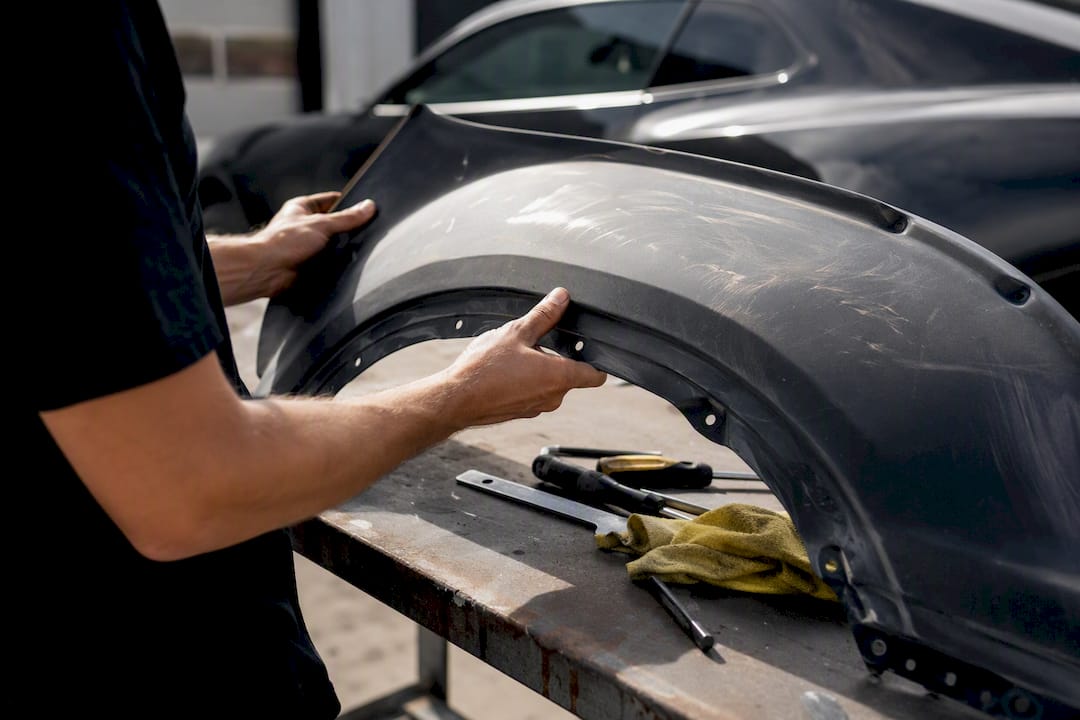
A/B/C grades tell you a used part’s repair or mileage condition, not whether it’s a good buy on its own. Grade A means ready-to-install, minimal work needed. Grade B means repairable, budget in labor or paint. Grade C means salvage territory, fine for a donor part but not your daily driver’s fender. These letters come from real standards, not seller guesswork.
The Automotive Recyclers Association built the framework most used-parts sellers reference, whether they cite it or not, and CAPA certification does the equivalent job for new aftermarket panels. Underground Dynamics builds its whole catalog around a different but related idea: fitment-first documentation so you never have to decode a stranger’s grading shorthand in the first place.
Here’s the quick action map:
- Grade A / low mileage: Buy with confidence, verify part numbers.
- Grade B / mid mileage: Inspect closely, price in repair time.
- Grade C / high mileage: Avoid for daily builds, consider only for parts, cores, or track cars where cosmetics don’t matter.
Key Takeaways
Grading tells you a used part’s condition, but fitment documentation is what actually prevents a bad install.
| Point | Details |
|---|---|
| A/B/C grades map to repair scope | Grade A means minimal work, Grade B needs repair budget, Grade C is salvage territory only. |
| New parts use tiers, not grades | CAPA-certified, OEM-equivalent, and performance tiers describe new aftermarket specs, not wear. |
| Safety-critical parts need stricter sourcing | Suspension and structural components warrant new, specified parts over graded used ones. |
| Documentation beats letter grades | Photos, disclosures, and warranty terms matter more than the grade alone. |
| Underground Dynamics skips grading uncertainty | New parts with documented fitment data replace the need to interpret a used-part grade. |
Table of Contents
- Aftermarket Parts Grading Explained: The ARA and AutoGrade Standards
- New Aftermarket Tiers vs. Used Part Condition Grades
- How to Use Grading When You’re Actually Buying
- Where Grading Falls Short: Red Flags Builders Miss
- How Underground Dynamics Removes the Guesswork
- Why Grading Shapes What You Can Actually Find and When
- Certification Bodies That Shape Grading Beyond ARA and NAAA
- Does Part Grading Affect Insurance and Inspections?
- What the Grading Debate Gets Wrong
- Get Fitment-First Parts Without the Grading Guesswork
- Sources
- FAQ
Aftermarket Parts Grading Explained: The ARA and AutoGrade Standards
Grading exists because “used” tells you nothing on its own. A bumper with one scuff and a bumper that’s been in three fender-benders are both technically used, but they’re not remotely the same purchase. The ARA built a system to close that gap, and it’s worth knowing the actual numbers instead of trusting a seller’s adjective.
For body parts, the ARA defines a “unit” as damage that could be covered by a credit-card-sized object. From there, the ARA Parts Grading and Description Guidelines break down like this:
- Grade A: One unit of damage or less. Think a small scratch or minor scuff.
- Grade B: More than one unit, up to two. Expect some bodywork or panel repair.
- Grade C: More than two units. You’re looking at real structural or cosmetic rebuild work.
Mechanical parts get graded differently, since mileage matters more than surface damage. Grade A covers parts under 60,000 total miles, or under 15,000 miles per model year on older vehicles. Grade B runs from 60,000 to 199,999 miles. Grade C is assigned to high mileage parts.
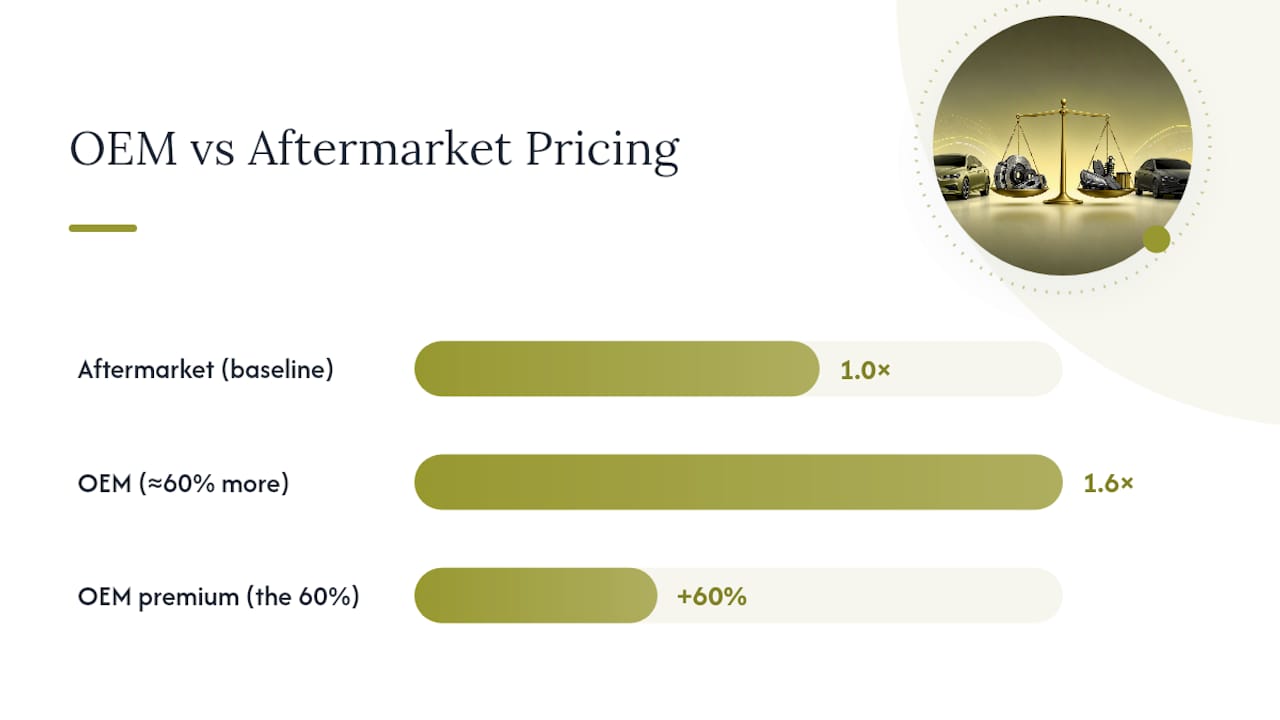
Statistic Callout: Industry pricing data shows OEM parts cost roughly 60% more than aftermarket alternatives, which is exactly why grading matters so much on the used side. You’re paying less, so you need a reliable way to know what “less” is buying you.
Auction and wholesale channels use a parallel system called AutoGrade®, an algorithmic condition score that factors in damage type, severity, and seller disclosures. It exists to strip subjectivity out of condition reports across different auction houses, which matters when you’re comparing listings from sellers you’ve never dealt with. Read any grade alongside actual photos and seller notes. A letter grade without visual proof is a claim, not a fact.
New Aftermarket Tiers vs. Used Part Condition Grades
This is where a lot of builders get tripped up: new aftermarket parts and used aftermarket parts are graded on completely different scales, and mixing them up leads to bad assumptions. A/B/C grades describe wear and repair history. They only apply to used parts. New aftermarket components get sorted by specification and certification tier instead, since there’s no mileage or damage to measure yet.
The tiers you’ll run into most often:
- CAPA-certified: Passed independent fit-and-finish testing through the Certified Automotive Parts Association, the closest thing the aftermarket has to a quality seal.
- OEM-equivalent: Matches factory specs for materials and dimensions, usually without the certification paperwork.
- Performance aftermarket: Built for function first, sometimes exceeding stock specs in strength or weight savings.
- Economy: Priced lowest, with the most variance in fitment accuracy and material quality.
Quality within these tiers varies a lot by manufacturer and application, which is why supplier track record matters as much as the tier label. A CAPA sticker tells you a part passed a specific test. It doesn’t tell you whether the company backs it with a real warranty.
Pro Tip: If a part touches suspension geometry, brake mounting, or structural fitment, lean new and specified over used and graded. A B-grade fender is a cosmetic gamble. A B-grade control arm is a safety gamble.
For performance builds specifically, this split usually settles into a clean rule: cosmetic aero panels can sometimes justify a graded used part if the price gap is big enough, but anything load-bearing or safety-critical should come from a new, specified source with real documentation behind it.
How to Use Grading When You’re Actually Buying
Knowing the grading scale is step one. Using it correctly during a real purchase is where builders either save money or create a headache six months into a build.
Start with the grade itself, then verify everything the grade doesn’t tell you:
- Match the grade to your build’s tolerance. A track car chasing lap times can absorb a B-grade panel that needs bodywork. A daily driver usually can’t afford that labor time.
- Confirm part numbers against your exact chassis and submodel. Grading says nothing about fitment compatibility.
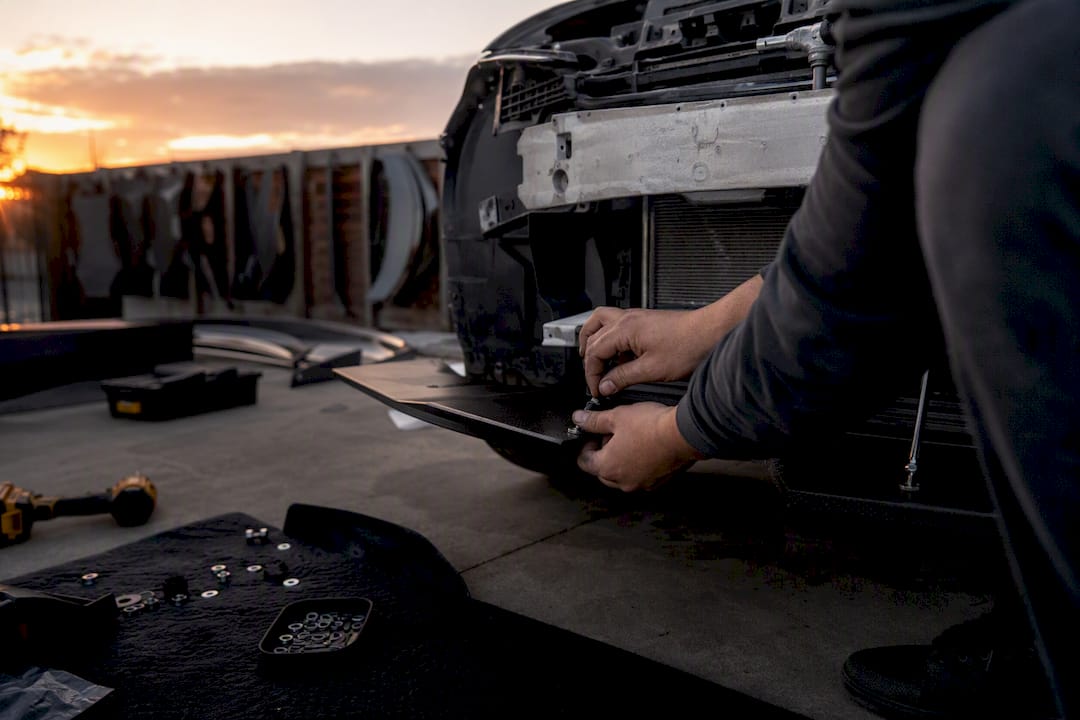
- Check mounting points and clearances against your actual application, especially on wide-body or aero components where tolerances are tight.
- Do a mock-fit check before final install whenever the seller allows a return window.
Beyond the grade, run through this seller checklist:
- Full disclosure on unit count or mileage, not just a letter grade.
- Multiple clear photos, not one stock image reused across listings.
- A stated return policy and any applicable warranty.
- Seller reputation: reviews, transaction history, response to fitment questions.
Checking a chassis-specific fitment guide before you buy graded panels can save you from ordering something that technically fits the model but not your exact trim or year.
Pro Tip: Price in labor and downtime, not just the part cost. A cheap B-grade hood that needs paint and alignment work can cost more in shop time than a new aftermarket unit that bolts on clean.
Where Grading Falls Short: Red Flags Builders Miss
Grading systems are useful, but they’re not foolproof, and performance builders run into specific failure modes more often than the average used-parts shopper.
Watch for these warning signs before you commit:
- Vague or missing mileage on mechanical parts. If a seller won’t give a number, assume the worst tier.
- “Ungraded” or “as-is” listings with no photos. No grade at all is worse than a C grade, because you have zero baseline.
- Grades that don’t match the photos provided. A seller calling something Grade A while the pictures show visible cracking is a listing to walk away from.
- Structural components sold with cosmetic-only grading language. Body-part unit grading was built for panels, not frame rails or subframes.
Used-part grades describe cosmetic and repair condition. They don’t guarantee mechanical function, which means a Grade A fender says nothing about whether the mounting brackets behind it are bent.
That gap between “looks fine” and “works fine” is exactly where hidden costs sneak in: alignment work after a suspension component swap, fabrication to correct a poorly fitting aero piece, or paint and blending after a body panel repair that looked simple in photos. If a listing can’t answer basic questions about mileage, damage extent, or return terms, that’s your signal to stop and source from a supplier who documents fitment upfront instead of leaving you to guess.
How Underground Dynamics Removes the Guesswork
Grading systems exist because used-parts markets are full of unknowns. Underground Dynamics sidesteps that problem differently: every component in the catalog ships new, with documented fitment data instead of a condition letter you have to interpret.
That matters most on the parts where grading ambiguity is riskiest:
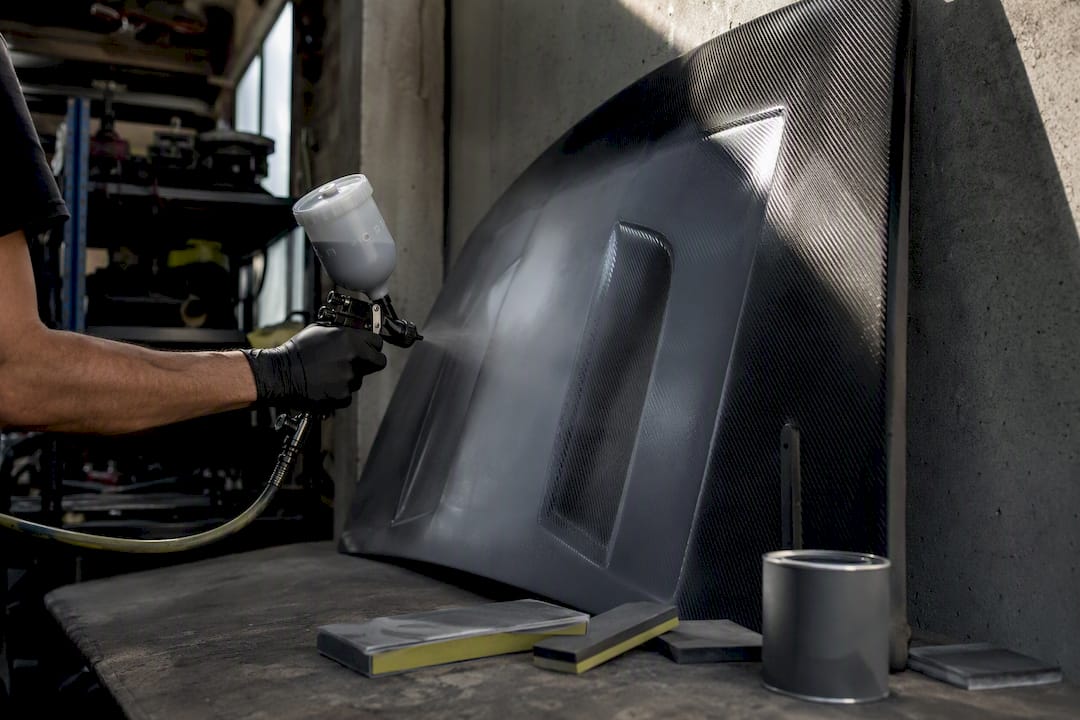
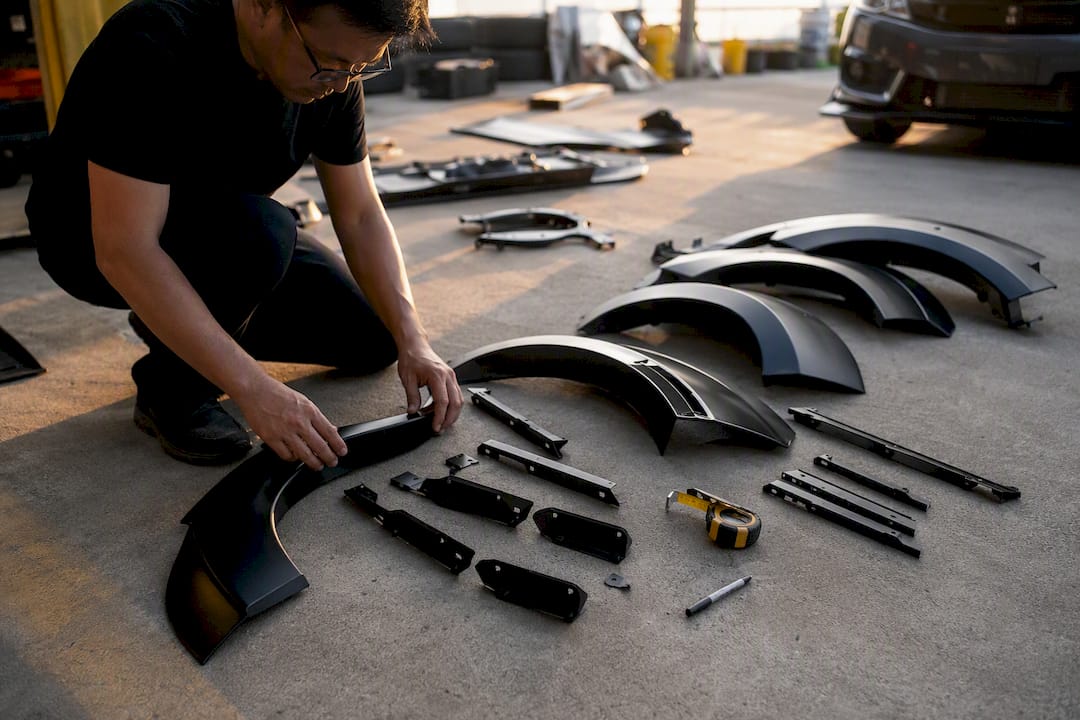
- Chassis-specific body kits and carbon fiber or fiberglass aero built to documented panel specs, not graded off wear.
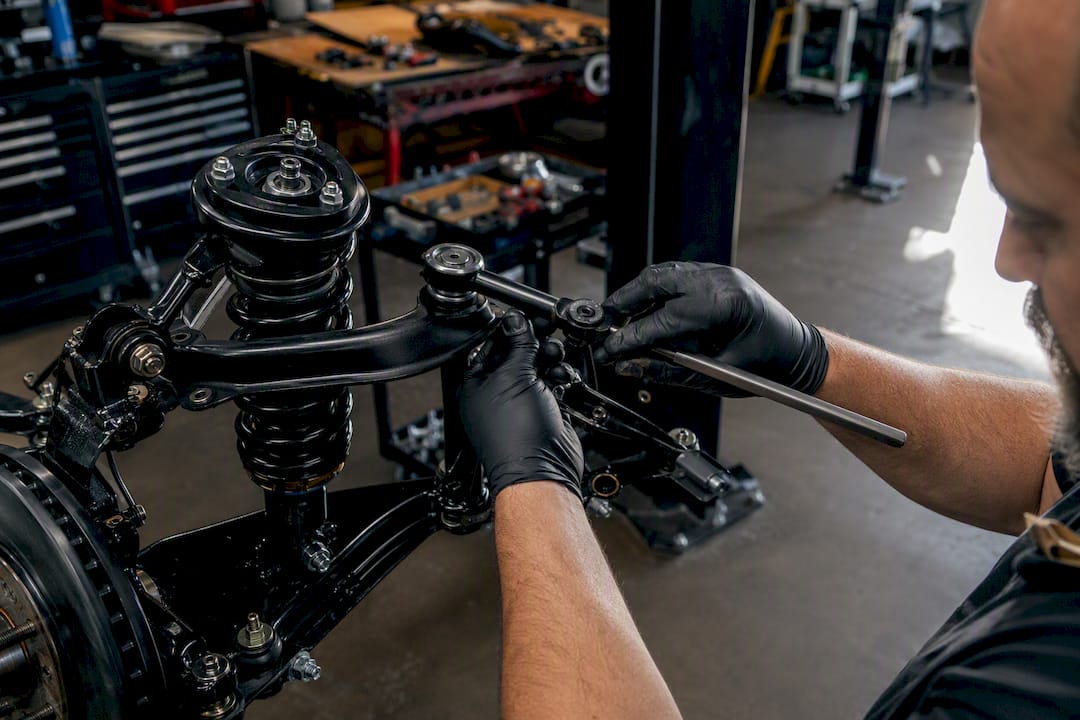
- Suspension components like coilovers and lowering springs, where safety-critical fitment leaves no room for a B-grade gamble.
- Real installs documented on the project blog, showing how parts actually fit specific builds.
Detailed specs and photos up front do the job a grading system tries to do after the fact: they tell you what you’re actually getting before money changes hands.
| Point | Details |
|---|---|
| Grades measure condition, not compatibility | Verify part numbers and chassis fitment separately from any A/B/C grade. |
| New aftermarket uses tiers, not grades | CAPA-certified, OEM-equivalent, and performance tiers apply only to new parts. |
| Underground Dynamics ships new, specified parts | Fitment data replaces grading uncertainty on aero and suspension categories. |
Why Grading Shapes What You Can Actually Find and When
Grading doesn’t just describe a part. It shapes what’s available to you and how fast you can get it. High-demand chassis, think Civic, Supra, or Mustang platforms, tend to have deeper supply of graded used panels simply because there are more donor vehicles in circulation. Less common chassis or rare aero pieces often skip the used market almost entirely, since there aren’t enough wrecked donor cars to create a reliable supply chain.
That scarcity pushes builders toward new aftermarket sourcing whether they planned to or not. A Grade A used fender for a common platform might ship from a regional yard in days. The same panel for a low-volume chassis might not exist in graded form at all, forcing you into new aftermarket territory by default rather than choice.
Grading also affects lead time indirectly. A Grade C part might be cheap and available immediately, but the repair work it needs can add weeks to your build timeline once you factor in bodywork, paint matching, or fabrication. A new, specified part often arrives with a longer initial ship time but zero prep work on the back end. When you’re planning a build calendar, that trade-off between grade-driven availability and total time-to-install matters as much as the sticker price.
Builders sourcing rare or platform-specific pieces should treat grading as one input among several, alongside curated supplier options and marketplaces like Supercars that aggregate availability across categories. Availability, not just condition, often decides the real cost of a part.
Certification Bodies That Shape Grading Beyond ARA and NAAA
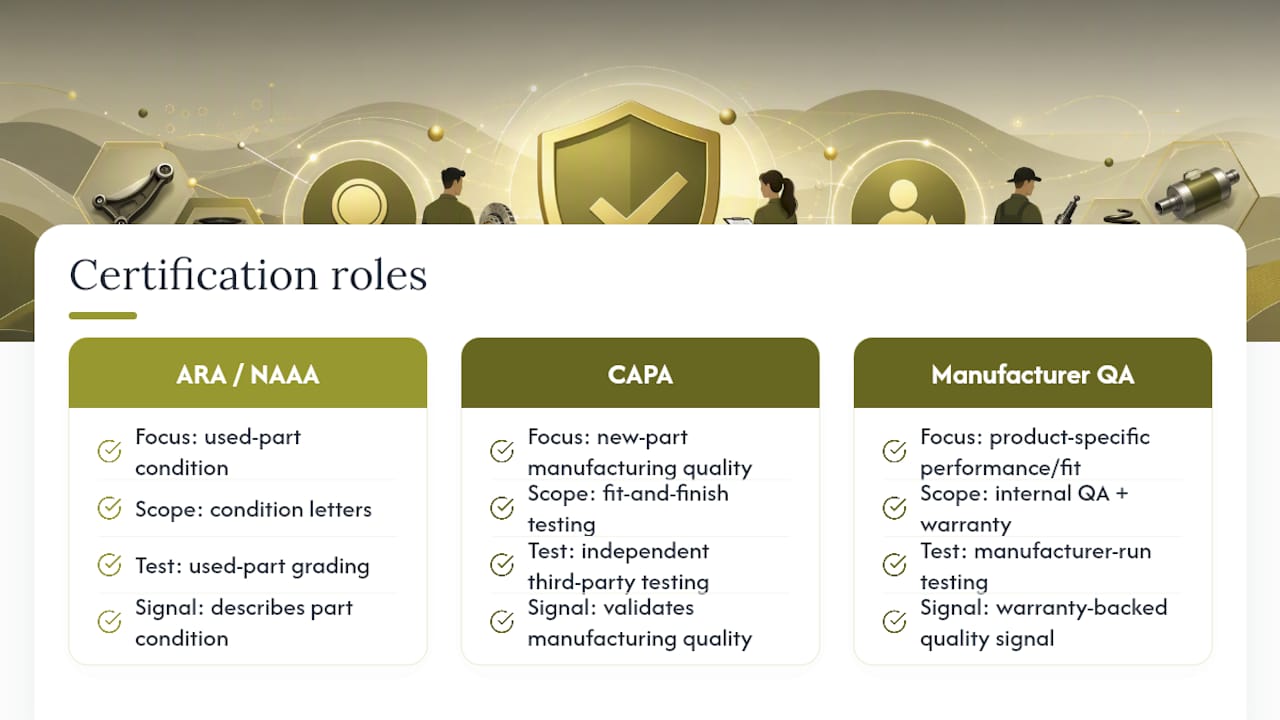
ARA and NAAA/AutoGrade dominate the conversation, but they’re not the only standards shaping what “quality” means in the aftermarket. CAPA sits alongside them as the primary certification body for new collision and aftermarket parts, running independent fit-and-finish testing that neither ARA nor AutoGrade covers, since those two focus on used-part condition rather than new-part manufacturing quality.
Beyond CAPA, individual manufacturers often run their own internal QA processes and warranty-backed testing, especially for performance-oriented components like coilovers or structural aero pieces. These aren’t third-party certifications in the CAPA sense, but a manufacturer with a documented testing process and a real warranty behind it functions as its own quality signal, arguably a stronger one than a used-part condition letter.
Insurance-industry data and repair-cost analysis, the kind J.D. Power compiles on OEM versus aftermarket pricing, also shapes grading indirectly. When insurers and repair shops treat certain aftermarket categories as acceptable substitutes for OEM parts, that acceptance pushes more manufacturers toward CAPA certification to stay competitive in insurance-approved repair networks.
For a performance builder, the practical takeaway is that certification bodies split by function. ARA and NAAA describe condition on used parts. CAPA validates manufacturing quality on new ones. Neither replaces old-fashioned supplier vetting, since certification tells you a part passed a specific test, not that the company stands behind it long-term.
Does Part Grading Affect Insurance and Inspections?
Grading matters more here than most builders expect, particularly if a vehicle goes through an insurance claim or a state safety inspection after repair work. Insurers frequently reference aftermarket part condition and certification status when approving repair estimates, and CAPA-certified parts are more likely to get accepted without pushback since the certification gives adjusters a documented quality baseline to point to.
Used parts graded A or B under ARA standards are commonly accepted in insurance-approved repairs, since the grading gives the shop and the adjuster a shared reference point for expected condition. Grade C parts face more scrutiny, and some insurers exclude them from covered repairs entirely, treating them as salvage-only material rather than installable replacement parts.
Vehicle safety inspections add another layer, especially for structural or safety-critical components. An inspector evaluating suspension work, for instance, cares less about whether a part carries a grade and more about whether it’s installed correctly and functions within spec. But documentation helps here too: a part with clear certification or fitment paperwork gives an inspector less reason to flag it, while an ungraded or poorly documented used part can trigger extra questions during inspection, particularly in states with stricter modified-vehicle rules.
The practical rule: keep documentation, whether that’s a CAPA certificate, a new-part invoice with specs, or a used-part grading disclosure, for anything that touches a claim or an inspection down the line.
What the Grading Debate Gets Wrong
Most explainers treat grading like it’s the whole story, and that’s the part I’d push back on. A grade is a snapshot of condition at one point in time, taken by someone whose incentive is to sell the part, not to protect your build. Treating an A grade as a green light without checking fitment specifics against your exact chassis is the single most common mistake I see builders make, and it’s an easy one to avoid.
The bigger blind spot is how differently grading should apply depending on what the part actually does. A graded used bumper cover is a reasonable gamble if the price is right and you can inspect it. A graded used suspension component is a different category of risk entirely, and the industry’s grading language doesn’t do a good job of signaling that distinction. Builders should draw their own line: cosmetic and non-structural parts can tolerate grading ambiguity, safety-critical and fitment-sensitive parts generally can’t.
If you take one thing from this, it’s that documentation beats letter grades every time you can get it. A detailed spec sheet and real fitment photos tell you more than any A/B/C ever will.
— Ismael
Get Fitment-First Parts Without the Grading Guesswork
Skip the letter-grade guessing game entirely. Underground Dynamics ships new carbon fiber and fiberglass aero, body kits, and suspension components with documented fitment data for your specific chassis, so you know what you’re installing before it ships instead of decoding a used-part grade after the fact.
That’s the real advantage over the used market: no repair-unit math, no mileage disclosures to double-check, no seller reputation to research. Every category, from chassis-specific body kits to coilovers and lowering springs, lists exact specs upfront. If you’re weighing a graded used aero panel against something new and documented, browse the Underground Dynamics catalog and compare the fitment detail yourself. For safety-critical upgrades especially, starting with a new, specified part removes the condition unknowns that used grading can never fully eliminate.
Sources
FAQ
What Does Grade A Mean on an Aftermarket Part?
Grade A means minimal damage or wear, one repair unit or less for body parts, or under 60,000 total miles for mechanical parts under ARA guidelines. It’s generally ready to install with little to no additional work.
Is CAPA Certification the Same as an A/B/C Grade?
No. CAPA certification applies to new aftermarket parts and confirms they passed fit-and-finish testing, while A/B/C grades describe the wear or repair condition of used parts.
Should I Buy a Grade C Part for a Performance Build?
Generally no, unless it’s for a track-only car or as a donor part for other components. Grade C means over two repair units or 200,000-plus miles, which usually means significant rebuild work.
Why Do OEM Parts Cost More Than Graded Aftermarket Parts?
OEM parts typically cost about 60% more than aftermarket alternatives, largely because you’re paying for brand-guaranteed fitment certainty rather than relying on a condition grade or specification tier.
Does Underground Dynamics Sell Graded Used Parts?
No. Underground Dynamics sells new carbon fiber and fiberglass parts with documented fitment specs, which removes the need to interpret a used-part condition grade at all.