FREE SHIPPING ON ORDERS OVER $150

Cart
0
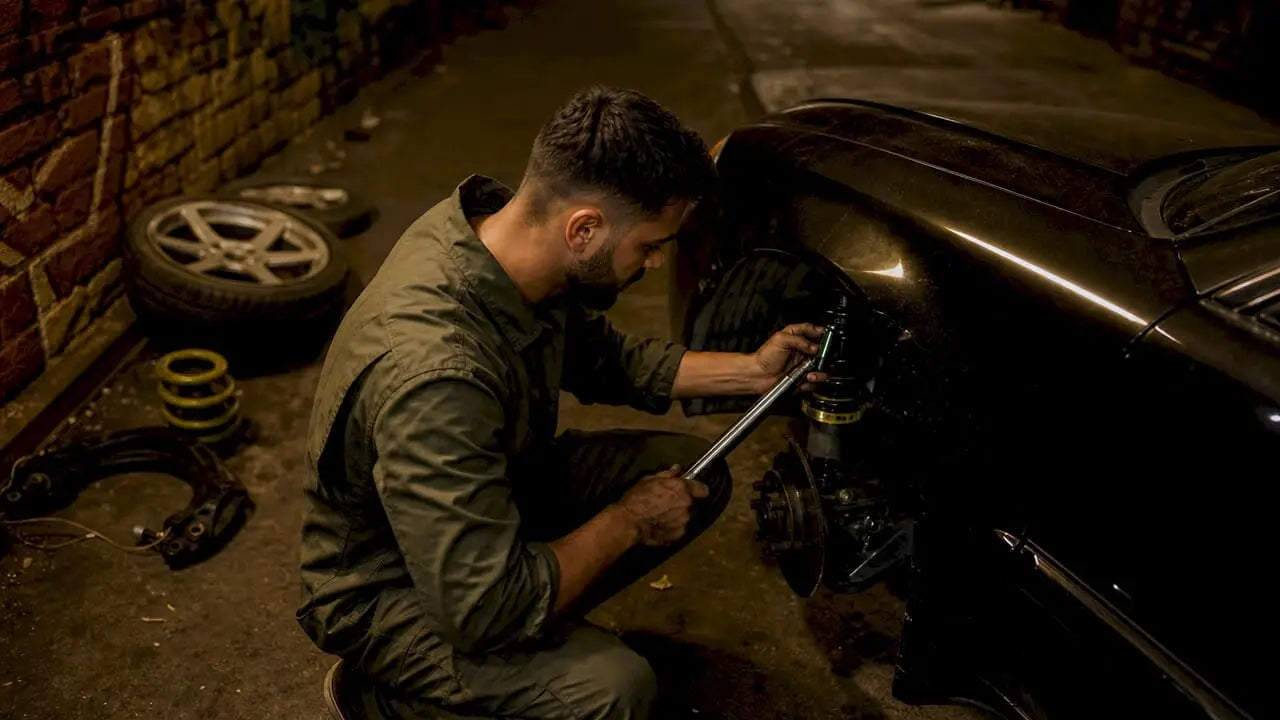
Coilovers are defined as integrated suspension units that combine a coil spring and shock absorber onto a single threaded body, giving you independent control over ride height, spring rate, and damping. That combination is exactly why civic coilovers improve handling in ways that stock suspension and fixed lowering springs simply cannot match. A properly set up coilover kit reduces body roll, sharpens cornering response, and keeps the tire planted through transitions. Whether you drive a tenth-gen Civic on canyon roads or push a Type R on a club circuit, the physics work the same way. The difference is in how much control you actually have over them.
How coilovers reduce body roll and improve cornering in Civics
Body roll is the enemy of cornering grip. When a Civic leans hard into a turn, weight transfers to the outside tires, the inside tires unload, and the contact patch shrinks. Coilovers fight this by pairing stiffer spring rates with matched damping, so the chassis stays flatter and the tires stay loaded through the corner.
High-quality coilovers reduce body roll and improve lateral grip, delivering lap time gains of 1–2 seconds on short club circuits over stock suspension or lowering springs. That gap comes from cornering consistency, not just outright speed. When the car transitions predictably, you can carry more corner entry speed with confidence.
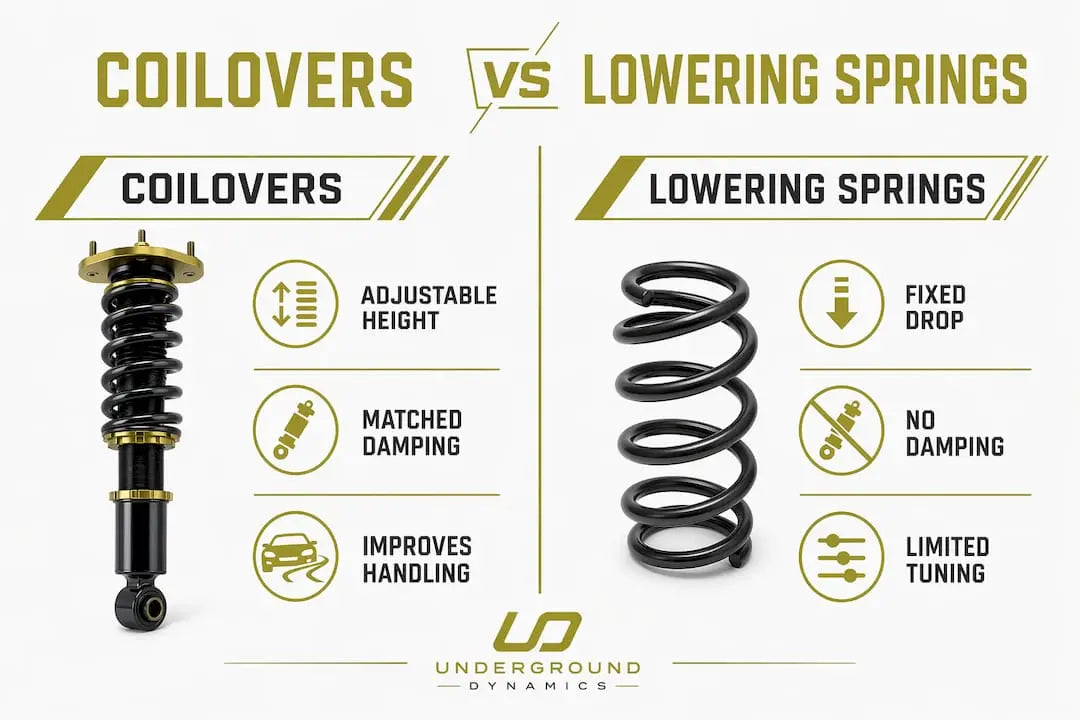
The key difference between coilovers and lowering springs is damping control. Lowering springs drop the car and raise the spring rate, but they rely on the factory shock absorber to manage rebound. If that shock is worn or mismatched, the tire bounces instead of gripping. Matched spring and shock systems deliver the handling improvement, not simply increased stiffness. Correct damping keeps the tire in contact rather than skipping across the pavement.
Coilovers also let you tune anti-dive and anti-squat behavior. Better end-of-stroke control allows tuning of anti-dive and anti-squat characteristics, which directly improves braking stability and evasive maneuver response. That is the kind of detail that separates a well-sorted Civic from one that just looks low.
| Point | Coilovers | Lowering springs |
|---|---|---|
| Height adjustment | 1–3 inches, threaded | Fixed drop, 0.5–2 inches |
| Damping control | Adjustable, matched to spring | Factory shock, often mismatched |
| Body roll reduction | High, tunable | Moderate, fixed |
| Lap time improvement | 1–2 seconds on club circuits | Minimal |
| Anti-dive/anti-squat tuning | Yes | No |
Pro Tip: Set your damping before you set your ride height. Getting the damping right first tells you how the car actually wants to sit under load, not just how it looks in the driveway.
Why adjustable damping matters for daily driving and spirited runs
Damping is the part of suspension tuning most drivers ignore. Spring rate gets all the attention, but damping is what controls how fast the spring compresses and rebounds. Get it wrong and a stiff spring just makes the car feel like a go-kart on a cobblestone road.
Street-oriented coilovers use spring rates 20–40% higher than factory specs to improve handling without excessive harshness when valved appropriately. The valving is the critical word. A spring rate increase without matching damping just transfers harshness directly to the chassis. Optimal damping ratios for daily comfort range 0.2–0.4, while track setups aim for 0.5–0.7. That range is wide enough to cover both a Monday commute and a Saturday track day.
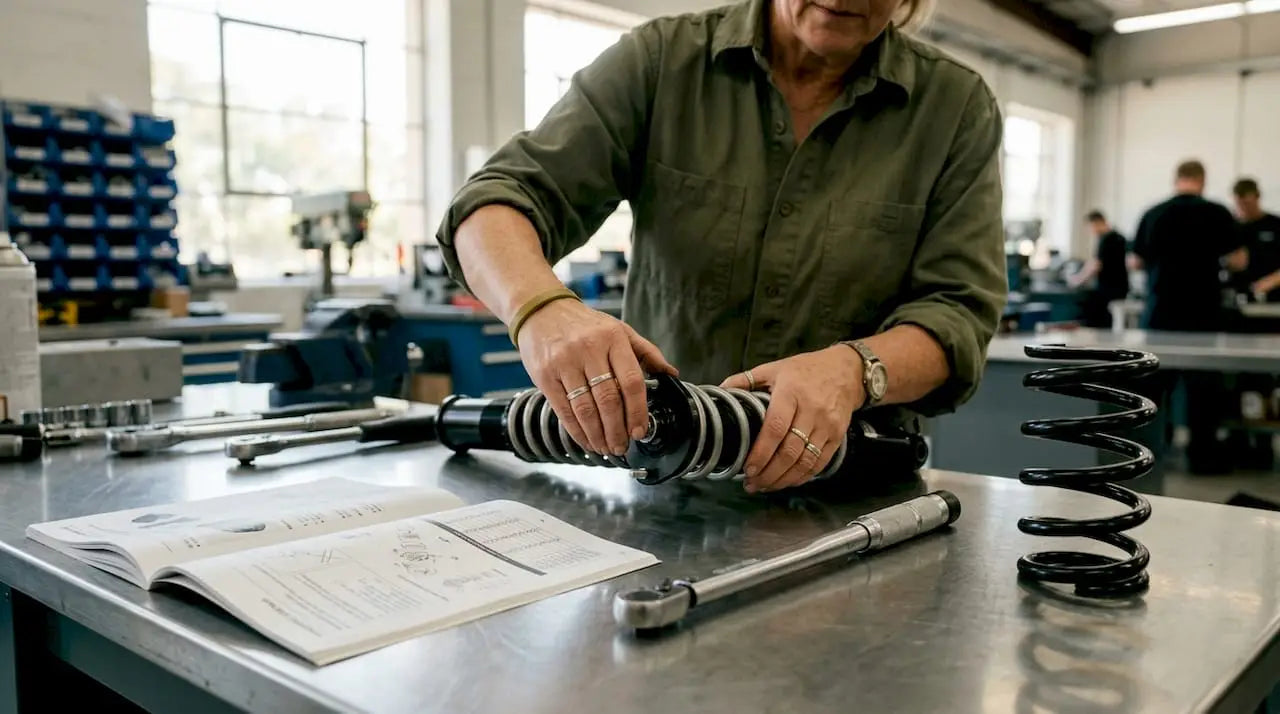
Adjustable damping lets drivers soften the ride for daily use and firm it for spirited driving, effectively giving you two suspension setups in one kit. Donald Molenaar of Intrax Suspension Technology identifies this flexibility as the greatest daily driving benefit of coilovers. You are not locked into one compromise.
Here is what adjustable damping actually gives you on a Civic:
- Softer compression settings absorb road imperfections on the commute without bottoming out
- Firmer rebound control prevents the car from floating after a bump at highway speed
- Mid-range damping works well for canyon roads where the surface changes constantly
- Full-stiff settings reduce chassis movement on smooth track surfaces for maximum feedback
- Independent front and rear adjustment lets you dial out understeer or oversteer tendencies
Pro Tip: Start with the manufacturer’s baseline damping setting, then adjust one click at a time. Jumping straight to full-stiff because you want “track feel” is how you end up with a car that skips over bumps instead of gripping them.
How coilovers improve suspension geometry and driver confidence
Suspension geometry is where most Civic coilover setups either win or fall apart. Lowering a car changes the roll center, camber curve, and bump steer behavior. Do it right and the car turns sharper and brakes flatter. Do it wrong and the steering gets nervous, the front end dives under braking, and the car feels unpredictable at the limit.
Civic owners benefit most from coilovers by restoring and tuning suspension geometry, which sharpens turn-in and reduces nose-dive during braking. The coilover body itself does not fix geometry automatically. You have to set it up correctly, and that means thinking beyond ride height.
Lowering beyond certain limits alters the roll center and induces bump steer negatively. Many Civic owners worsen handling by ignoring roll center correction and extended ball joints. The suspension geometry on a tenth-gen Civic is designed around a specific ride height range. Push past that range and the geometry fights you, not the road.
The role of suspension systems in performance vehicles extends beyond spring and damper selection. Geometry corrections are part of the same system. Here is the process to get it right:
- Set ride height first. Target a drop of 1–1.5 inches for street use. This keeps the suspension in its designed travel range.
- Check and correct roll center. Use roll center correction inserts or extended ball joints to restore the factory roll center after lowering.
- Align camber and toe. A proper four-wheel alignment after installation is not optional. Expect to run slightly negative front camber for improved turn-in.
- Inspect and replace worn bushings. Fresh rubber or polyurethane bushings eliminate slop that masks what the coilovers are actually doing.
- Test and retune damping on the road. Drive the car over your normal routes before making final adjustments. Real-world feedback beats any spec sheet.
Pro Tip: Pair your coilover install with a roll center correction kit if you are dropping more than an inch. Skipping this step is the single most common reason a lowered Civic feels worse than stock.
Common mistakes that kill the benefits of civic coilover setups
The biggest myth in the Civic community is that stiffer always means faster. It does not. Proper damping control is key to maintaining tire contact and improving grip. A spring rate that is too high for the damper to control just makes the tire skip, which reduces grip rather than increasing it.
Here are the mistakes that actually hurt handling after a coilover install:
- Over-lowering the car. Dropping more than 2 inches on a street Civic puts the suspension into bind, limits travel, and induces bump steer. The car looks slammed but handles worse than stock.
- Ignoring damper adjustment. Installing coilovers and leaving the damping at full-stiff because it “feels sporty” destroys ride quality and tire contact on anything but a perfectly smooth track.
- Buying mismatched components. Budget coilover kits that pair a stiff spring with a weak damper create the worst of both worlds: harsh ride and poor grip.
- Skipping the alignment. Coilovers change your suspension geometry. Running without a fresh alignment after install causes uneven tire wear and unpredictable steering.
- Never servicing the coilovers. Damper fluid degrades over time. A coilover that felt great at install can feel dead two years later if the damper is never rebuilt or replaced.
Properly set up coilovers can be more comfortable and predictable than cars lowered by springs alone, especially when factory shocks are worn or mismatched. The key word is “properly.” The hardware is only as good as the setup behind it.
Key Takeaways
Civic coilovers improve handling because they combine adjustable spring rates and matched damping into one system that controls body roll, preserves suspension geometry, and keeps tires in contact with the road.
| Point | Details |
|---|---|
| Body roll reduction | Matched spring and damper rates keep the chassis flat and tires loaded through corners. |
| Adjustable damping | Spring rates 20–40% above factory work correctly only when paired with properly valved dampers. |
| Geometry matters | Lowering beyond 1.5 inches requires roll center correction to avoid bump steer and handling loss. |
| Avoid over-lowering | Drops beyond 2 inches on street Civics limit suspension travel and worsen real-world handling. |
| Setup beats hardware | A mid-range coilover kit set up correctly outperforms an expensive kit installed without alignment or damping adjustment. |
What I’ve learned tuning Civics on coilovers
I’ve seen more Civic builds go sideways from over-lowering than from any other single mistake. The car looks great in photos, sits at two fingers, and then the owner wonders why it feels nervous on the highway and darts over every expansion joint. The geometry is fighting them. The suspension is running out of travel before it even gets to do its job.
The builds that actually work are the ones where the driver spent time on damping adjustment, not just ride height. I’ve watched a Civic on a mid-range coilover kit run consistent, confident laps at a club event simply because the driver dialed in compression and rebound over three sessions. The car next to it had a more expensive kit, dropped two inches lower, and was a handful in fast corners because nobody touched the dampers after install.
My honest advice: treat the coilover install as the beginning of the setup process, not the end. Get the alignment done immediately. Run the car for a week on the street before touching the damping. Then adjust one end at a time and note what changes. Pairing coilovers with suspension geometry corrections is not optional if you are dropping more than an inch. It is the difference between a car that handles and a car that just looks like it does.
Periodic retuning matters too. Dampers wear. Springs settle. What worked at install may need a revisit after 20,000 miles. The drivers who stay on top of this always have the most consistent, confidence-inspiring setups.
— Ismael
Civic suspension upgrades at Undergrounddynamics
Undergrounddynamics carries coilover kits and suspension accessories built for Honda platforms, selected for real fitment and technical spec transparency. Every product listing includes the details you need to buy with confidence, not guesswork.

If you are ready to upgrade your Civic’s suspension, browse the full catalog at Undergrounddynamics for coilover kits, geometry correction hardware, and supporting components. The catalog is organized by chassis so you can find parts that actually fit your build. No generic listings, no vague compatibility claims. Just parts that work.
FAQ
Why do coilovers improve handling more than lowering springs?
Coilovers pair a matched spring and damper in one adjustable unit, giving you control over both spring rate and damping. Lowering springs rely on the factory shock, which is often worn or mismatched, causing the tire to skip rather than grip.
How much should I lower my Civic for better handling?
A drop of 1–1.5 inches is the practical limit for street use on most Civic models. Lowering beyond 2 inches disrupts the roll center and induces bump steer, which worsens handling rather than improving it.
Do I need an alignment after installing coilovers?
Yes. Coilovers change your suspension geometry, and running without a fresh four-wheel alignment after install causes uneven tire wear and unpredictable steering response.
Can I daily drive a Civic on coilovers?
Adjustable damping lets you soften the ride for daily commuting and firm it for spirited driving, making coilovers practical for everyday use when set up correctly.
What damping ratio works best for street driving?
Optimal damping ratios for daily comfort range 0.2–0.4, while track setups target 0.5–0.7. Start at the manufacturer’s baseline and adjust from there based on real-world road feedback.